Dubai regulator clarifies real-world asset tokenization rules: Lawyer
Newly updated guidelines from Dubai’s crypto regulator include provisions on real-world asset (RWA) tokenization and clarify rules for issuers. On May 19, Dubai’s Virtual Asset Regulatory Authority (VARA) released its up...
Archive context
Older archive item. Useful for background and entity history, but not a fresh market-moving signal.
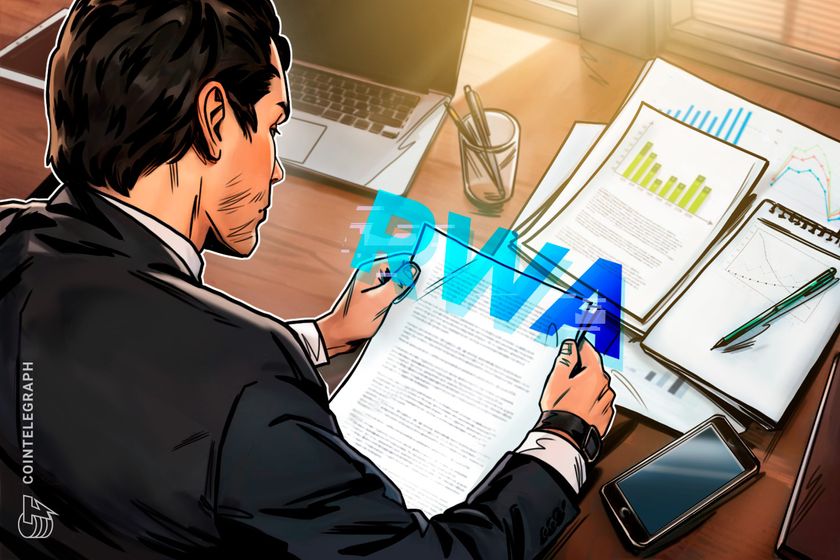
Newly updated guidelines from Dubai’s crypto regulator include provisions on real-world asset (RWA) tokenization and clarify rules for issuers.
On May 19, Dubai’s Virtual Asset Regulatory Authority (VARA) released its updated Rulebook for virtual asset service providers (VASPs) operating in the region. The regulator gave market participants until June 19 to comply with the new rules.
The regulator previously told Cointelegraph that it had enhanced supervisory mechanisms and brought consistency across activity-based rules. One of the more prominent changes includes regulatory clarity on RWA tokens.
Irina Heaver, partner at the United Arab Emirates-based law firm NeosLegal, told Cointelegraph that the updated rules clarify RWA issuance and distribution.
“Issuing real-world asset tokens and listing them on secondary markets is no longer theoretical,” Heaver told Cointelegraph. “It’s now a regulatory reality in Dubai and the broader UAE.”
A “viable” path to realize RWA hypeHeaver compared RWAs to security token offerings (STOs), an earlier attempt from the crypto space to tokenize securities like stocks, bonds and real estate investment trusts. However, the UAE crypto lawyer said that STOs “died a peaceful death in 2018 to 2019.”
The lawyer told Cointelegraph STOs did not work out because of the lack of regulatory clarity, viable secondary market trading venues, institutional investor appetite and liquidity.
Still, the situation is different for RWAs. Heaver told Cointelegraph that RWAs are the next foundational layer for institutional adoption of blockchain and virtual assets. Heaver said that VARA’s new rules already cover them as Asset-Referenced Virtual Assets (ARVA) tokens. She said:
“VARA’s newly updated Virtual Asset Issuance Rulebook (May 2025) addresses these failures head-on. Regulated exchanges and broker-dealers in Dubai are now authorized to distribute and list ARVA tokens.”The lawyer said this solves an issue in jurisdictions like Switzerland, where token issuance is possible, but listing and secondary trading remain unregulated.
Related: Dubai gov’t agencies to link real estate registry with property tokenization
Lawyer shares requirements for RWA issuersHeaver said ARVA tokens are defined under Dubai law as representing direct or indirect ownership of real-world assets, granting entitlement to receive or share income and purporting to maintain a stable value by reference to real-world assets or income.
ARVA tokens are also backed or collateralised by such real-world assets or constitute a derivative, wrapped, duplicated, or fractionalised version of another ARVA.
The lawyer said issuers must meet specific requirements, including a Category 1 Virtual Asset Issuance license, a comprehensive white paper and a risk disclosure statement.
In addition, issuers must have a paid-up capital of 1.5 million UAE dirhams (about $408,000) or 2% of reserve assets held. The issuers are also subjected to monthly independent audit obligations and must adhere to ongoing supervisory oversight.
“VARA is providing regulatory clarity, and it’s giving the industry a viable, enforceable path to turn the hype of RWA tokenization into reality,” Heaver told Cointelegraph. “This matters because it marks a shift, from theory to execution, from fiction to framework.”
Magazine: Danger signs for Bitcoin as retail abandons it to institutions: Sky Wee
Why this matters
This blockchain story adds another data point to the current market tape and is useful when read alongside nearby source coverage.
Original source
Read on CointelegraphRelated market context
SEC Updates Crypto-Asset FAQs as Firms Seek Clarity on Federal Securities Rules
TL;DR: The SEC Division of Corporation Finance added questions 1.4, 1.5 and 1.6 to its crypto-assets FAQ on November 2, 2026. SEC...
Coinbase says 99% of customer assets sit in cold storage after Binance’s $6.3 billion breach
Coinbase says 99% of customer assets are in cold storage and it wasn't affected by the $6.3 billion Binance hack.
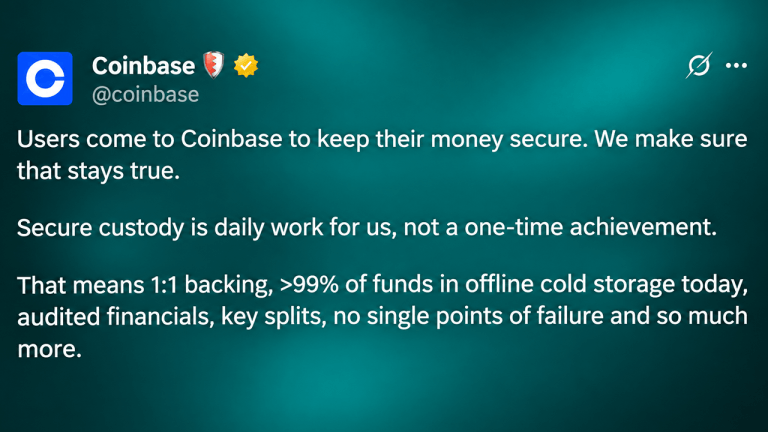
Coinbase Says 99% of Customer Assets in Cold Storage After $6.3B Binance Hack
Coinbase says more than 99% of customer assets are held in offline cold storage following Binance’s $6.34 billion hack on Oct. 29,...
Coinbase says 99% of customer assets are in cold storage following Binance’s $6.3B hack
Coinbase's robust cold storage strategy highlights the critical need for enhanced security measures in the crypto industry to prev...
Six Days After Launch, Morgan Stanley Says It Is Using DTCC’s Tokenization Service
Morgan Stanley is using the DTCC Tokenization Service (DTS) to put U.S. equities and Treasuries into token form, the bank said in...

Moscow Exchange Details Clearing and Settlement for Bitcoin, Ether and USDT Trades
Moscow Exchange (MOEX) has set out how its planned crypto market will work, saying trades in bitcoin, ether and USDT will go throu...