Elon Musk’s Department of Government Efficiency Explores Blockchain To Modernize U.S. Spending
According to individuals familiar with the discussions, D.O.G.E. representatives have met with teams from multiple public blockchain networks, although no specific platforms have been publicly named. The new agency, whic...
Archive context
Older archive item. Useful for background and entity history, but not a fresh market-moving signal.

According to individuals familiar with the discussions, D.O.G.E. representatives have met with teams from multiple public blockchain networks, although no specific platforms have been publicly named. The new agency, which briefly featured the Dogecoin logo on its website, has sparked questions about whether this emerging technology could truly reshape how the government monitors spending and manages data.
Changpeng Zhao, the former Binance CEO, expressed his enthusiasm about the prospect in a statement on X, saying, “Unpopular opinion: All governments should track all their spending on the blockchain—an immutable public ledger. It’s called ‘public spending’ for a reason.”
Source: CZ on X
Yet while some view blockchain as an innovative path toward accountability, the approach is already drawing skepticism from policy experts who worry that a technology born from cryptocurrencies might be unnecessarily complex for government use.
A New Initiative With Deep Ties To CryptoElon Musk, the world’s richest man and a known crypto proponent, was tapped to lead the D.O.G.E. agency after President Trump’s election victory. The name is a nod to Dogecoin, an altcoin that Musk has famously championed on social media. Officials say the department aims to explore a range of strategies to cut federal costs, from auditing government buildings to reevaluating payment systems.
From the start, D.O.G.E. aligned itself with the broader push by the new administration to adopt digital assets. Last week, President Trump signed a landmark executive order establishing the Presidential Working Group on Digital Asset Markets, solidifying a White House interest in blockchain, cryptocurrencies, and other decentralized technologies. In parallel, the Trump and Melania memecoins recently debuted on Solana, amplifying the administration’s crypto-friendly posture.
Conversations about D.O.G.E.’s future picked up momentum earlier this month when the agency’s official website briefly displayed the Dogecoin logo. While that image has since been removed, speculation continues about which network—if any—will form the backbone of D.O.G.E.’s potential blockchain initiative. Sources close to the agency indicate that existing blockchains such as Bitcoin, Ethereum, Solana, or even Dogecoin itself could be under consideration.
In the midst of these developments, Musk parted ways with co-chair Vivek Ramaswamy, a prominent entrepreneur known for his pro-crypto stance. Ramaswamy reportedly left D.O.G.E. this week to focus on running for governor of Ohio.
Skepticism And The Road AheadEven as Musk contemplates a blockchain-based overhaul, some experts remain unconvinced that distributed ledgers are the best solution.
Sam Hammond, chief economist at the Foundation for American Innovation, acknowledged the potential benefits of secure, decentralized record-keeping. “An internal government blockchain could be used to track spending, documents and contracts in a way that’s fully secure and transparent,” Hammond said. “But the question is whether you really need a blockchain to do that, since conventional databases can be used in a similar way and with fewer downsides.”
Campbell Harvey, a finance professor at Duke University, raised additional concerns about the government ceding control to a public network. “One issue with the government using a public Blockchain is that they would have no control over the entries,” he noted. “I think that loss of control would be a problem for governments.”
Whether D.O.G.E. ultimately becomes the largest government blockchain experiment in U.S. history hinges on multiple variables. The technology has yet to be tested on a scale as massive as federal spending, and past corporate-led blockchain projects often struggled with both cost and governance.
Yet with Musk at the helm, those familiar with his track record anticipate that D.O.G.E. will continue evaluating ways to integrate blockchain into everything from payment systems to managing federal assets.
For now, D.O.G.E.’s official website has returned to displaying a simple dollar sign in place of the iconic Shiba Inu dog. Still, the department’s early foray highlights the Trump administration’s willingness to embrace emerging technology—and, if successful, could set a new precedent for government transparency and efficiency.
Why this matters
This blockchain story adds another data point to the current market tape and is useful when read alongside nearby source coverage.
Original source
Read on Brave New CoinRelated market context
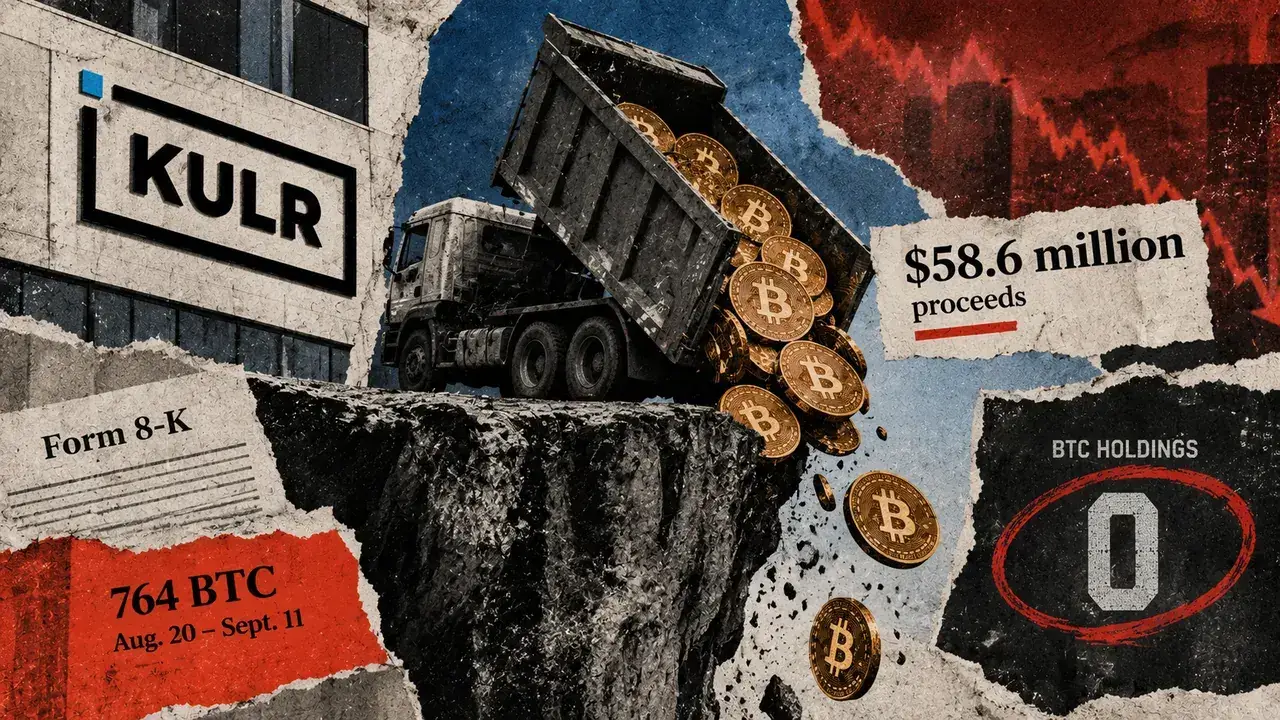
Another public company has abandoned its Bitcoin treasury after selling the last 764 BTC
KULR Technology Group has sold its remaining Bitcoin, completing a retreat from a treasury strategy it began unwinding in August....

Revolut Exposes Bitcoin Records, Passports After Fraudulent Government Email Attack
Key Takeaways: Revolut had to share sensitive data about its users after receiving a phishing request that looked legitimate from...
Why Trump Backed Tougher Ethics Rules in Clarity Act, and Why the Crypto Industry Thinks It Can Pass
Republicans' "last, best and final offer" wins Trump's backing on stronger ethics rules and concedes on DeFi and stablecoin sticki...

Dogecoin (DOGE) Price Prediction: DOGE Builds a Bottom as Bulls Prepare for a $0.10 Breakout
After months of steady selling, Dogecoin may finally be showing early signs of a turnaround. DOGE is holding near $0.0847 as impro...

The biggest vulnerability in your Bitcoin wallet might be the shipping label
Hardware wallets might be able to protect your keys, but the paperwork from buying them could expose your identity. To buy a hardw...

Bitwise is closing the lowest-fee Dogecoin ETF after rivals captured nearly all the capital
Bitwise is closing its Dogecoin ETF after investors largely bypassed the fund in favor of competing products. On Sept. 10, the ass...