Free-to-Own: The New Model for Blockchain Gaming?
Computer gaming has gone through distinct phases taking in various business models, from arcade gaming to home consoles and gaming PCs, all the way through to modern mobile games. Accompanying these progressions have bee...
Archive context
Older archive item. Useful for background and entity history, but not a fresh market-moving signal.

Computer gaming has gone through distinct phases taking in various business models, from arcade gaming to home consoles and gaming PCs, all the way through to modern mobile games.
Accompanying these progressions have been changes in payment models, from paying for each play in an arcade, to one-off upfront payments for cartridges, to the world of free mobile gaming with payments for in-game upgrades.
Currently, we see the gaming industry and cryptocurrencies drawing closer together and intersecting. Cast back to Bitcoin’s earliest days, and this might have seemed unlikely, what with Bitcoin advocates being most vocally concerned with monetary issues, and significantly more likely to bring up Austrian economics than Candy Crush.
In fact, that’s still the case, as discussions around blockchain technology as it relates to gaming are primarily occurring away from Bitcoin and in new quarters of the cryptocurrency space that have branched off and expanded, and which lend themselves more apparently to uses within gaming environments.
This meeting of games and crypto has accelerated with the recent explosion of interest in NFTs, along with the emergence of the web3 narrative, within which crypto has undergone something akin to a rebranding, and blockchains are posited as the architecture upon which the next iteration of the web, taking in gaming, will be constructed.
There is also a crossover with the metaverse narrative, as gaming environments might conceivably become zones within a wider metaverse, while metaverse projects incorporate gaming dynamics in order to hook users and provide entertainment.
An example of the latter, a potentially game-like metaverse, is Otherside, which has evolved out of the Bored Ape Yacht Club NFT collection, and whose developers appear to be ensuring that users are not simply present in a virtual world, but that they have a good time while they are there.
Axie Infinity and P2E
Where crypto enters the gaming equation, we see the development of play-to-earn (P2E) gaming, which allows players to earn crypto tokens by playing the games in question.
The leading product in this market has been Axie Infinity, which gained hugely in exposure during the most recent crypto bull run, and from which many participants have earned considerable profits. However, Axie token prices have subsequently collapsed, and the bear market has revealed flaws in its system.
Among the criticisms of Axie are not only that its model was unsustainable, or even that it operated as a Ponzi scheme, but also that the game itself simply wasn’t enjoyable to play, and only gained traction because of the user earning potential.
Perhaps as a reaction to complaints that play-to-earn blockchain gaming is nothing more than a crypto profit grind, with the mundane basics of a game strapped on, the play-to-earn label has been superseded by play-and-earn.
This new tag implies that the gaming experience is primary while potential crypto earnings are an added bonus, but it remains to be seen whether this change is anything other than just nominal.
Recently, we have seen the emergence of a dynamic called move-to-earn (M2E), which utilizes NFTs and crypto, and allows participants to earn tokens through exercising. This is creating what could become a gamified, blockchain-based fitness and lifestyle sector, exemplified through projects such as STEPN and Step App.
DigiDaigaku and F2O
Recently, there has been a significant new development, with the launch of a gaming/NFT project called DigiDaigaku, and the F2O model around which it is centered. F2O means free-to-own, and it’s a departure from previous tie-ups between crypto and gaming.
DigiDaigaku is a work-in-progress that was launched in August by Limit Break, which itself is a new web3 gaming firm established by Gabriel Leydon and Halbert Nakagawa. Leydon and Nakagawa are two of the co-founders of Machine Zone (now owned by mobile technology company AppLovin), which is a leading company in the mobile gaming arena.
The F2O model being pioneered through Limit Break and DigiDaigaku lays the foundation for a new type of gaming economy, which is being proposed as an improvement on both free-to-play mobile games, and the play-to-earn models that sell NFTs upfront.
DigiDaigaku, which features the kind of anime-inspired aesthetic that has been a key NFT trend this year, minted its 2,022 NFTs for free, and has subsequently seen their secondary market value surge despite currently subdued wider conditions.
Proposed DigiDaigaku and F2O concepts are that the freely delivered NFT assets will act as generators creating further NFTs for in-game use, that initial holders become invested in expanding a project’s reach but are not motivated to quickly recoup any buy-in costs, and that app stores can be bypassed as developers, NFT holders and players form a flexible network that requires no middlemen.
It should be noted that firmly laid out mechanics of the F2O gaming model are not available and that the DigiDaigaku project is lacking in concrete details. Also, although not released as gaming projects, freely distributed NFTs are nothing new, going back to CryptoPunks in 2017, and including this year’s surprise hit collection, Goblintown.
However, the founders of Limit Break and DigiDaigaku are experienced, driven and highly competent, and, at the very least, look set to inject valuable creative disruption into the worlds of both gaming and NFTs.
This article was written by Sam White at www.financemagnates.com.Why this matters
This blockchain story adds another data point to the current market tape and is useful when read alongside nearby source coverage.
Original source
Read on Finance MagnatesRelated market context
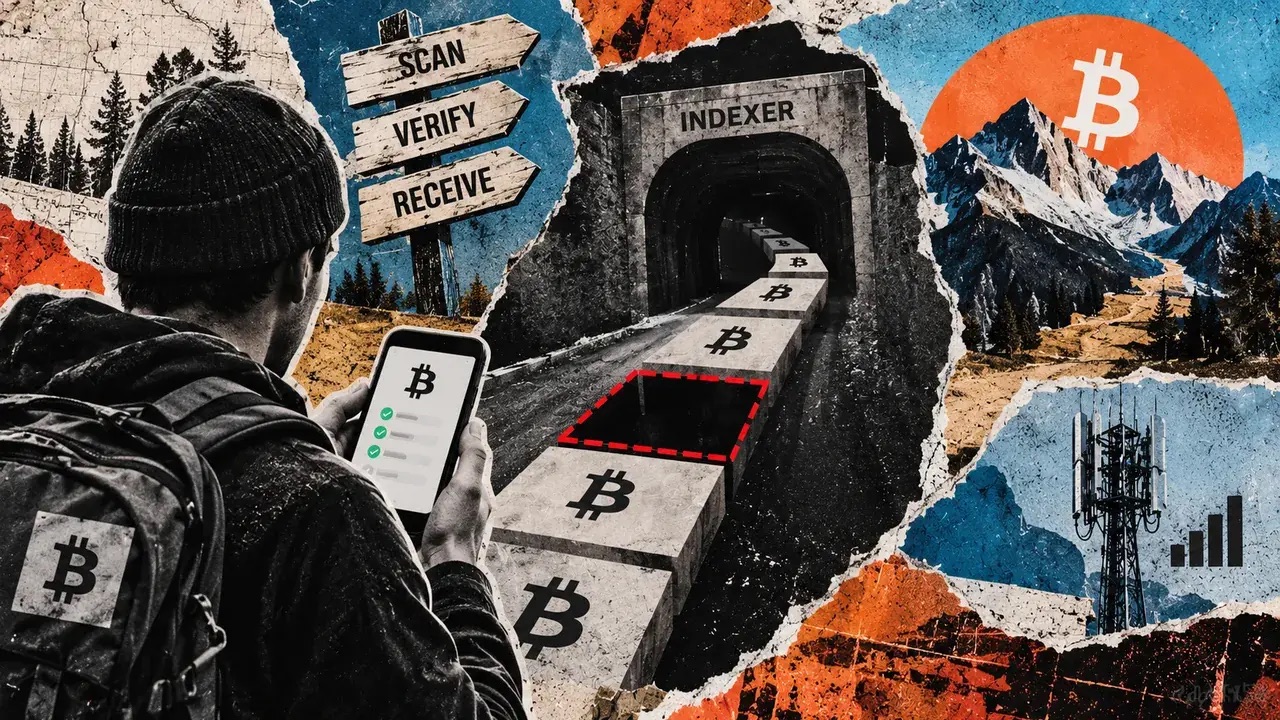
Bitcoin’s newest mobile privacy feature can make your incoming money completely invisible
Silent Payments promise a reusable Bitcoin address without exposing an obvious chain of payments to that address. A sender uses th...

A Bitcoin Berkshire Model: Orange Juice
Bitcoin Magazine A Bitcoin Berkshire Model: Orange Juice The corporate Bitcoin landscape is currently dominated by a single, aggre...
Grayscale Makes XRP a Core Holding in New Crypto Model Portfolios
Grayscale has made its XRP ETF one of the largest allocations across its new crypto model portfolios for financial advisors. The X...

Grayscale launches model portfolios to simplify digital asset investing for financial advisors
Grayscale's model portfolios could drive increased crypto adoption among financial advisors, reshaping digital asset distribution...

Is APEING Stage 4 the Best Crypto to Buy Now? $93K+ Raised, Find Out How to Unlock 10% Extra $APEING
Yet for anyone hunting the best crypto to buy now, there is a bigger question than which established coin can squeeze out another...

Strategy copycat Satsuma crashed 99%, liquidated treasury
British Strategy copycat, Satsuma Technology, which raised £168.9 million ($227.6 million) from noteholders at the height of the 2...