Lido Gets All-Clear Signal From Blockchain Auditing Experts Statemind
The firm behind the recent success story, where $350M in damages were prevented from hitting the Avalanche blockchain, has released an in-depth audit report of the popular Ethereum liquidity staking solution, Lido. The r...
Archive context
Older archive item. Useful for background and entity history, but not a fresh market-moving signal.

The firm behind the recent success story, where $350M in damages were prevented from hitting the Avalanche blockchain, has released an in-depth audit report of the popular Ethereum liquidity staking solution, Lido.
The report has ultimately given Lido an all-clear signal, noting that no significant vulnerabilities were discovered. Here is what newcomer blockchain auditing firm Statemind did find in their Lido report.
Lido Tasks Statemind With Keeping Billions At Stake SecureLido is designed to provide liquidity for staked assets with daily rewards and no lock up periods. Lido staking solutions are available for Ethereum, Solana, Polygon, Terra, Kusama, and Polkadot. When staking Lido you mint staked tokens which are issued 1:1 to your initial stake. With Lido, your staked tokens can be used across the DeFi ecosystem as collateral, for lending, yield farming, and more.
As Lido expands its stronghold over liquid crypto staking solutions, the need for the underlying code to be squeaky clean and without any potential complications becomes imperative. Billions of dollars in value are at stake across millions of users. Lido has tasked blockchain auditing firm Statemind with reviewing its code and ensuring no critical vulnerabilities exist — and if they do, snuff them out before they become an issue.
Statemind Makes Huge Splash At Launch, Saving Avalanche $350MStatemind did just this but outside of its regular clientele, while simultaneously making a huge splash across the cryptocurrency development community. A proactive review of several top blockchains revealed that Avalanche and associated chains were exposed to a critical vulnerability. Estimated damages top over $350M that Statemind was able to save.
In the more reactive Lido research prompted by the client themselves, Statemind, fortunately, discovered zero critical, high, or medium-severity bugs. Only informational bugs were found, which are easily patched and pose no threat, said Statemind.
New Audit Report
Statemind has completed a full Audit of @LidoFinance MEV-boost relay allowlist.
No Critical Vulnerabilities Found
Read our full report here: https://t.co/GthoW7Osd7
— Statemind (@statemindio) September 21, 2022
The Results And Recommendations Of The Lido Audit ReportStatemind further outlined the results of the MEV-Boost relay allowlist project and Lido audit in a nine-page report. According to the report, the on-chain relay allowlist is “used by Node Operators participating in the Lido protocol after the ETH Merge to extract MEV.” Node Operators use the contract to ensure up-to-date software configuration at all times.
“Key recommendations involve checking the number of relays right after the msg.sender check, removing the zero address check for msg.sender, checking if the token address is a contract in the function _safe_erc20_transfer, and utilizing mapping that maps URI to index of relay in the array,” Statemind explained in a blog post.
What You Need To Know About Statemind Blockchain Safety AuditsLido is just one of many of Statemind’s clients, which also include 1INCH and Yearn.Finance. Statemind is a brand new blockchain security auditing firm with over 100,000 LoC of Solidity and Vyper experience combined. Thus far, Statemind audits have secured over $10B in TVL, and the examples above have only added to this rapidly-growing number. To learn more, visit Statemind.io.
Why this matters
This blockchain story adds another data point to the current market tape and is useful when read alongside nearby source coverage.
Original source
Read on NewsBTCRelated market context

Joseph Lubin to discuss institutional Ethereum staking at Lido Poolside call
Lubin's insights may boost institutional confidence in Ethereum, potentially influencing its market dynamics and adoption in finan...

MEXC’s September 2026 Proof of Reserves Reaffirms Full Backing of User Assets, BTC Reserve Ratio Increases to 297%
Mutsamudu, Comoros, September 15, 2026 – MEXC, a pioneer in 0-fee digital asset trading, has released its September 2026 Proof of...
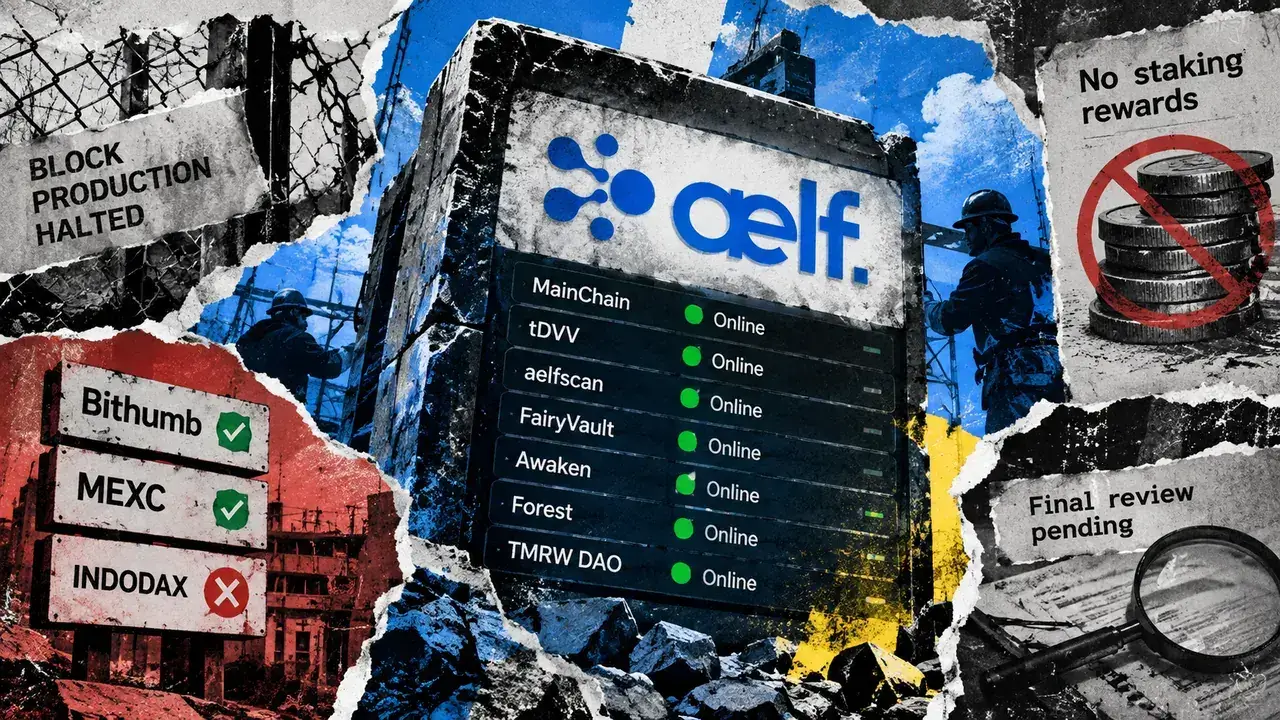
7-day blockchain outage wipes out a full week of staking rewards after emergency aelf shutdown
aelf, a blockchain network built around its AELF MainChain and tDVV dAppChain, has restored public node access and several core se...

BlackRock’s staking Ethereum ETF pays yield but investors still prefer its $9 billion ETHA fund
Staking was supposed to strengthen Ethereum exchange-traded funds (ETFs), but BlackRock’s early results show investors still favor...

Centrifuge to release RWA report on tokenized money market funds’ structural differences
The report highlights the critical need for improved composability and regulatory clarity to fully integrate tokenized funds into...

Bitcoin’s newest mobile privacy feature can make your incoming money completely invisible
Silent Payments promise a reusable Bitcoin address without exposing an obvious chain of payments to that address. A sender uses th...