MIT-Incubated Optimum Raises $11M, Develops Memory Layer for Any Blockchain
Optimum, the first decentralized high-performance memory infrastructure for any blockchain, has announced the successful closure of its $11 million seed round.According to the press release shared with Cryptonews, the ro...
Archive context
Older archive item. Useful for background and entity history, but not a fresh market-moving signal.
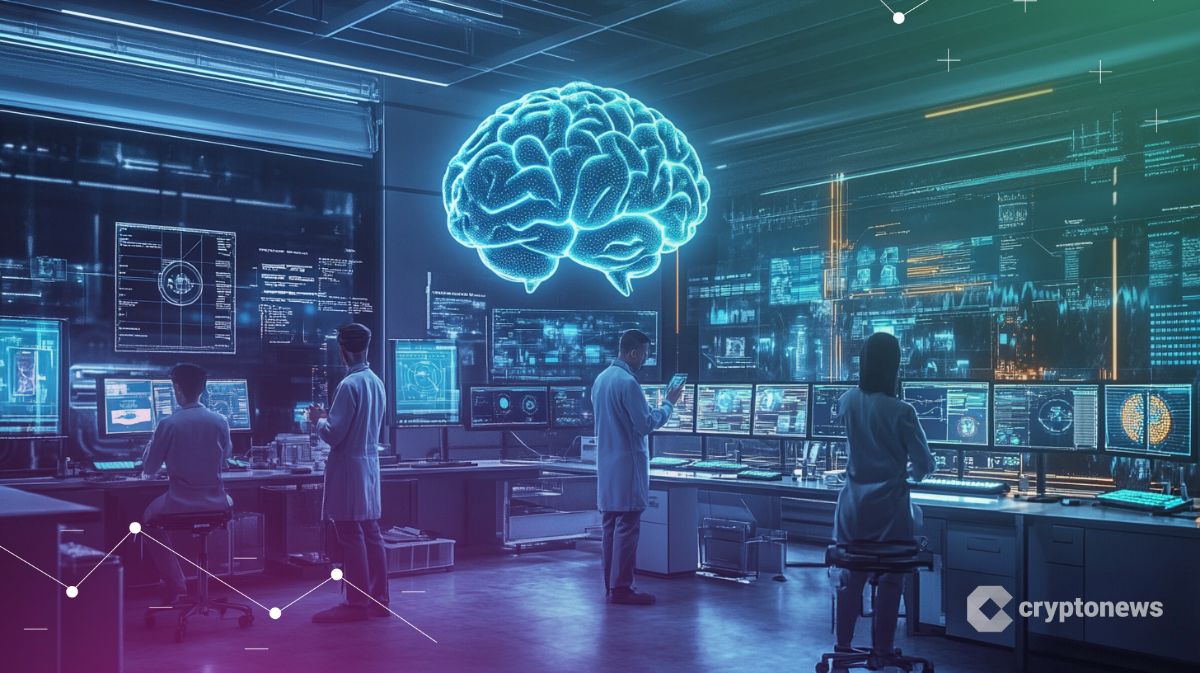
Optimum, the first decentralized high-performance memory infrastructure for any blockchain, has announced the successful closure of its $11 million seed round.
According to the press release shared with Cryptonews, the round was led by crypto investment firm 1kx with participation from Robot Ventures, CMT Digital, Spartan, Finality Capital, Triton Capital, SNZ, Big Brain, CMS, Longhash, NGC, Animoca, GSR, Caladan, Reforge, and more.
The team says it will use the new funding for integration across major ecosystems, lowering costs, and boosting scalability for any L1 and L2 blockchain and performance for node operators.
Optimum is co-founded by MIT professor Muriel Médard, who invented the patented tech that powers this layer. It is now live on private testnet with the OptimumP2P flagship product.
While blockchains power decentralized apps with recognizable operating systems, the underlying memory infrastructure is a patchwork of best-effort solutions—gossip protocols, full-node replication, and mempools—that don’t compare to dedicated RAM.
— Optimum (@get_optimum) April 3, 2025Per the announcement, blockchains are missing a memory layer, which is necessary for efficient computing. This is what Optimum is building. The team argues that this tech will alter the way data is stored, accessed, and disseminated. These processes will become decentralized, faster, and cheaper.
Furthermore, blockchains store all state data permanently. With time, this creates a number of interconnected issues. These include a growing burden on full nodes, congested mempools, unpredictable delays, and redundant data propagation, among others.
However, Optimum claims to have built a “provably optimal memory infrastructure that turns blockchains into high-speed, scalable computing networks” and solves the above-stated issues.
Médard commented that “high-performance memory has been the missing link in blockchain infrastructure.” Most innovation has focused on computation and execution, leaving data access and networking underexplored.
“A scalable memory layer provides the missing piece, optimizing data retrieval, reducing congestion, and unlocking the speed and efficiency needed for blockchain to serve as the backbone of the decentralized Internet,” she says.
You might also like Legacy Blockchain Is Holding Crypto Back, and Scalability Is the Key to Its Survival New Encoding TechOptimum’s team consists of MIT, Harvard, and Meta alumni. Their novel memory layer leverages new technology called Random Linear Network Coding (RLNC), a coding scheme that encodes data into packets to transmit over a network efficiently.
Prof. Muriel Médard has developed RLNC, which is now at the core of Optimum. Per the website, RLNC is “an advanced form of erasure coding.” It transforms data into smaller chunks and encodes them into random linear combinations before transmission.
Did you know our former president @ChandlerOtterbe is building out @get_optimum ?
Congrats on the impressive builders round!
Optimum is building the world's first high-performance memory infrastructure for any blockchain. Powered by RLNC, it will scale L1/L2s, enhance dapp… https://t.co/wGfFIyCPwg
“This method significantly improves network efficiency and fault tolerance, ensuring data can be accurately reconstructed even if some pieces are lost along the way,” the team says.
Wei Dai, Research Partner at 1kx, commented that the technology around RLNC has “far-reaching potential.”
Additionally, Optimum is already live with the OptimumP2P product. This protocol functions as a memory bus, the team says. It complements outdated gossip networks with coding-based data propagation to decrease redundancy and increase throughput for any network.
Moreover, it plans to launch Optimum deRAM, a decentralized RAM layer. This product will ensure data atomicity, consistency, and durability to enable on-demand access, cheaper storage, and lower fees for L1/L2, validators, dapps, and end users.
Source: OptimumPer the announcement, the team has “refined [RLNC] over two decades.” It received the IEEE Koji Kobayashi Computers and Communications Award in 2022. It also assisted its co-inventor Médard’s election to the US National Academy of Engineering and recognition as a Fellow of the National Academy of Inventors.
Médard is the NEC Chair at MIT EECS since 2005. Her CV includes membership in the US National Academy of Engineering, membership in the US National Academy of Inventors, leading Network Coding & Reliable Communications, and tenure as the former IEEE Information Theory Society President.
You might also like Breakthrough in Zero Energy Storage May Pave the Way for Eternal BlockchainsThe post MIT-Incubated Optimum Raises $11M, Develops Memory Layer for Any Blockchain appeared first on Cryptonews.
Why this matters
This blockchain story adds another data point to the current market tape and is useful when read alongside nearby source coverage.
Original source
Read on CryptonewsRelated market context

Sam Altman’s ChatGPT AI Predicts ‘Will Crypto Recover?’
Sam Altman’s ChatGPT AI predicts ‘Will crypto recover?’. When prompted, the OpenAI bot gave an in-depth answer on whether and when...
Claude AI Predicts “Operation Meridian” for Ripple: Can XRP Really Hit $40?
Anthropic’s Claude AI predicts that, if a completely hypothetical “Operation Meridian” rolls out for Ripple, XRP USD could hit inc...

Elon Musk’s Grok AI Predicts a Monster Move for Ripple XRP
Something potentially game-changing could be approaching for XRP by January 1, 2027. According to Elon Musk’s AI bot, Grok AI pred...

Mark Zuckerberg’s Meta AI Predicts the Bitcoin Price: Is This Actually Possible?
A genuinely outsized move for Bitcoin (BTC) may still be on the table before January 1, 2027, as Mark Zuckerberg’s Meta AI predict...

NEAR Protocol Tokenomics Overhaul Catapults The Crypto Coin 10% Higher
NEAR Protocol is climbing as the market weighs a major tokenomics overhaul designed to reduce token inflation and ease long-term s...

Copilot AI Predicts an Explosive Q4 Move for NEAR Protocol
Something potentially significant could happen for NEAR Protocol by early 2027. Microsoft Copilot AI predicts a highly speculative...