Mysten Labs Technology Prototype on Sui Provides First Proof of Elastic Blockchain Scaling
Mysten Labs, a team of leading distributed systems, programming languages, and cryptography experts and originators of the Sui Network, today announced a landmark achievement in scaling blockchain capacity. During testin...
Archive context
Older archive item. Useful for background and entity history, but not a fresh market-moving signal.

Mysten Labs, a team of leading distributed systems, programming languages, and cryptography experts and originators of the Sui Network, today announced a landmark achievement in scaling blockchain capacity. During testing and development in a Sui blockchain environment, Pilotfish, a prototype Sui extension, increased throughput by 8x when backed by 8 machines, successfully illustrating the possibility of linear scaling. Notably, the latency per transaction decreased as more machines were added during the test, proving the viability of linear horizontal scaling for low latency blockchain transactions for the first time ever on any blockchain.
This proof-of-concept, was formally presented as an academic preprint titled, “Pilotfish: Distributed Transaction Execution for Lazy Blockchains,” and initially shared on January 29, 2024 as an article on the open access archive arXiv.
“Pilotfish is a game changer as the blockchain industry seeks to achieve the same dynamic capacity increase currently possible only with centralized server technologies,” said Lefteris Kokoris-Kogias, one of the authors of the paper and researcher at Mysten Labs. “Pilotfish has the potential to push throughput well beyond what is currently at the forefront of high-performance blockchains, enabling transaction throughput levels no other blockchain existing today can achieve.”
Sui leads the industry in throughput by leveraging multiple cores for parallel transaction execution within individual validators. Using this approach, within months following mainnet, Sui reached 65.8 million transaction executions in a single day—the most of any blockchain ever. However, a single machine can only incorporate a finite number of cores, so throughput gains via this strategy are limited. Moreover, the machines capable of accommodating large numbers of cores are expensive to buy and use. The breakthrough solution that Pilotfish offers enables a single validator to employ multiple servers simultaneously. This new technology not only makes elastic capacity possible, but its auto-scaling architecture, akin to centralized solutions like AWS or Heroku, allows the use of smaller, cheaper servers available on demand.
Nearly all other blockchains aiming to scale use some form of batching—grouping transactions together to be added all at once. The downside of this method is significant additional latency. Instead of transactions moving directly to finality, they are delayed waiting for others to be batched for execution with them. Unlike these other scaling solutions, Pilotfish achieves potentially linear throughput scaling without increasing latency. In the simplest terms, with the horizontal scaling enabled by Pilotfish, simply by engaging the requisite number of machines, a validator can adapt its throughput and resource use to the use case at hand.
Alberto Sonnino, a research scientist at Mysten Labs, said, “Until now the only option to increase a validator’s capacity has been to upgrade to a more powerful machine. Pilotfish removes that constraint, making possible horizontal scaling by simply adding servers and without delaying execution. With Pilotfish, the question is no longer whether a level of throughput is possible, only how many servers it will require.”
Pilotfish achieves its remarkable scalability by enabling a single validator to execute transactions across multiple machines. Specifically, Pilotfish partitions the validation function into three key roles: (1) the Primary, which handles sequencing transactions using a high-throughput consensus, (2) SequencingWorkers (SWs), which store transactions and dispatch them for execution; and (3) ExecutionWorkers (EWs), which store the blockchain state and execute transactions received from the SWs. Different components may reside on multiple different machines to increase the capacity of the system with more precision.
In experimental results, Pilotfish has already achieved remarkable results in terms of linear scaling, low latency, and support for various workloads. In testing, Pilotfish reduced network response times and maintained a latency envelope below 20ms. Future plans include enhancements like multiple SequencingWorkers, shard replication, and ultra-fast networking.
Contact
Mysten Labs
[email protected]
Why this matters
This blockchain story adds another data point to the current market tape and is useful when read alongside nearby source coverage.
Original source
Read on Brave New CoinRelated market context

XRP News: XRPL Records 2K Transactions from 20 Wallets
The XRP Ledger processed a record 3,254 transactions in ledger 106,965,249 yesterday, but 2,000 of the news came from just 20 acco...

Altcoins see highest 7-day inflow transactions in months as Binance leads the charge
Increased altcoin inflows suggest a shift in investor interest, potentially indicating a broader diversification within the crypto...

Solana transactions just got more than 3 times bigger, giving an edge over Ethereum
Transaction V1 raises Solana’s limit to 4,096 bytes from 1,232, giving developers more room for multi-step trades, company-wallet...
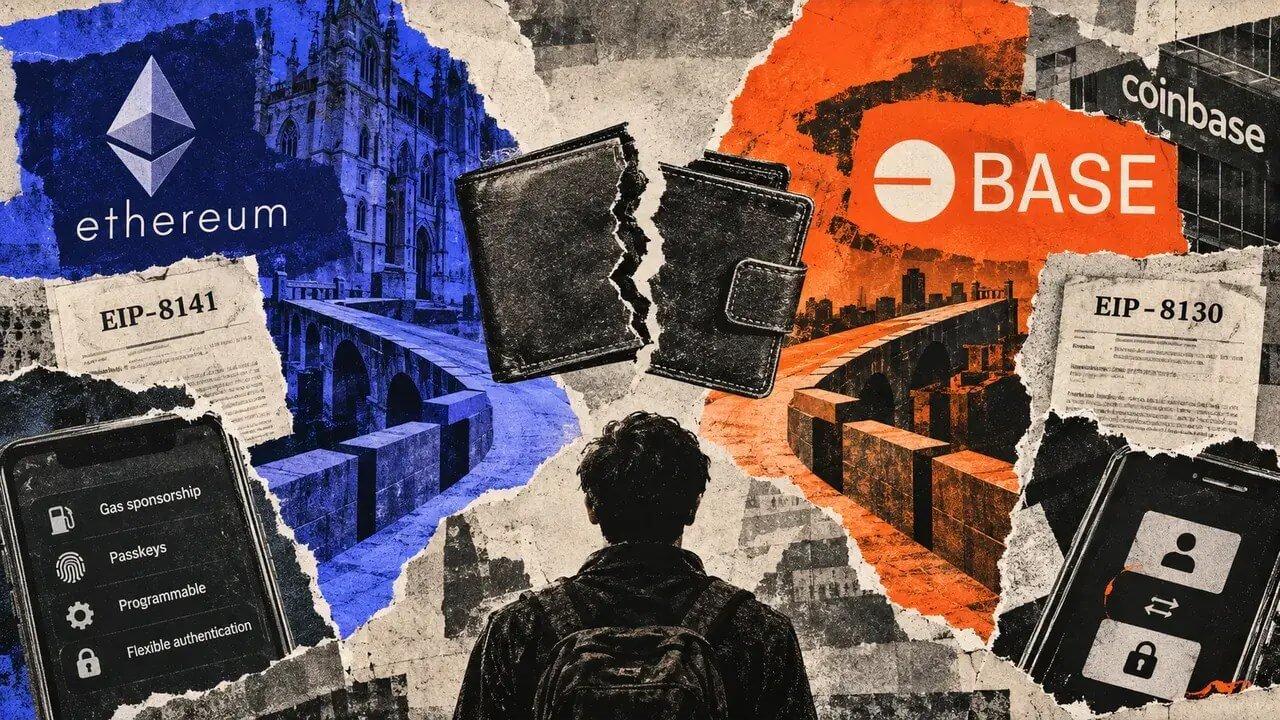
Coinbase-backed Base just exposed the uncomfortable truth about Ethereum’s L2s
Ethereum and Coinbase-backed layer-2 network Base have abandoned an effort to agree on how the next generation of crypto wallets s...
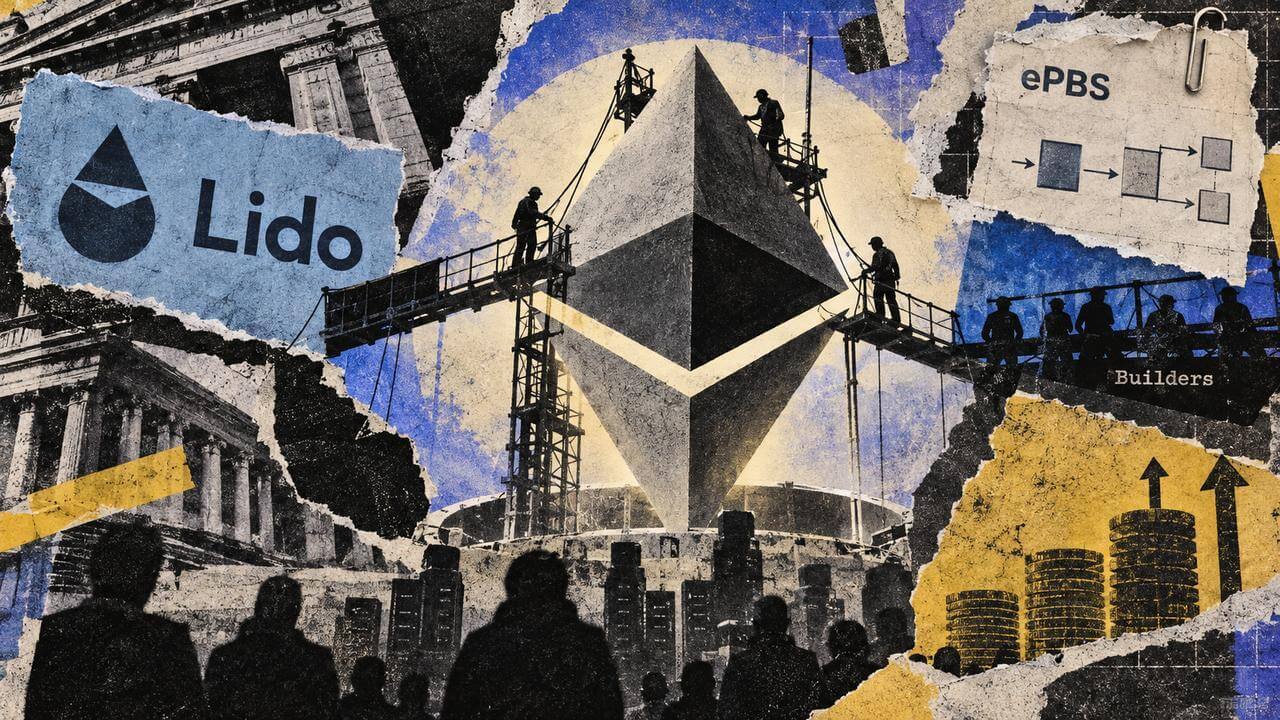
Ethereum builders face a choice between locking up too much cash or relying on trusted brokers
In a Sept. 8-11 Lido discussion, Commit-Boost contributor Jason Vranek argued that builders funding protocol-backed payments face...
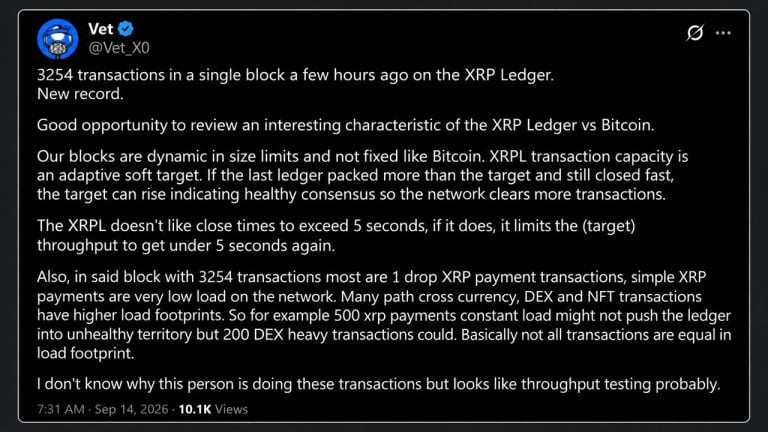
XRP Ledger Broke Its Transaction Record, and 20 Wallets Did Most of It
The XRP Ledger crammed a record 3,254 transactions into one ledger on Sept. 13, yet 2,000 of them were identical 1-drop payments f...