New U.S. Law on Crypto Market Structure Nears
Congress is advancing the Digital Asset Market Structure Clarity Act, a bill that would finally settle the regulatory divide between the SEC and CFTC. By classifying many digital assets as commodities rather than securit...
Archive context
Older archive item. Useful for background and entity history, but not a fresh market-moving signal.

Congress is advancing the Digital Asset Market Structure Clarity Act, a bill that would finally settle the regulatory divide between the SEC and CFTC. By classifying many digital assets as commodities rather than securities, it is intended to provide clearer rules and a more defined regulatory framework for digital asset projects, especially in DeFi—though critics warn it could weaken investor protection and anti-money-laundering oversight.
Online Platforms and the Shifting Digital EconomyAcross the digital economy, regulation is redefining how platforms function—from crypto markets and digital payment systems to streaming services, esports, and online gaming environments. As blockchain integration and token-based transactions become more common, the boundaries between finance, entertainment, and technology continue to merge. This shift has brought new attention to transparency, licensing, and data integrity as important elements of user trust and market stability.
In this wider context, observers often highlight examples such as decentralized exchanges, esports hubs, and stake casino alternatives to show how emerging sectors are adapting to higher compliance standards. In the case of alternatives to stake casinos, these platforms typically emphasize verifiable fairness, a broader range of available games, incentive structures, diversified payment options, and fast access to services—all framed within clearer oversight and licensing conditions. Their development reflects a broader move toward digital environments that combine usability with transparency and responsible governance.
As lawmakers refine frameworks for digital assets through initiatives like the CLARITY Act, similar principles are shaping adjacent sectors—emphasizing clarity, oversight, and long-term sustainability in the evolving online economy.
Defining Who Regulates WhatFor years, crypto firms have operated under uncertainty. The SEC has treated many tokens as securities, while the CFTC has viewed others as commodities. The CLARITY Act establishes three legal categories: digital commodities, investment-contract assets, and permitted payment stablecoins. The CFTC would oversee digital commodities and spot markets; the SEC would retain authority over assets sold as investment contracts. By drawing clear lines, lawmakers hope to end the turf war that has slowed both innovation and enforcement.
The bill also creates registration rules for exchanges and brokers handling digital commodities, with requirements for transparency, custody, and customer protection. It clarifies how tokens can evolve from securities to commodities as networks mature, offering projects a lawful path from launch to open trading and replacing regulatory uncertainty with clearer ground rules for innovation.
Implications for DeFi and Market AccessSupporters say the law would open the market to broader participation and attract institutional investors previously deterred by unclear rules. Clearer definitions could reduce compliance risks for exchanges, custodians, and DeFi developers. The bill also exempts certain non-custodial protocols—developers and node operators who don’t hold client assets—from full registration, acknowledging the decentralized nature of blockchain systems.
Industry observers say the approach could boost U.S. competitiveness by encouraging innovation to stay onshore rather than move to jurisdictions with friendlier rules. With standardized oversight and fewer gray areas, venture funding and institutional partnerships may increase, while developers gain confidence to build compliant products without fear of sudden enforcement shifts.
Concerns About OversightOpponents argue that shifting major oversight to the CFTC could weaken consumer protection, since the SEC has traditionally taken the lead on disclosure and fraud prevention. Some fear firms will label tokens as commodities to avoid stricter rules. Others point to gaps in the bill’s anti–money-laundering provisions, saying decentralized platforms still pose risks for illicit finance. Without strong enforcement tools, critics warn, the new framework could create regulatory blind spots instead of clarity.
Skeptics also question whether the CFTC has the resources to handle an expanded mandate, noting that its budget and staffing are far smaller than the SEC’s. They argue that effective oversight of fast-moving digital markets will require new funding, technology, and expertise—otherwise, the promise of clarity could be undermined by limited enforcement capacity and inconsistent supervision across agencies.
Legislative Progress and Next StepsIntroduced in May 2025 by Representative French Hill, the CLARITY Act passed the House in July with bipartisan backing. It now moves to the Senate, where negotiations may adjust DeFi exemptions, reporting standards, and agency coordination. If enacted, both the SEC and CFTC would begin drafting detailed rules for registration, disclosures, and compliance timelines.
The CLARITY Act could mark a new era for U.S. crypto regulation—one promising structure and predictability after years of friction. Whether it strengthens trust and investor safety or simply shifts oversight burdens remains to be seen. For now, the world’s largest crypto market stands on the edge of a long-awaited reset.
The post New U.S. Law on Crypto Market Structure Nears appeared first on CryptoNinjas.
Why this matters
This blockchain story adds another data point to the current market tape and is useful when read alongside nearby source coverage.
Original source
Read on CryptoNinjasRelated market context

Gemini Can’t Shed Its CFTC Consent Order Even With the Agency’s Backing, Judge Rules
A federal judge in Manhattan on Thursday refused to vacate Gemini’s 2025 settlement with the Commodity Futures Trading Commission,...

Fidelity Digital Assets finds Bitcoin now moving with US Treasury real rates
Bitcoin's correlation with US Treasury real rates suggests a shift in investor sentiment, potentially altering traditional portfol...

Binance Tokenized Stocks Cross $1 Billion in Assets Under Management
Binance’s tokenized U.S. securities offering surpassed $1 billion in assets under management (AUM) in roughly four months, making...
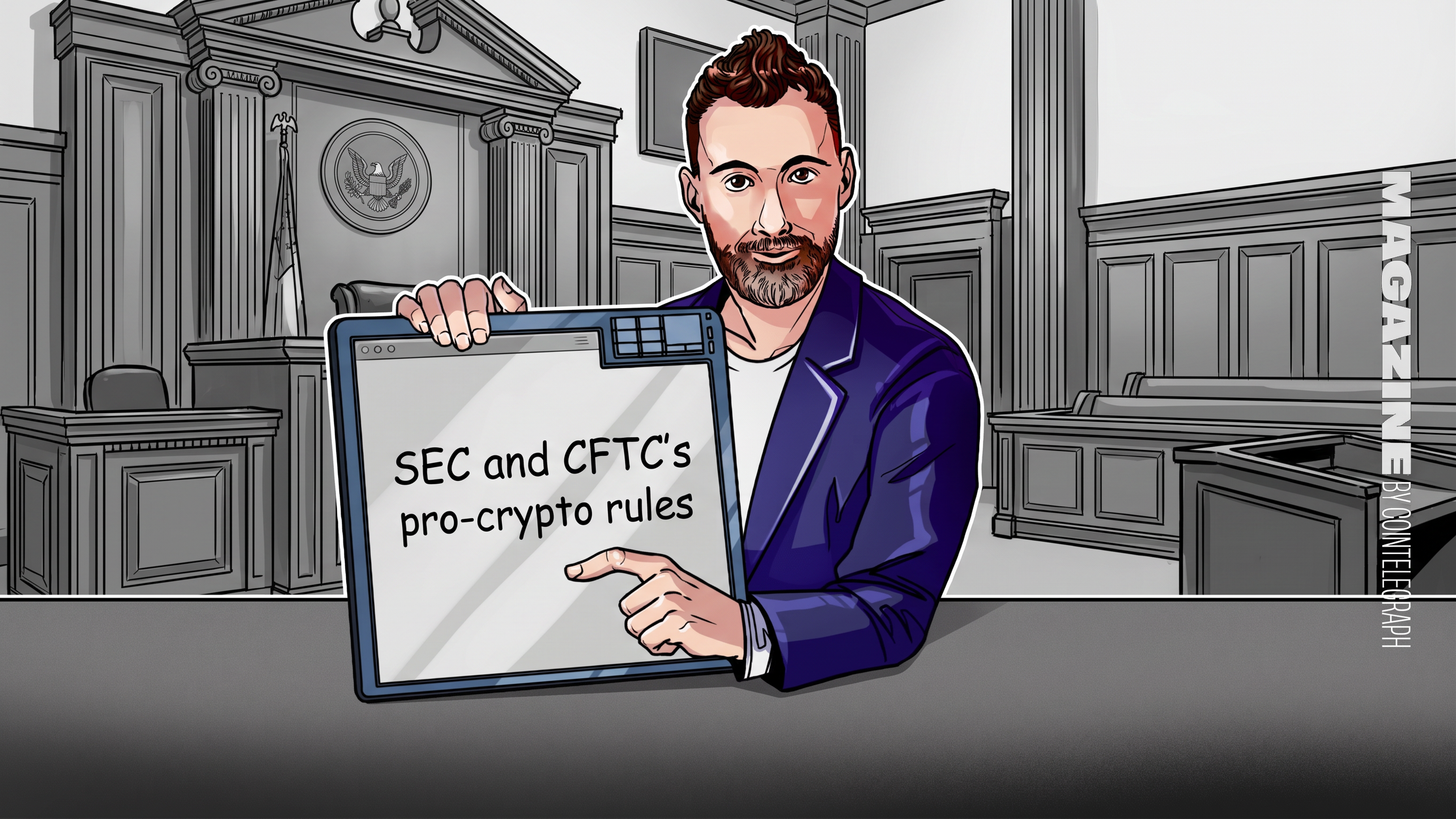
Can the SEC and CFTC’s pro-crypto rules be overturned? Legal opinion
The SEC and the CFTC have issued a raft of pro-crypto rules recently. But will the rules hold up in court, and can they be easily...

CFTC working to integrate Hyperliquid into US market, says Trump
The CFTC's move to integrate Hyperliquid may signal a shift towards greater regulatory acceptance of innovative crypto platforms i...

US Hoovers up Bitcoin While the World Runs on Its Digital Dollars: Report
Bitcoin Magazine US Hoovers up Bitcoin While the World Runs on Its Digital Dollars: Report America is accumulating bitcoin while e...