New York Bill Seeks Blockchain Integration to Protect Voter Information and Election Integrity
Key Takeaways: Assembly Bill A7716 seeks to investigate how blockchain can protect New York’s voter rolls and election outcomes. The proposal highlights transparency, immutability, and public confidence in democratic pro...
Archive context
Older archive item. Useful for background and entity history, but not a fresh market-moving signal.

Key Takeaways:
- Assembly Bill A7716 seeks to investigate how blockchain can protect New York’s voter rolls and election outcomes.
- The proposal highlights transparency, immutability, and public confidence in democratic processes.
- This is one of the first government attempts by an American state to incorporate blockchain into core electoral infrastructure.
With technology continuing to revolutionize how governments operate, New York is leading the charge in modernizing elections. Introduced by Assemblyman Clyde Vanel is Assembly Bill A7716, legislation that suggests promoting the use of blockchain technology to enhance the state’s electoral process to be more secure, transparent, and reliable.
The bill, which is currently pending in the New York State Assembly, seeks to call for a comprehensive study on the application of blockchain in voter registration, vote counting, and election result verification.
Securing the Vote: New York Bill Seeks to Modernize Election with Blockchain
The Purposes of A7716Rather than hurrying to use blockchain in upcoming elections, the bill suggests a measured approach:
- Investigate how blockchain technology can be integrated into New York’s voting systems.
- Analyze the potential benefits and drawbacks, including security, cost, scalability, and legality.
- Provide a formal report within a year of enactment, providing legislators with actionable data.
The legislation is a reaction to more profound concerns regarding the instability of public trust in election facilities. Foreign tampering, disinformation, aging infrastructure, and nail-biters have all contributed to a climate in which even verified results are disputed.
By recognizing newer technology, A7716 aims to restore trust in voters with election results that cannot be disputed.
Scope and Study ParametersIf passed, the bill would require the New York State Board of Elections to work with technologists and industry experts to assess blockchain’s potential application to several priority areas:
- Voter registration systems: to prevent double voting and unauthorized tampering
- Ballot security: providing a digital, trackable record for each vote
- Result reporting: reducing delays and improving accuracy in outcome transmission
- Voter identity protection: protecting personal data within encrypted records
The ensuing report should include:
- Technical infrastructure requirements
- Security audits and threat analysis
- Implementation schedules and budgets
- Legal and regulatory concerns
- Potential pilot pilots or public tests
Such a report would be a blueprint for future legislative action, deciding whether or not to proceed with the actual rollout of blockchain technologies in election systems.
A Rising Trend in Civic TechnologyThough the idea of blockchain in elections is controversial, governments across the globe are increasingly exploring its use:
- Estonia uses blockchain to make its online government services secure.
- Utah tested blockchain-based elections for overseas foreign military personnel.
- Brazil and South Korea looked at doing similar research projects.
A7716, though, is not aimed at the distant internet voting that raises security red flags with most experts. Instead, it’s aimed at using blockchain to support back-end security in an effort to modernize internal mechanisms, not replace in-person voting.
The Path ForwardThe bill has made it into early stages of legislative review, including possible committee hearings and budgetary review. If the bill passes both the Assembly and Senate and is signed into law by them, the subsequent feasibility study could set the stage for a multi-year implementation plan to computerize New York’s elections.
More News: Crypto’s $134 Million Investment in the 2024 Elections Are Shaping US Politics
The post New York Bill Seeks Blockchain Integration to Protect Voter Information and Election Integrity appeared first on CryptoNinjas.
Why this matters
This blockchain story adds another data point to the current market tape and is useful when read alongside nearby source coverage.
Original source
Read on CryptoNinjasRelated market context

Taiwan Blocks Coinbase and Kalshi Over Bets on Its November Elections
Taiwan has blocked the websites of Coinbase and Kalshi under a court order sought by police investigating election betting, six we...

Binance.US seeks up to $100 million in funding at $1 billion valuation amid US expansion push
Binance.US seeks to raise up to $100M at a $1B valuation as it moves to regain US market share and expand its crypto trading servi...
Binance’s bStocks Lead Tokenized Stocks After Crossing $1 Billion
Binance’s tokenized U.S. equities product, bStocks, now holds more than $1 billion in assets under management, the exchange announ...
Binance Claims Fastest $1 Billion Sprint in bStocks With $6 Billion in Share Conversions
Binance has reported that its bStocks product crossed $1 billion in assets faster than any competing tokenised equity offering. Un...

Institutions managing €800 billion ask what crypto tokens actually earn
Brendan Ma, head of investment strategy at the Arbitrum Foundation, said he met with representatives of institutions managing abou...
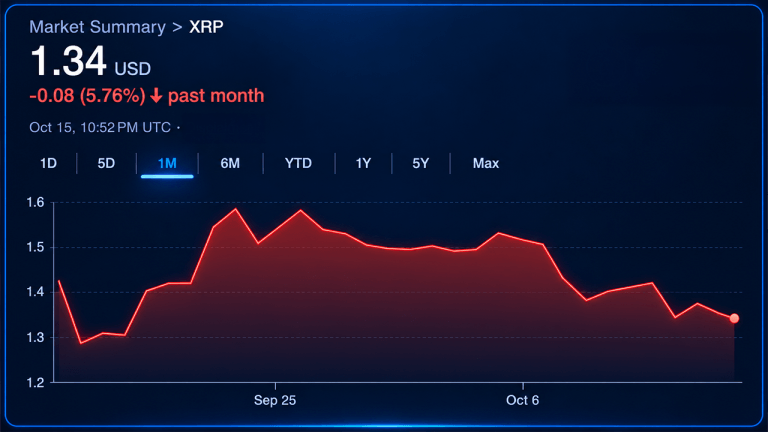
XRP Whales Move 1.67 Billion Tokens to Binance as Price Slips
Large XRP holders have transferred 1.669 billion XRP to Binance over the past 30 days, pushing the exchange’s whale inflow metric...