Nigerian Crypto and Blockchain Advocacy Group: Freezing or Closure of Bank Accounts Not Supported by Law
The Blockchain Industry Coordinating Committee of Nigeria (BICCON), has said it is not lawful for Nigerian financial institutions to arbitrarily freeze or close bank accounts belonging to individuals or entities accused...
Archive context
Older archive item. Useful for background and entity history, but not a fresh market-moving signal.

The Blockchain Industry Coordinating Committee of Nigeria (BICCON), has said it is not lawful for Nigerian financial institutions to arbitrarily freeze or close bank accounts belonging to individuals or entities accused of trading cryptocurrency.
Affected Crypto Entities Told to Seek Legal AdviceIn a public statement issued on November 22, BICCON — a coalition of Nigeria’s foremost cryptocurrency and blockchain advocacy groups — advises affected individuals and companies to seek legal advice and redress in courts where appropriate. The body also insists that no Nigerian organization, public or private, should be above the law.
As previously reported by Bitcoin.com News, Nigerian financial institutions have been closing or freezing bank accounts of entities suspected of trading cryptocurrency since November 3. The institutions have claimed they are doing this in order to comply with the Central Bank of Nigeria (CBN) directive that was initially issued on February 5.
However, despite these claims by banks, the blockchain committee insists it is questionable for the financial institutions to block or freeze accounts simply because the account holders are cryptocurrency traders. BICCON’s statement explains:
We consider questionable the actions of deposit money banks (DMBs), nonbank financial institutions (NBFIs), and other financial institutions (OFIs) blocking, closing, and/or freezing the bank accounts of individuals and entities by the mere fact that these individuals and entities are involved in cryptocurrency trading or cryptocurrency-related transactions without more. It is not supported under the current laws of the Federal Republic of Nigeria.
The statement also reiterates BICCON’s stance on a CBN directive that was initially used by financial institutions to justify the exclusion of crypto entities from the banking system.
Only Nigerian Legislature Can Criminalize Crypto TradingMeanwhile, in the same statement, BICCON also uses the renewed spotlight on the Nigerian cryptocurrency industry to restate its belief that the CBN is encroaching on the law-making powers of the legislature. BICCON states:
“Since 5 February 2021, a number of persons and entities accounts have been closed … Though as the regulator, the CBN has the statutory authority to delimit banking operations, but [the] ordering [of] banks and other financial institutions to freeze [or close] accounts suspected to be in use for cryptocurrency may not be supported by law. This is because there is currently no legislation by the National Assembly criminalizing or illegalizing trade in cryptocurrency in Nigeria.”
The statement insists the failure to review the CBN’s circular “will set a dangerous precedent in the country.” The statement also suggests that while BICCON is against the “undue discrimination” against Nigeria’s blockchain & crypto industry, the body is willing to collaborate with concerned regulators, law enforcement agencies, and the government.
What do you think of BICCON’s public statement? Tell us what you think in the comments section below.
Why this matters
This blockchain story adds another data point to the current market tape and is useful when read alongside nearby source coverage.
Original source
Read on Bitcoin NewsRelated market context

Philippine court freezes 25 crypto wallets and 86 bank accounts in flood control probe
The freeze highlights the growing scrutiny on digital assets in corruption cases, potentially reshaping regulatory approaches to c...

Central Bank of Iran plans to block rial accounts tied to crypto exchanges
Iran's crypto restrictions could stifle local exchanges, complicate rial-to-crypto conversions, and heighten economic isolation am...

American Bankers Sue OCC Over Crypto Bank Charters, Challenging Coinbase and Circle
The lawsuit, filed October 2 in the U.S. District Court for the District of Columbia, puts the growing role of crypto firms within...
South Africa’s Absa Becomes First Bank on the Continent to Custody Bitcoin: Report
Bitcoin Magazine South Africa’s Absa Becomes First Bank on the Continent to Custody Bitcoin: Report South African bank Absa has be...

Coinbase completes Deribit switch, ending International Exchange trading
Coinbase completed the migration of Coinbase International Exchange to Deribit on Oct. 1, ending trading on its former internation...
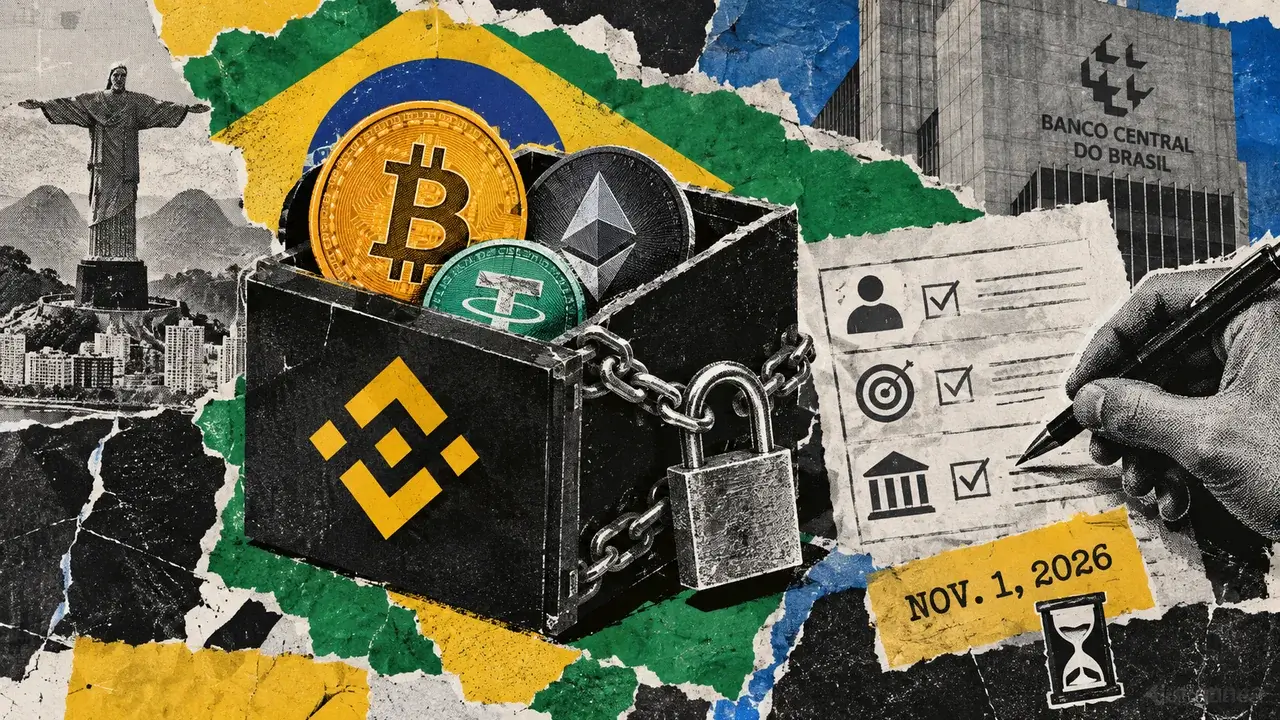
Binance will hold some Brazil crypto deposits until users explain where the money came from
Binance will require Brazilian users to provide additional information for cross-border crypto transfers starting Nov. 1. The exch...