Nintendo’s Console Bans Show Why Blockchain Gaming Offers Better Player Protection
Reddit user dmanthey purchased four used Switch 1 games from Facebook Marketplace, a routine transaction that happens thousands of times daily across gaming communities. He inserted the cartridges into his brand-new Swit...
Archive context
Older archive item. Useful for background and entity history, but not a fresh market-moving signal.

Reddit user dmanthey purchased four used Switch 1 games from Facebook Marketplace, a routine transaction that happens thousands of times daily across gaming communities. He inserted the cartridges into his brand-new Switch 2, downloaded the necessary game updates overnight, and went to sleep expecting to enjoy his purchases the next day.
Instead, he woke up to error code 0x1F727C—2124-4025, a message that effectively bricked his console’s online functionality. The error blocks access to the eShop, prevents downloading purchased games, and cuts off all online multiplayer services. For a console that costs nearly $500, it’s a devastating blow that leaves players unable to use core features they paid for.
Why Nintendo Switch 2 Has A Used Games BanThe issue here is Nintendo’s approach to anti-piracy. Each game cartridge contains a unique cryptographic key that Nintendo’s servers monitor. When the company detects the same key being used simultaneously on multiple consoles, it assumes piracy and automatically bans all systems involved—no questions asked, no investigation into legitimacy.
The problem occurs when previous cartridge owners had “dumped” the game data to MIG flashcards or other backup devices before selling their physical copies. This dumping process, often done for personal backup purposes or to use with flashcart devices, creates identical copies with the same unique identifier. When the new owner innocently plays their legitimately purchased cartridge, Nintendo’s system sees duplicate usage and triggers mass bans.
The ban doesn’t completely “brick” consoles, as offline single-player games still function but players lose access to digital purchases, online multiplayer, system updates, and the eShop entirely. Fortunately, Nintendo support has been relatively helpful in reversing these false positive bans, but only after users provide extensive proof of legitimate purchase. Players must submit photos of their cartridges, screenshots of marketplace listings, chat logs with sellers, and sometimes additional documentation to prove their innocence. The process can take days or weeks, during which their expensive hardware remains effectively non-functional.
While dmanthey and others have successfully appealed their bans, the incident exposes a fundamental flaw in centralized gaming: players can lose access to their investments based entirely on the unknown actions of previous owners they’ve never met. It’s a system where buyers must prove their innocence after being presumed guilty by an algorithm.
How Blockchain Gaming Prevents ThisThe blockchain gaming sector operates on fundamentally different principles that would make a similar event to Nintendo’s current problem highly unlikely or impossible. Major games are already proving these concepts work in practice.
True Digital Ownership with Cryptographic ProofIn Axie Infinity, players own their creatures as ERC-721 NFTs with unique identifiers permanently recorded on Ethereum. When players trade Axies on secondary markets, ownership transfers are cryptographically verified and immutable. Unlike Nintendo’s system that can misidentify legitimate owners, Axie’s blockchain records provide absolute proof of ownership that cannot be disputed or algorithmically “misunderstood.”
Source: Axie Infinity
The Sandbox takes this further, with players owning virtual land as NFTs worth millions of dollars. Plot 6,397 sold for $4.3 million in 2021, and that ownership is mathematically verifiable on the blockchain. No centralized authority can revoke access to land you provably own, eliminating the false positive problem that plagues Nintendo’s system.
Gods Unchained demonstrates this with trading cards, players own cards as NFTs and can trade them on external marketplaces like OpenSea without the game developer’s permission. The $12.8 million in trading volume shows real economic value that survives independently of the platform.
Decentralized Governance in ActionDecentraland operates through a DAO where $MANA token holders vote on policy changes and major decisions require community approval. When Decentraland proposed content policies and changs, for example, the community can vote them down, proving that players, and not corporate executives, control the platform.
Gala Games has distributed governance across 26,000+ node operators who earn GALA tokens for securing the network. These node operators vote on game launches, economic parameters, and platform policies. The decentralized structure means no single entity can implement arbitrary restrictions.
The Bottom LineNintendo’s ban controversy demonstrates the fatal flaw in centralized gaming: algorithmic false positives can destroy hundreds of dollars in hardware value overnight. Blockchain gaming solves this through cryptographic ownership proofs, community governance, and multi-chain resilience that makes arbitrary restrictions structurally impossible.
Why this matters
This blockchain story adds another data point to the current market tape and is useful when read alongside nearby source coverage.
Original source
Read on Brave New CoinRelated market context

Ethereum’s past outflow charts can change when more exchange wallets are identified
Coin Metrics has rebuilt Ethereum's historical Standard Flow Metrics, raising a timing problem for tests that treat exchange outfl...
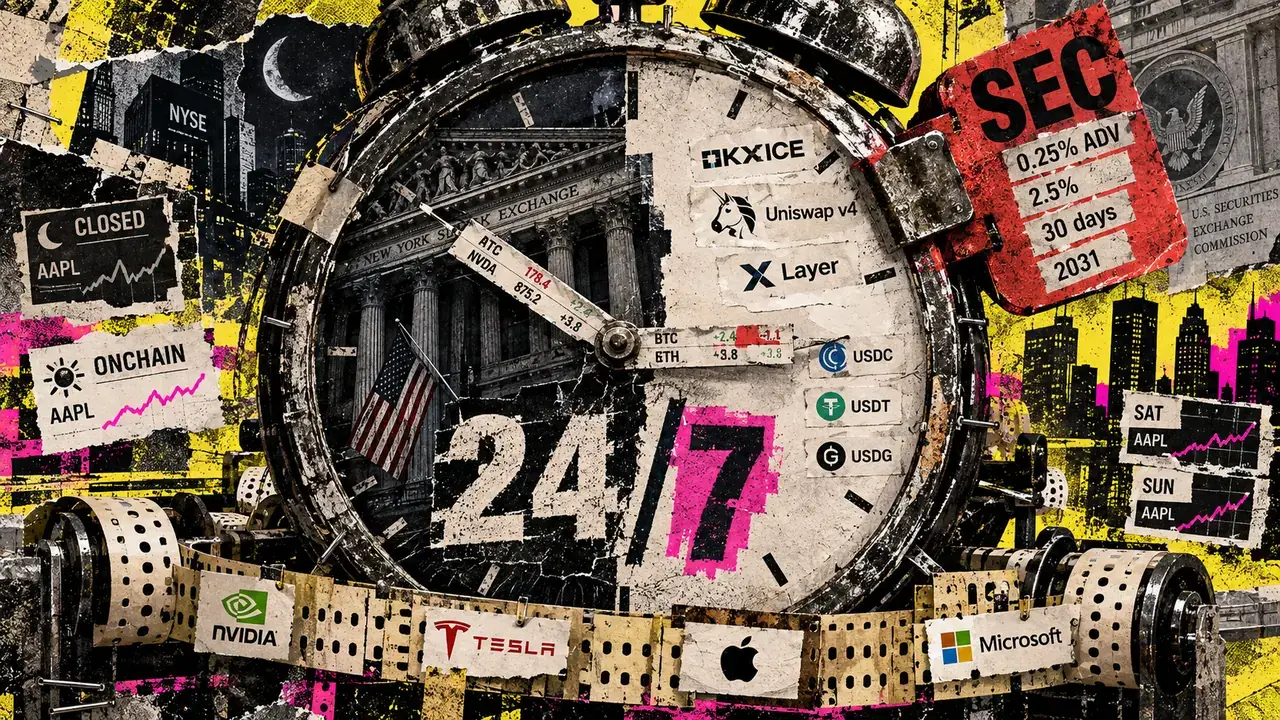
NYSE owner and OKX plan 24/7 tokenized stock trading using Uniswap
Intercontinental Exchange and OKX are preparing an always-open market where tokenized US stocks could keep repricing after Wall St...
SEC Proposes New Crypto Custody Rules to Unlock Multi-Trillion Dollar Market Access
Key Takeaways: The SEC put forth a new plan for crypto asset custody of advisers and funds. More flexibility may be warranted unde...
Aave Founder Warns EU MiCA Review Could Restrict DeFi Access
Aave founder Stani Kulechov is criticizing proposals from European regulators that could extend restrictions on stablecoin yield a...
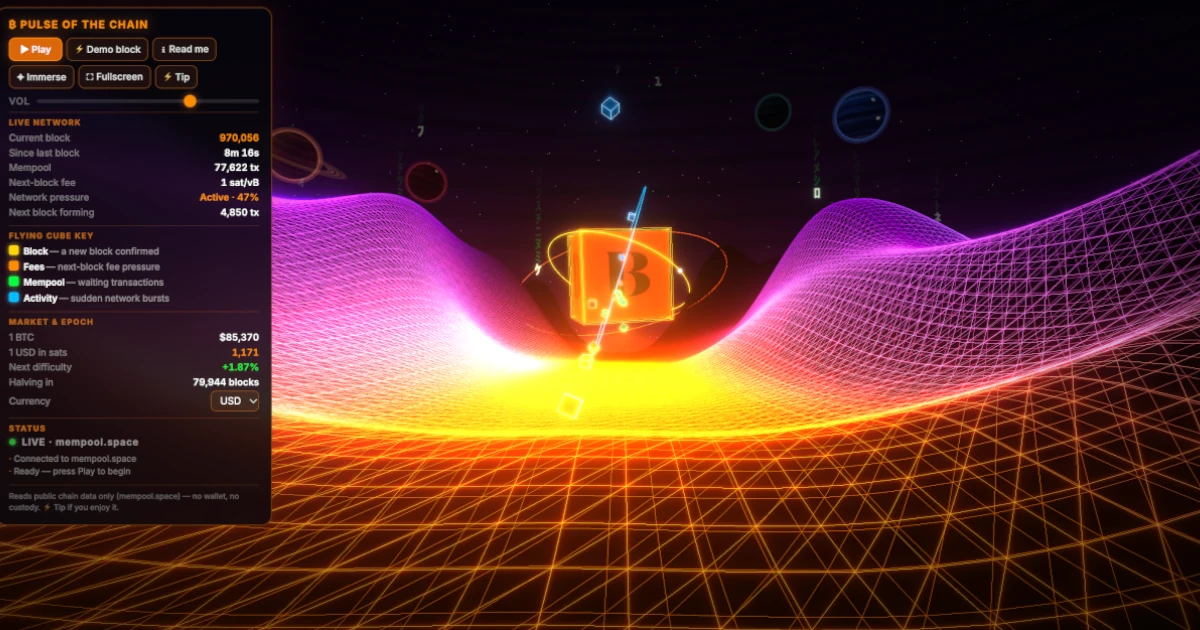
Top Bitcoin Blockchain Visualizers For Your Home And Office
Bitcoin Magazine Top Bitcoin Blockchain Visualizers For Your Home And Office Bitcoin is often talked about in very abstract terms:...
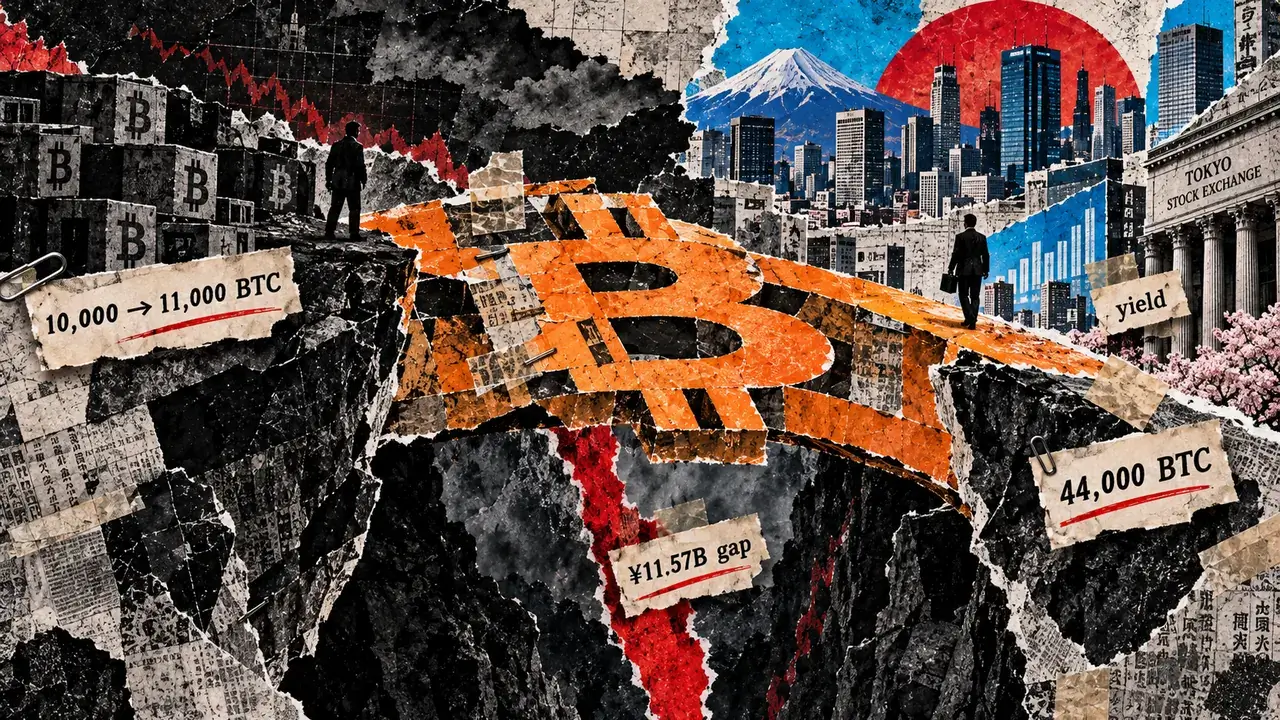
Metaplanet sold 10,000 Bitcoin in a credit-rating bid, only to buy back 11,000 BTC at a higher price per coin
Metaplanet sold 10,000 Bitcoin and later bought back 11,000 BTC to strengthen its credit profile and expand beyond accumulation du...