OK, But Is It Really DeFi?
DeFi Friday is Decrypt's DeFi email newsletter. (art: Grant Kempster) A key conversation in crypto these days revolves around whether a crypto thing is really DeFi or not. Blame it on the rise of "DeFi" (decentralized fi...
Archive context
Older archive item. Useful for background and entity history, but not a fresh market-moving signal.

DeFi Friday is Decrypt's DeFi email newsletter. (art: Grant Kempster)
A key conversation in crypto these days revolves around whether a crypto thing is really DeFi or not. Blame it on the rise of "DeFi" (decentralized finance) as a blanket term for a wide range of projects, protocols, tokens, or tools that in many cases aren't so decentralized.
Some people say that Bitcoin, by definition, is DeFi. The Bitcoin network has the most nodes of any crypto network operating around the world and, for all intents and purposes, it is money. These two facts suggest that Bitcoin is indeed a form of DeFi. It’s decentralized finance.
But the prevailing narrative for a while now has been that Bitcoin's use cases are limited to holding or spending, and that the Bitcoin blockchain can't do much beyond recording Bitcoin transactions. There aren’t really decentralized exchanges built on top of Bitcoin (other than Bisq and whatever Jack Dorsey is looking to build), nor are there exotic derivative products (unless you count 1 satoshi, the smallest unit of Bitcoin, as a derivative). The way many crypto purists see it: There's Bitcoin, and then there's Ethereum and the DeFi world built on it, and never the twain shall meet.
I probably fall more into the latter camp, but perhaps a redefining of terms is what we need. Bitcoin is the father of this whole industry and a crucial asset, but I’d argue that DeFi should be taken to refer to the rails along which such an asset can travel. DeFi is less about the tokens themselves, and more about what these tokens can do.
An example of what tokens can do in DeFi would be any kind of wrapped Bitcoin asset. Take for example WBTC, the largest wrapped Bitcoin on Ethereum in terms of market share.
Market share of different kinds of wrapped Bitcoin on Ethereum. (Dune Analytics)There are other versions for different networks, but all you really need to know is that these tokens track the price of Bitcoin and are built with a different token standard. This means you can bring a synthetic Bitcoin asset over to Binance Smart Chain or Tron, even though the network and the asset are technically not compatible.
The point of WBTC isn’t its price—it’s pegged to the price of Bitcoin. The point of it is the way it activates Bitcoin. Instead of holding a pet rock and waiting for “number go up,” you can now do things with it (while also waiting for the number to go up).
You can add it to Uniswap and earn fees for providing liquidity. You can stick it in Aave and earn interest on that pet rock. Or you can even borrow against WBTC on Compound to tap some quick liquidity. The list goes on and on. (You can also do a lot of these things through companies like Coinbase, BlockFi, and Celsius, but these services come with a key drawback: centralization. Adding your Bitcoin to BlockFi, for example, means that BlockFi is in total control of those funds.)
On the other hand, Stacks founder Muneeb Ali points to wrapped Bitcoin as a form of unnecessary workaround. "Instead of trying to bring Bitcoin in a wrapped fashion to some smart contract chain," he told Decrypt in an interview at the Messari Mainnet conference in New York, "why don't you bring the smart contract functionality directly to Bitcoin?" Stacks, which Ali calls a "layer 1.5," builds smart contracts atop the Bitcoin blockchain—something Ali knows many people in crypto think Bitcoin cannot do. When people see Stacks in action, they have an "aha moment," Ali says: "They're like, 'Oh wow, smart contracts are there for Bitcoin.'"
Of course, there are risks to DeFi. Hacks and rug pulls are common in the space, and one might argue that most user interfaces are still too confusing to be considered safe for most people. So, take all of this with a grain of salt.
This is in part why I think of DeFi in terms of a framework or ecosystem, rather than a variety of strictly defined DeFi tokens. Another example that makes this all clear is non-fungible tokens, or NFTs.
NFTs, as popular culture has come to understand them, are unique blockchain-based tokens that prove ownership of digital items, such as music, art, or even concert tickets. They, like Bitcoin, are as valuable as the next individual is willing to pay for them—just like your pet rocks.
Imagine you have a $1 million NFT. Does that actually make you a millionaire? Unless you sell that NFT, then no, not really. Without DeFi, all you have is a cool jpeg image—at least, one you think is cool.
But with a wave of the magic DeFi wand, this rock can quickly become an active asset. Thanks to services like NFTfi and C.R.E.A.M Finance, you can now borrow against your NFT and get access to cash, or lend it out to a status-seeker for liquidity.
In July, PleasrDAO, an investment collective that’s bought up a ton of multimillion-dollar NFTs, took out a loan for $3.5 million against four different NFTs. On NFTfi, you can hop on the other side of the trade and lend out your NFT and earn yield on your loan. (NFTfi is a peer-to-peer platform, so loan offers are contingent on whether both the lender and borrower agree to terms.)
NFTfi lending service dashboard for a Fidenza NFT. (Source: NFTfi)So not all crypto is DeFi, but pretty much everything crypto-related can be used within the DeFi world. And as this sector grows, the boundaries of how assets can be put to work will continue to expand. That might make "Bitcoin DeFi" believers like Muneeb Ali look prescient.
DeFi Friday is Decrypt's Friday email newsletter, led each week by this essay. Subscribers to the email get to read the essay first, before it goes on our site. Subscribe here.
Why this matters
This blockchain story adds another data point to the current market tape and is useful when read alongside nearby source coverage.
Original source
Read on DecryptRelated market context

A Crypto Project Hasn’t Delivered Your Tokens. What Can You Do?
Law and Ledger is a news segment focusing on crypto legal news, brought to you by Kelman Law – A law firm focused on digital asset...

Once a $2 billion Ethereum layer-2, Blast is shutting down after assets plunge 98%
Once home to more than $2 billion in crypto assets, Blast is shutting down as activity fades, costs rise, and bigger platforms lik...
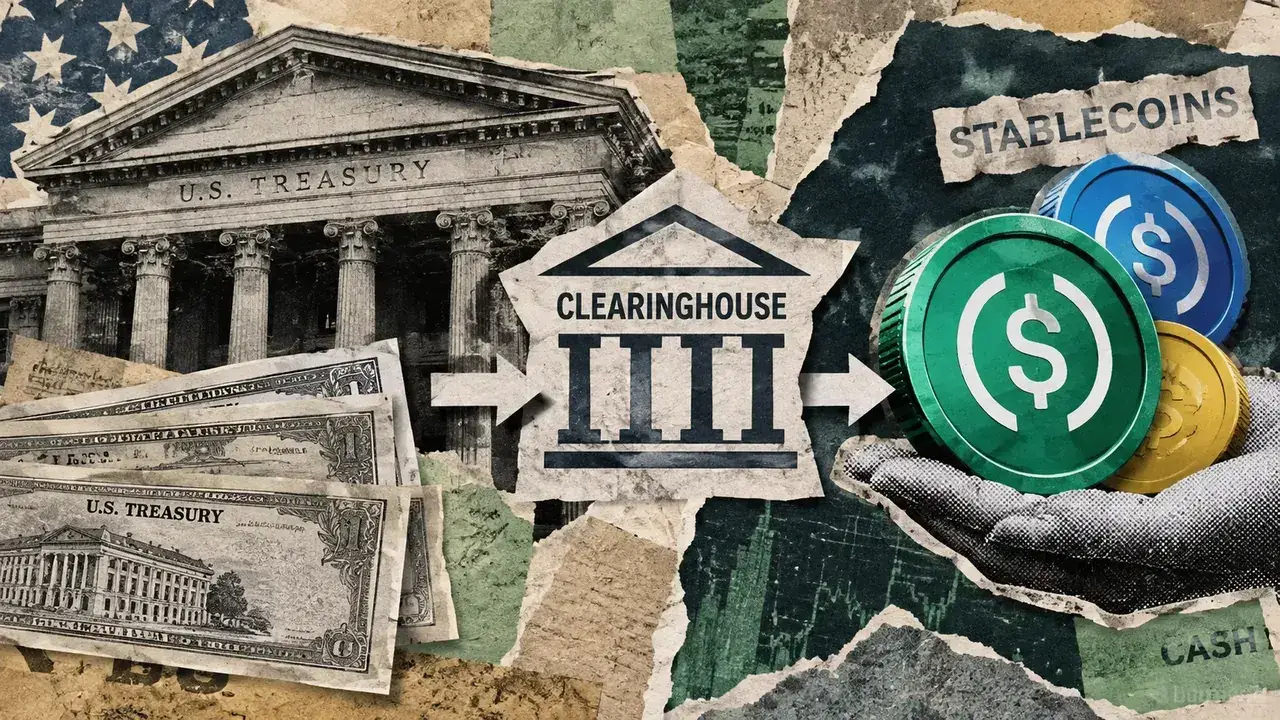
New Treasury rules could change how stablecoin issuers get your dollars back
US government debt is one of the easiest assets in the world to borrow against, which lets financial companies get cash without gi...
Ethereum Layer 2 Blast Is Shutting Down, Saying Costs Now Exceed What the Chain Earns
Blast, the Ethereum layer 2 network created by Blur founder Tieshun “Pacman” Roquerre, is shutting down, its team announced on X o...

Following the Bitget Hack: BitOK Traces 87.8 BTC as Stolen Funds Reach Mixers
Research and reporting by Alexander Manev, BitOK. Reporting and adaptation by Brave New Coin. Investigators following the Bitget h...

Ethereum’s past outflow charts can change when more exchange wallets are identified
Coin Metrics has rebuilt Ethereum's historical Standard Flow Metrics, raising a timing problem for tests that treat exchange outfl...