Phantom Wallet Surpasses $1B Trading Volume, Reinventing How DeFi Users Interact
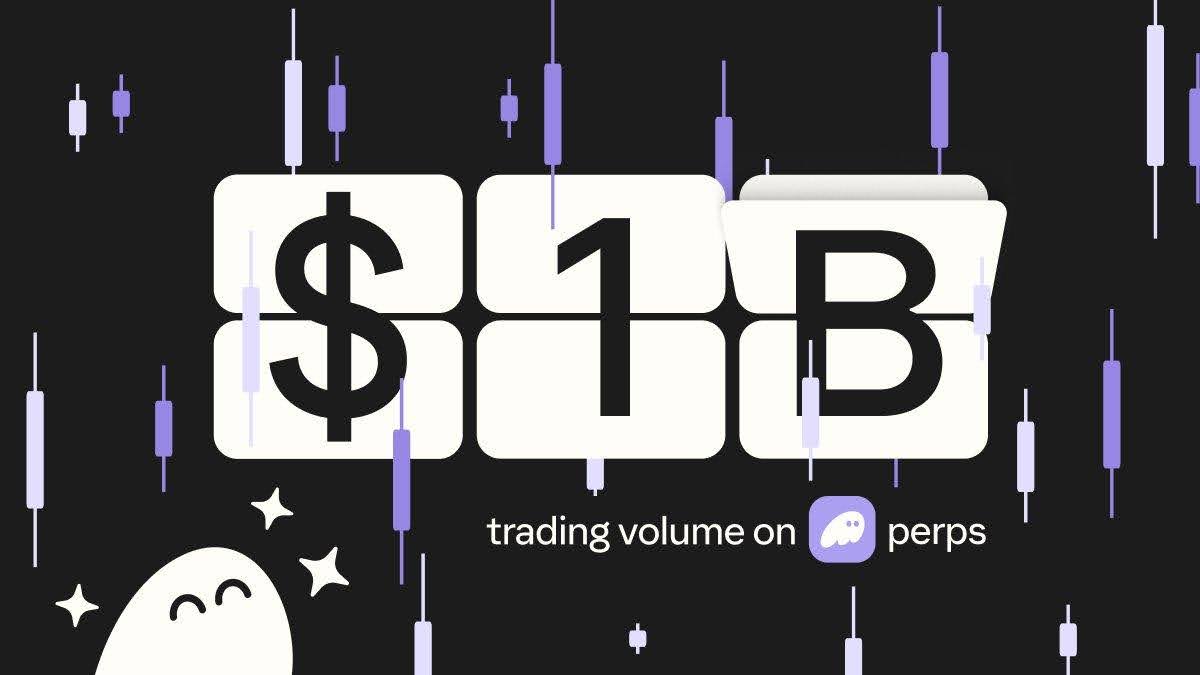
Key Takeaways: Phantom Wallet’s perpetuals trading has surpassed $1 billion in cumulative volume, driven by its Hyperliquid integration. The in-wallet trading experience is redefining DeFi UX, making Phantom a central pl...
Archive context
Older archive item. Useful for background and entity history, but not a fresh market-moving signal.
Key Takeaways:
- Phantom Wallet’s perpetuals trading has surpassed $1 billion in cumulative volume, driven by its Hyperliquid integration.
- The in-wallet trading experience is redefining DeFi UX, making Phantom a central player in the Solana ecosystem.
- Hyperliquid continues to gain momentum as a preferred decentralized perpetuals protocol for high-frequency traders.
Phantom Wallet’s recent milestone in perpetuals trading volume marks more than just a number; it signals a deeper change in how users engage with DeFi, blending simplicity with serious financial infrastructure.
Phantom Perps Surpasses $1 Billion in Trading VolumePhantom Wallet has officially entered a new league of decentralized finance products after its perpetual futures feature, Phantom Perps, hit $1 billion in total trading volume. This growth is tied closely to its integration with Hyperliquid, a rising star in the decentralized perpetuals space.
The significance of this achievement lies in the trend it represents: users are increasingly turning to wallet-native trading tools that offer speed, security, and ease of access. Rather than jumping between dApps or centralized exchanges, users can now engage in leveraged trading directly inside their wallet interface.
This shift not only streamlines the trading experience but also reflects growing confidence in decentralized wallet ecosystems as complete financial hubs.
Read More: Phantom Wallet Faces $3.1M Lawsuit After $500K Theft Sparks Crypto Security Concerns
Hyperliquid Powers Phantom’s DeFi Trading SurgeA big part of Phantom’s success in the perpetuals space is its seamless integration with Hyperliquid, a decentralized exchange built for perpetual futures. Hyperliquid has seen consistent growth in on-chain activity and fee generation, with reports showing it pulled in over $1.7 million in daily trading fees in recent weeks.
Contrary to traditional DeFi DEXs most of the time relying on pooled liquidity and manual slippage settings, Hyperliquid has been architectured to provide ultra-low latency and competitive spreads, based on a near-CEX experience while remaining fully decentralized.
By integrating this technology into the Phantom wallet, users now have rapid and easy access to trading abilities without forgoing control or visibility.
Comparing Phantom to Other DeFi PlatformsWhile Pump.fun continues to dominate in the memecoin space on Solana, frequently topping the charts in weekly protocol revenue; Phantom is carving out a different niche. Instead of speculative token launches, it focuses on infrastructure-based value creation, such as long-term trading tools and integrations.
Read More: Presale Rumor $1B: May Pump.fun’s Mysterious Token Shake Up the Solana Meme Coin Space?
Although no verified data confirms that Phantom has surpassed Pump.fun in revenue, the two serve very different user needs. One thrives on viral coin launches, while the other builds tools for professional-grade DeFi participation.
Significantly, the development of Phantom highlights how infrastructure can develop a sustainable participation whereby the users used it not because it was new but rather because it would be reliable and functional.
Phantom’s Broader Strategy: All-in-One DeFi AccessPhantom, next to perpetuals, is slowly starting to introduce a wide range of DeFi services and customization, including staking, bridging, NFT management, among others. It will already support several blockchains such as Solana, Ethereum and Polygon so that participants can control their cross-chain assets without any need to leave the platform.
That places Phantom as a major contender in the wallet wars, not just matching MetaMask and Rabby but newer wallets that are experimenting with embedded finance. Especially as a mobile-first UX really appeals to an obviously increasingly mobile user base who want to be able to do their on-chain dicking around back there on the train.
While wallets increasingly have become a user-facing dApp in their own right, it wouldn’t be surprising if Phantom’s approach of incorporating trading infrastructure catches on.
Now that it has more than $1 billion in trading volume, Phantom is not just a wallet, it’s on track to become a launchpad for the next generation of decentralized finance.
The post Phantom Wallet Surpasses $1B Trading Volume, Reinventing How DeFi Users Interact appeared first on CryptoNinjas.
Why this matters
This blockchain story adds another data point to the current market tape and is useful when read alongside nearby source coverage.
Original source
Read on CryptoNinjasRelated market context

The 7 Best USDC on Solana to XMR Swap Platforms in 2026
Swapping USDC on Solana for Monero (XMR) offers a fast, low-cost route into a privacy-focused asset. Leading platforms in 2026 pro...
Ripple opens Wall Street’s door to Hyperliquid’s $59 billion trading market
Institutions trade swaps referencing more than 100 traditional financial markets around the clock, with Ripple Prime as the princi...

Strategy passes JPMorgan in trading volume, ranks as 19th most-traded US stock
MSTR's rise in trading volume highlights the growing influence of crypto-linked stocks, offering high volatility and liquidity for...

Ledger wallets compromised, Solana plans upgrade, US CPI rises
Rising inflation and security breaches may erode trust in crypto markets, while Solana's upgrade could bolster its competitive edg...
Binance’s bStocks Lead Tokenized Stocks After Crossing $1 Billion
Binance’s tokenized U.S. equities product, bStocks, now holds more than $1 billion in assets under management, the exchange announ...

Ripple Prime Opens 24/7 Swaps on Stocks, Metals and Currencies, With Virtu Already Trading
Ripple Prime, Ripple’s institutional prime brokerage, now lets clients hold positions on stocks, indices, commodities and currenci...