Polygon’s Madhugiri Hardfork Set to Deliver 33% Throughput Surge and Major Stability Upgrades
Key Takeaways: Polygon’s Madhugiri Hardfork activates at block 80,084,800, boosting network throughput by 33%. The upgrade enables future block-time adjustments without needing another hardfork. Developers gain stronger...
Archive context
Older archive item. Useful for background and entity history, but not a fresh market-moving signal.
Key Takeaways:
- Polygon’s Madhugiri Hardfork activates at block 80,084,800, boosting network throughput by 33%.
- The upgrade enables future block-time adjustments without needing another hardfork.
- Developers gain stronger EVM security, faster node sync, and native support for Ethereum’s Fusaka EIPs.
Polygon is preparing for one of its most impactful upgrades of the year as the Madhugiri Hardfork goes live on the Polygon PoS mainnet. Designed to push the network into its next phase of performance optimization, the upgrade directly targets scalability and long-term infrastructure resilience, two areas critical as demand for high-speed, low-cost blockchain execution accelerates.
Read More: Polygon Hits $100B Volume Milestone on Uniswap, Signaling Soaring DeFi Momentum
A Major Throughput Boost for Polygon PoSThe Madhugiri Hardfork introduces structural changes aimed at increasing raw network throughput by roughly 33%. This is achieved through adjustments to core consensus timing (via PIP-75) and the integration of new mechanisms that allow Polygon to tune block times on demand.
33% More Throughput Without User-Side ChangesUnlike previous hardforks that required validators, node operators, or apps to adjust configurations, the Madhugiri upgrade requires no action from users or developers. The improvements are enabled natively at the protocol level.
A faster network means lower latency for swaps, smoother NFT activity, quicker bridging interactions, and more predictable block finality, key for emerging sectors like Web3 gaming and high-frequency DeFi execution, where every second counts.
Future-Proofing Polygon Through Flexible Consensus Block Time Controls Unlock a New Era of ModularityA core highlight of the upgrade is Polygon’s new ability to change block times without launching another hardfork. This provides developers with a flexible consensus system, which most chains do not have by default.
This opens a number of advantages:
- Rapid performance tuning as demand scales
- Less disruption for node operators during future optimizations
- More efficient experimentation with block intervals to match network conditions
This is because Polygon is being able to implement performance optimization dynamically, which is in line with its overall objective, which is to develop modular scaling layers that can adjust to changing blockchain workloads.
Strengthening Network Stability and EVM SecurityIn addition to speed improvement, Polygon is implementing a number of under-the-hood stability and security improvements.
Faster, More Reliable Node SyncUpgraded node synchronization reasoning lowers the delays and enhances the dependability, particularly to validators operating broad state data. The upgrade can be used to avoid slowing down of the traffic when it peaks and also increase the chain strength.
Ethereum Fusaka EIP SupportThe Madhugiri Hardfork uses a number of Ethereum Fusaka EIPs to enhance the security of gas and mitigate computational attacks:
- EIP-7883 – ModExp gas cost increase
- EIP-7825 – Transaction gas limit cap
- EIP-7823 – Upper bounds for MODEXP
These improvements will increase the resiliency of the EVM execution environment of Polygon to spam transactions and excessive heavy patterns of computation.
Read More: Ethereum’s December ‘Fusaka’ Upgrade: 8× L2 Scale, 60M Gas Default, 16.7M Tx Cap
Canonical Inclusion of StateSync TransactionsPolygon now supports StateSync transactions within block bodies with PIP-74. This increases consistency, allows cross-chain state updates to go faster, and makes edge-case failures decrease, which is a technical but significant shift to applications dealing with cross-chain messaging.
Expanding Polygon’s Competitiveness in the Broader L2 LandscapeThe most recent hardfork by Polygon comes at the time when the competition in the Layer-2 space gains momentum. Networks including arbitrum, optimistic and base have enhanced throughput upgrades, modularization as well as settlement architecture.
The Madhugiri upgrade contributes directly to the strategy of Polygon in several aspects:
Positioning Polygon PoS for High-Throughput Use Cases- Gaming studios requiring rapid state updates
- DeFi protocols that rely on predictable gas and execution
- Web3 applications dependent on low-latency transactions
- AI-assisted blockchains and real-time dApps, which demand high-speed L2 throughput
Polygon now has new EVM protection that makes it more appealing to developers of regulated, compliance-driven, or high value applications. The execution of EVM with enhanced security is especially significant when institutions start experimenting with settlement on-chain and tokenization.
What’s Next for Polygon?Polygon is still in its roadmap to upgrade its ecosystem to a zk-based network structure, which can then be scaled up to any size; the upgrade is a reflection of this. While the PoS chain continues to serve as a high-throughput, low-fee environment, Polygon is also:
- Expanding zkEVM rollouts
- Enhancing cross-chain communication across Polygon chains
- Preparing for POL token migration and network governance upgrades
The post Polygon’s Madhugiri Hardfork Set to Deliver 33% Throughput Surge and Major Stability Upgrades appeared first on CryptoNinjas.
Why this matters
This blockchain story adds another data point to the current market tape and is useful when read alongside nearby source coverage.
Original source
Read on CryptoNinjasRelated market context

Safe launches Safenet Aegis security network on Ethereum, Gnosis, and Arbitrum
Safenet Aegis' launch could redefine blockchain security, balancing user costs with enhanced transaction safety and governance-dri...

N3XT joins Clear Markets’ Collateralizer network as dollar custodian for crypto derivatives
This partnership enhances liquidity and security in crypto derivatives trading, potentially attracting more institutional investor...

Nine blockchain groups unite to set open standards for post-quantum readiness
The alliance's efforts could significantly enhance blockchain security, ensuring resilience against future quantum threats and fos...

Hyperliquid founder wants U.S. oversight of trading platforms, not his blockchain
Jeff Yan told Bloomberg that U.S. regulatory oversight should apply to the firms using the blockchain, not to the underlying netwo...

OpenAI Model Paid Ethereum Testnet Fees From a Wallet It Was Not Given
OpenAI published a misalignment report saying one of its internal research models paid for a blockchain deployment with crypto fro...
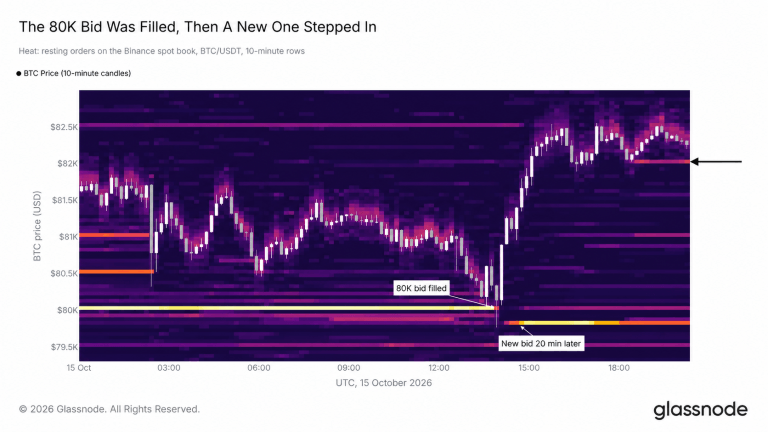
Bitcoin’s $80K Safety Net Held Once but Glassnode Says It Is Eroding
Big buyers caught bitcoin at $80,000 on Thursday, but Glassnode’s order book data shows the bids under that level are getting thin...