Polymath And CineCity Explore Regulated Tokenized Film Investment Platform
TL;DR Polymath and Chicago-based CineCity Studios are exploring a platform for financing independent film through regulated digital securities. Polymath would provide issuance, investor onboarding, compliance and lifecyc...
Watchlist
Published in the last two hours. A tracked entity is involved.

- Polymath and Chicago-based CineCity Studios are exploring a platform for financing independent film through regulated digital securities.
- Polymath would provide issuance, investor onboarding, compliance and lifecycle infrastructure, while CineCity contributes production-industry access.
- The platform is being explored; it is not yet a launched investment marketplace.
Real-world asset tokenization is moving into a category that rarely appears beside Treasury bills and private credit: film production.
Polymath and CineCity Studios announced on October 1 that they will explore a tokenized film-investment platform designed to connect independent productions with investors through regulated digital securities.
The idea attacks a genuine financing problem. Independent films often rely on bespoke private deals, a small network of backers and complicated legal structures that make participation difficult to broaden.
Tokenization could make the ownership layer easier to administerUnder the proposed model, Polymath would provide the technical infrastructure for issuing digital securities, onboarding investors, managing compliance workflows and maintaining investor records over the life of an investment.
CineCity would bring the production side. Its Chicago campus has hosted work connected to major studios and entertainment companies, giving the project a route into an industry where financing is often fragmented.
The blockchain component does not magically make film investment liquid or low risk. A token representing a regulated security still sits behind real legal rights, project economics and transfer restrictions.
What tokenization can potentially improve is administration: who owns what, who is allowed to buy, how transfers are recorded and how distributions are managed.
That broader infrastructure build is visible in the SEC’s crypto fundraising proposal and its movement toward a clearer digital-asset taxonomy.
The market is expanding beyond obvious financial assetsTokenized Treasuries and money-market products were a natural starting point because they already have standardized cash flows and well-understood legal structures.
Film finance is much less uniform. Returns can depend on production budgets, distribution agreements, box office performance, streaming rights and a long chain of contractual claims.
That complexity is exactly why the Polymath-CineCity experiment is interesting. If regulated tokenization can work for an asset class this bespoke, it broadens the range of markets that might eventually move onto programmable ownership rails.
The same shift toward onchain capital-market plumbing is visible in projects such as 24-hour trading infrastructure and institutional tokenized securities.
The word to keep in mind is “explore”Neither company says the platform is already open to investors.
The announcement describes a collaboration to explore the model. Regulatory structure, product design, project selection and distribution still have to turn that idea into an investable offering.
That status makes the story more credible, not less. Tokenization has no shortage of grand claims. A measured pilot around a difficult real-world financing market may ultimately tell us more about where the technology is useful than another promise to put everything onchain overnight.
—
This article was written by the News Desk and edited by Samuel Rae.
Why this matters
SEC is showing up inside the Regulation theme, so this story is worth tracking for follow-through rather than treating it as a one-off headline.
Original source
Read on NewsBTCRelated market context

OpenWorld Begins Nasdaq Trading As VerifyMe Deal Creates Public Tokenization Company
TL;DR OpenWorld and VerifyMe have completed their business combination, with the combined company trading on Nasdaq under OPNW fro...

Fiserv Puts Stablecoin Banking Platform Live With North Dakota Roughrider Coin
TL;DR Fiserv says its digital-asset platform is now live with financial-institution clients. Bank of North Dakota’s dollar-backed...

Chainlink And Swift Demo Automated Tokenized-Equity Dividends Across Four Blockchains
TL;DR Chainlink built a Swift Hackathon solution that automated a cash-dividend workflow for tokenized equities across four blockc...

China Crypto Future: Solana Co. CEO Joseph Chee on Regulation
Solana Co. CEO Joseph Chee expects China eventually to accommodate more crypto activity under close regulation, a forecast he made...
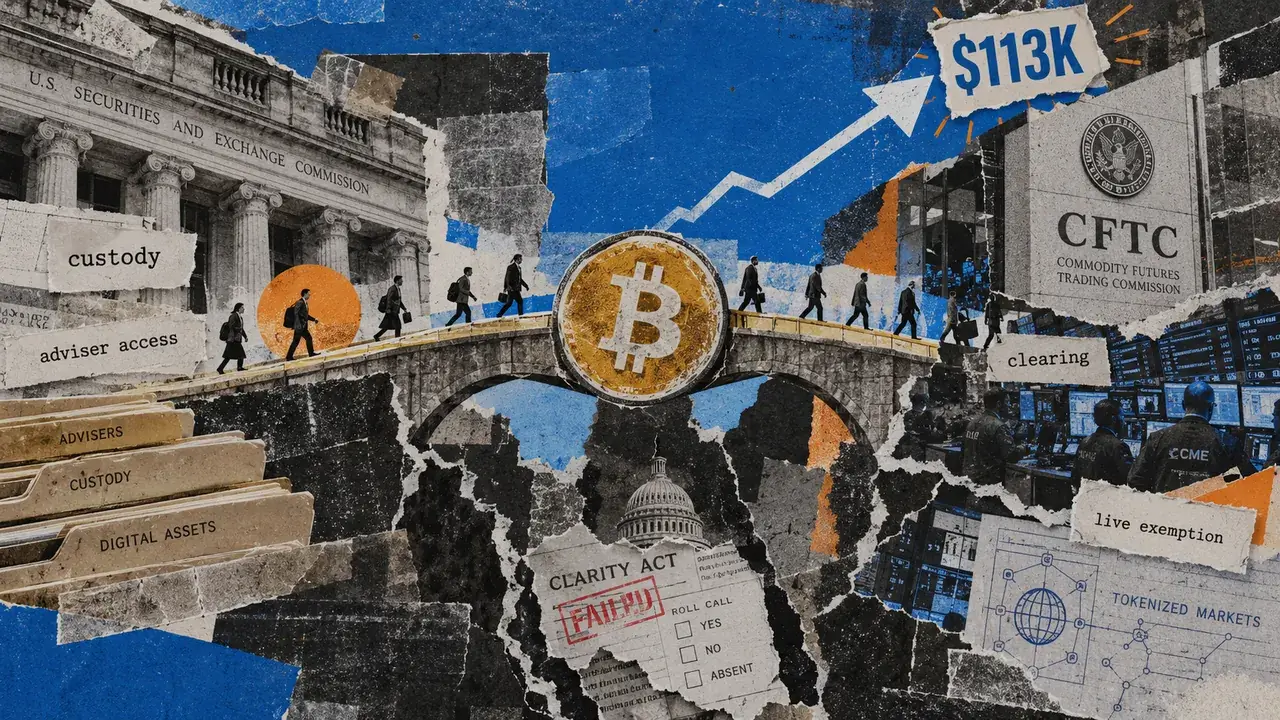
Bitcoin’s $113,000 case strengthens as US regulators push 9 crypto actions
The US Securities and Exchange Commission (SEC) proposed a custody framework on Oct. 1 that would let investment advisers and regu...

Visa Says Business Payments Now Drive 17% Of Stablecoin-Linked Card Volume
TL;DR Visa says roughly 17% of its stablecoin-linked card volume in fiscal 2026 year-to-date came from business and commercial car...