Proof of Reputation: The Future Of DeFi
Decentralized Finance (DeFi) has become one of the most popular concepts of the crypto world recently, and with good reasons. Its applications not only opens unprecedented opportunities to users of any background, but it...
Archive context
Older archive item. Useful for background and entity history, but not a fresh market-moving signal.

Decentralized Finance (DeFi) has become one of the most popular concepts of the crypto world recently, and with good reasons. Its applications not only opens unprecedented opportunities to users of any background, but it does so in user-friendly, and fully transparent ways. Today, the focus will be on Proof of Reputation (PoR), titled the future of DeFi by many—read on to find out why, and how you can take advantage of it.
Decentralized Finance (DeFi) in a nutshellBefore jumping into details about Proof of Reputation, a brief introduction to Decentralized Finance (DeFi) is needed. Essentially, DeFi is an aggregate term for all protocols that are not controlled by any central authority, leverage open blockchain technology, and provide equal opportunities for users to utilize financial services and other benefits through cryptocurrencies. There are numerous DeFi concepts out there, including liquidity providing protocols, Decentralized Exchanges (DEXs), staking options, and many more.
Proof of Work, Proof of Stake, and Proof of ReputationNow that everyone is up to speed about the fundamentals, the attention will shift to the specifics. Generally speaking, DeFi and other crypto projects all use a so-called consensus mechanism to securely provide their services and perks to users. Such algorithms are needed so that the nodes (computers) maintaining the network are always on the same page about all the transactions, and that the chance of malicious behavior is minimized, or even eliminated in some cases.
The three most popular consensus mechanisms are Proof of Work, Proof of Stake, and the current favorite, Proof of Reputation, which is a revolutionary version of Proof of Authority.
Proof of Work (PoW) is based on an agreement between nodes on computation performed. While it has been proven to be somewhat secure, and significant blockchains such as Bitcoin rely on it, it has been criticized for its environmentally unfriendly nature and scalability limitations.
Proof of Stake (PoS), used by Cardano (ADA) for instance, managed to improve on some of PoW’s flaws, as it doesn’t require energy-intensive actions to reach consensus. Instead, nodes need to put up through staking tokens, which functions as a sort of collateral guaranteeing that they won’t tamper with the network; if they do so, their stake is seized by the algorithm. However, the main issue of PoS is its speed, as it can’t quite deliver the throughput demand would dictate.
Finally, Proof of Reputation (PoR), which is a more secure version of Proof of Authority (PoA), implemented by Kaiba DeFi, is considered the most up-to-date and efficient system among all others. In essence, nodes run the network and ensure the rules are followed by putting up their identity at stake. This not only allows for a transparent and evident way of verifying nodes, but it’s also perfect for reaching consensus in a fast and reliable manner.
Proof of Reputation in PracticeTo illustrate the working of PoR, Kaiba DeFi’s applications can be observed.These applications manage to provide superior speed and significantly lower fees than counterparts thanks to their underlying Proof of Reputation system. As an example, take KaibaEx, the project’s Decentralized Exchange (DEX), which offers up to 20% less network fees than other exchanges, such as Uniswap, and facilitates fully commission-free trades, which is unmatched within the industry. Another great instance would be trading KAIBA, Kaiba Defi’s native crypto token, which, thanks to PoR and their contract optimization, can be 60% cheaper to transact with than other comparable ERC-20 tokens.
Final thoughtsOverall, as demonstrated above, the groundbreaking version of Proof of Authority called Proof of Reputation (PoR) unlocks unparalleled opportunities for projects that recognize its potential and build their ecosystem around it. Kaiba DeFi was among the first to fully implement and take advantage of PoR, and when looking at their results, it is safe to say that this novel consensus mechanism is, indeed, the future of Decentralized Finance.
Why this matters
This blockchain story adds another data point to the current market tape and is useful when read alongside nearby source coverage.
Original source
Read on NewsBTCRelated market context

Malicious Uniswap v4 hooks are baiting DeFi traders with fake swap quotes
Liquidity aggregator 0x said on Sept. 14 that it had seen an alarming increase in malicious Uniswap v4 hooks over recent weeks, de...
Circle Switches On Arc Blockchain and Mints 10 Billion Tokens It Has Not Promised to Sell
Circle switched on the public mainnet of Arc, its Layer 1 blockchain, on Wednesday, and said it had minted the entire opening supp...

Bitcoin Price Prediction: Another Pressure Looms, But Is a Rate Hike Priced In?
Bitcoin sits at $75,500, down by an ugly 2% since yesterday. It’s far from calm, but the bigger number that matters happened in le...

Did crypto’s $20 Billion DeFi surge just get stolen by price inflation?
The central question behind DeFi's latest rebound is whether protocols gained fresh deployable liquidity or simply more valuable c...
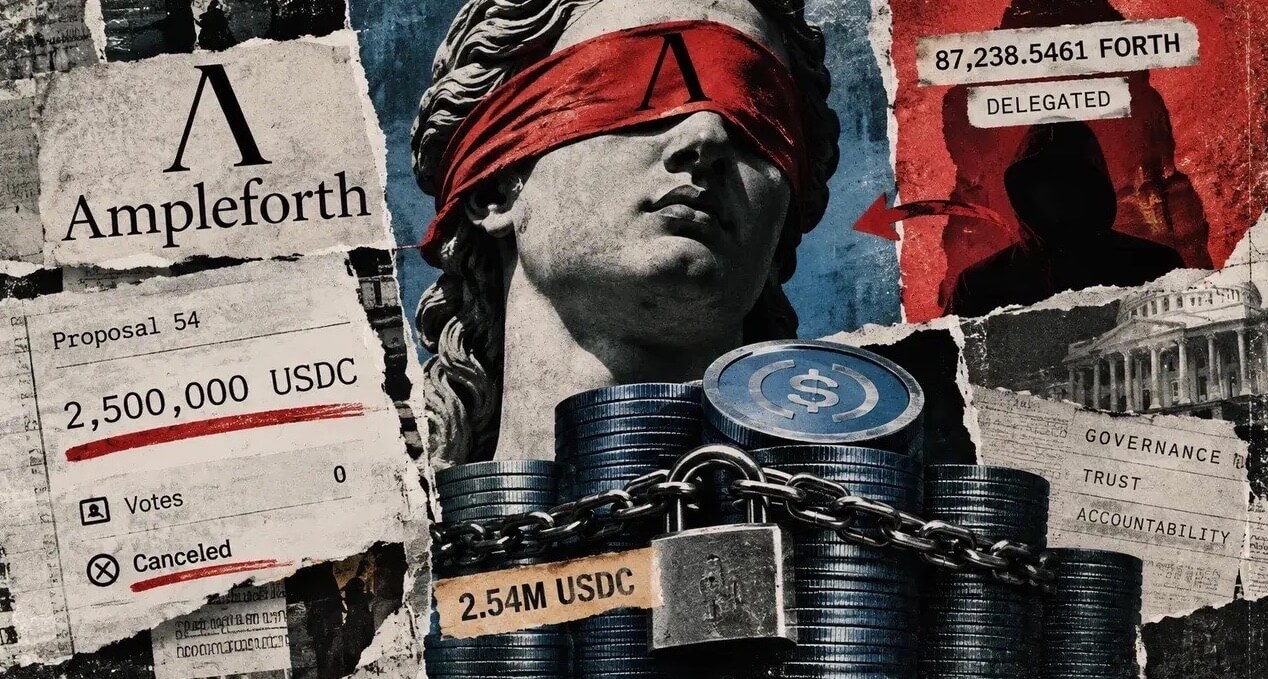
DeFi governance gap allows one wallet to request 98% of Ampleforth treasury’s USDC balance
Ampleforth, a DeFi protocol governed by FORTH token holders, saw Proposal 54 canceled on-chain before its voting window opened. Th...

Robinhood Chain surpasses Hyperliquid in 24-hour app revenue, per DeFiLlama
The shifting revenue dynamics highlight the volatile nature of DeFi markets and underscore the competitive landscape among blockch...