PwC Signals Major Crypto Pivot as GENIUS Act Fuels Stablecoins and Tokenization Push
Key Takeaways: PwC’s CEO says the GENIUS Act is strengthening confidence in stablecoins and tokenized assets The firm is preparing to deepen its role across crypto, from compliance to infrastructure Regulatory clarity is...
Archive context
Older archive item. Useful for background and entity history, but not a fresh market-moving signal.

Key Takeaways:
- PwC’s CEO says the GENIUS Act is strengthening confidence in stablecoins and tokenized assets
- The firm is preparing to deepen its role across crypto, from compliance to infrastructure
- Regulatory clarity is accelerating Big Four adoption of blockchain-based financial products
PricewaterhouseCoopers (PwC) is positioning itself for a deeper expansion into crypto as U.S. regulation turns more constructive. CEO and senior partner Paul Griggs says new stablecoin rules and tokenization frameworks are shifting how large institutions view digital assets.
Regulatory Clarity Is Changing Institutional BehaviorPwC’s renewed push into crypto comes as U.S. lawmakers move closer to formalizing stablecoin oversight. Speaking to the Financial Times, CEO Paul Griggs highlighted the GENIUS Act as a key catalyst reshaping institutional sentiment.
He said the law, along with broader regulatory rulemaking around stablecoins, is creating stronger conviction to engage directly with the asset class rather than observe from the sidelines. For years, large professional services firms approached crypto cautiously. Regulatory uncertainty made it difficult to justify deeper investment, especially for firms responsible for audits, compliance, and risk management. That dynamic is now shifting.
Stablecoins are no longer viewed as a fringe experiment. With legislation clarifying issuance, reserves, and oversight, they are increasingly treated as financial infrastructure. The management of PwC believes that this is a turning point.
Another similar trend, mentioned by Griggs, was tokenization that is gaining momentum. Assets, financial instruments, and settlement procedures are going on-chain generating a need to offer advisory, assurance, and governance services, which is one of the areas where traditional firms can provide their offerings uniquely.
Why Stablecoins Are Central to PwC’s StrategyStablecoins are in the border zone between crypto innovation and conventional finance. They facilitate payments, trading, lending and on-chain settlement in addition to ensuring stability of prices. To institutions, stability is important.
The GENIUS Act will probably establish the clear standards of reserve backing, disclosures, and operational control. The latter framework reduces risk to organizations that are interested in deploying stablecoins to treasury management, international payments, or blockchain finance.
Read More: GENIUS Act Passes House With 308 Votes, Could Redefine Stablecoins and Supercharge U.S. Crypto
The interest of PwC is not confined to the issuance and trading of tokens. The company does prioritize the ecosystem around it: governance, accounting treatment, cybersecurity and regulatory alignment. With the increase in the adoption of stablecoins, the need to have trusted intermediaries who have knowledge of financial regulation and blockchain functionality also increases. PwC does not want to miss out on becoming one of such intermediaries.
Tokenization Moves from Concept to ExecutionIn addition to stablecoins, tokenization is turning into a useful tool, as opposed to a hypothetical notion. The tokenized assets may be in the form of bonds, funds, real estate interests, and even operating cash flows. Moving these assets on-chain enables the institutions to decrease the settlement time, enhance transparency, and automate compliance.
Read More: Vietnam’s Bold Move into Digital Assets Regulation
Griggs clarified that PwC anticipates that tokenization would get more and more sophisticated soon. The company has the view that it has to be integrated into that ecosystem in order to remain relevant as financial markets are being modernized.
This is in line with industry trends. In the case of tokenized funds, asset managers are on the test. Banking is looking into on-chain settlement rails. Programmable assets are slowly replacing the financial infrastructure. PwC believes that it is facilitating this change in a non-threatening manner.
PwC’s Expanding Crypto CapabilitiesPwC already provides a huge number of crypto-related services, both audit and consulting. They are digital asset accounting, custody and wallet controls, cybersecurity tests, regulatory advisory and blockchain-specific risk frameworks.
The company collaborates with crypto-native organizations, conventional financial organizations joining the industry as well as with governmental institutions like regulators and central banks. According to Griggs, PwC has been continually increasing its internal competency throughout the last one year. With these opportunities, the company bet on expert talent and collaboration with other firms to help with sophisticated crypto activities.
From Advisory to Full-Spectrum Crypto ServicesPwC does not target crypto as a niche product. Rather, it incorporates digital assets in its fundamental business lines. Understanding audits, compliance audits, or strategic consulting, the firm uses the same standards as to its traditional finance. That method is essential to institutions that require credibility in the context of working on-chain.
The leadership of PwC is confident that the demand will only increase going forward with the uncertainty minimized by regulation and the increase of capital to blockchain-based systems.
The post PwC Signals Major Crypto Pivot as GENIUS Act Fuels Stablecoins and Tokenization Push appeared first on CryptoNinjas.
Why this matters
This maps to the Stablecoins hub, so it can help confirm whether that theme is gaining breadth across the crypto news cycle.
Original source
Read on CryptoNinjasRelated market context

Tokenized assets need reliable settlement and ownership rights to win over institutions, says Brickken CEO
Institutional adoption of tokenized assets hinges on robust legal frameworks, reliable settlement systems, and liquidity managemen...
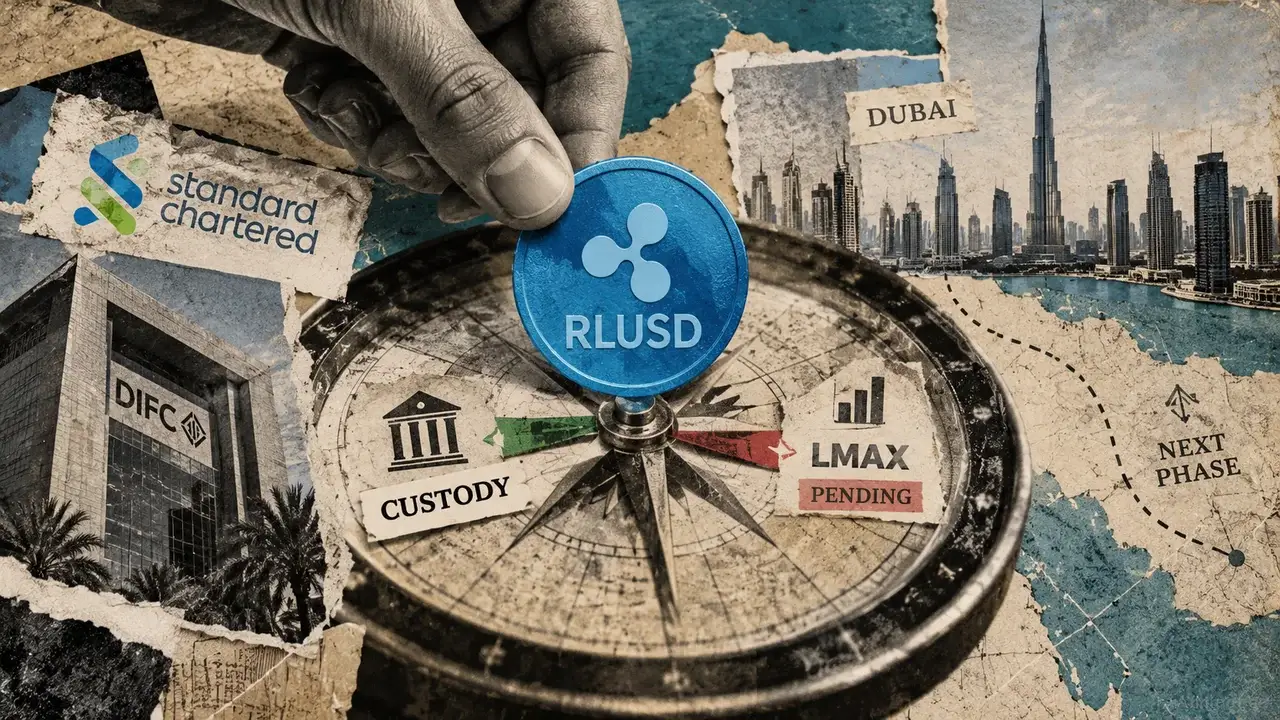
Standard Chartered brings Ripple’s RLUSD into banking custody after $765 million quarterly surge
Standard Chartered has launched custody for Ripple's RLUSD stablecoin as it prepares to expand its use as collateral for instituti...

IMF finds over half of tokenized US stock trading happens after Wall Street closes
More than half of sampled tokenized US stock trading occurs outside Wall Street's regular hours, the International Monetary Fund (...

Anthropic’s Claude AI Predicts a Wild Price for Chainlink (LINK)
Anthropic’s Claude AI predicts that in a peak bull-market setup, Chainlink (LINK) could hit $150–$250 by January 1, 2027, with a s...

Thailand wants a piece of the $120 billion Bitcoin and Ethereum ETF market, but on its own terms
Thailand has finalized rules allowing domestic Bitcoin and Ethereum ETFs while restricting retail access to competing overseas inv...

Morgan Stanley projects tokenized assets market could hit $10T by 2030
The projected growth in tokenized assets could revolutionize financial markets, driving innovation and increasing institutional pa...