Request Network Introduces One-Click Cross-Chain Mass Payouts and Expands Wallet Screening With Merkle Science
Zug, Switzerland, June 25th, 2026, Chainwire Anyone can now execute mass payouts across EVM chains and Tron from a single platform and can choose between multiple wallet screening providers. Just three weeks after releas...
Archive context
Older archive item. Useful for background and entity history, but not a fresh market-moving signal.

Zug, Switzerland, June 25th, 2026, Chainwire
Anyone can now execute mass payouts across EVM chains and Tron from a single platform and can choose between multiple wallet screening providers.
Just three weeks after releasing major upgrades for crypto payment collection, the Request Network Foundation today announced another expansion of its stablecoin payment platform. The release introduces one-click mass payouts on both EVM and Tron, alongside built-in bridging and token swapping across EVM chains. The update also expands compliance capabilities through the integration of Merkle Science as an additional wallet screening provider.
Together, these capabilities reinforce Request Network’s vision of providing businesses with a simpler, more scalable, and more resilient way to operate stablecoin payments globally.
Users Can Now Disburse at Scale in One Click From a Single Wallet Without Bridging or Swapping
Stablecoins are already widely used to disburse salaries, commissions, affiliate rewards, bug bounties, supplier payments, and customer refunds or withdrawals across the world. While settlements are now faster and cheaper in stablecoins compared to fiat, the operational processes needed to send funds remain complex as recipients usually require payments on multiple chains and in multiple currencies. This has forced finance teams to initiate multiple transactions in separate currencies and from multiple wallets.
Request Network now abstracts away this fragmentation, allowing anyone to initiate mass payouts from a single wallet in a single currency to pay recipients across the top 6 EVM chains (Ethereum, Base, Arbitrum, Optimism, Polygon, and BNB Chain) in USDC and USDT.
Through a single signature, a mass payout can now be initiated even if the individual transactions need to be bridged and swapped to reach their recipient. Request Network protocol automatically retrieves and batches bridge and swap quotes in order to funnel every payment of a batch to its correct destination in just one approval.
To simplify the process further, Request Network also allows any recipient to set and update their payment preferences so payments are always routed to where they should go.
This represents one of the biggest breakthroughs in cross-chain and swapping abstraction, bringing payers and recipients closer than ever before, regardless of the blockchain or currency they trust.
Mass Payouts Now Available on Tron
Alongside EVM mass payouts, Request Network also announced the support of mass payouts on Tron, becoming the first protocol to combine both capabilities.
Thanks to this release, anyone can now send USDT to multiple recipients on Tron in a single transaction, unlocking large-scale payouts on one of the most used chains in Asia, Africa, Eastern Europe, and Latin America.
With this release, anyone can now manage all stablecoin payouts globally from the Request Network protocol.
More Choice for Wallet Screening
Alongside mass payouts, Request Network also announced a partnership with Merkle Science to offer additional wallet screening providers on the protocol.
As a reminder, Request Network offers built-in wallet screening to protect its users from high-risk wallet interactions. When enabled, this feature allows payments to be executed only if the payer or recipient satisfies the preset screening policies, helping businesses to avoid exposure to high-risk wallets which may lead to asset freezing or difficulties off-ramping to fiat.
By expanding its integration of Merkle Science, Request Network just became one of the safest ways to receive crypto onchain, while accommodating for recipients’ preferences.
Tristan Wallaert, CEO of the Request Network Foundation, said: “Stablecoins allowed money to move globally without the usual fiat constraints, but executing payments at scale remains a bottleneck and is forcing users to rely on payment service providers. Anyone should be able to pay by himself hundreds of payments across chains in just a single operation.High risk wallets exposure has tarnished the crypto reputation recently, if we want to provide the best protection to blockchain users they need to be able to use the best screening providers. Sending and receiving payments must become intuitive and safe if we want stablecoins to be a real alternative to fiat.”
Mriganka Pattnaik, CEO of Merkle Science, said: “As stablecoin payments become more global and cross-chain, compliance needs to become just as seamless as the payment experience itself. Our integration with Request Network helps businesses screen wallets with greater confidence, reduce exposure to high-risk activity, and scale onchain payments without compromising trust or operational efficiency”.
About Request Network
Since 2017, Request Network has developed, educated about, and promoted the use of open-source, decentralized and permissionless protocols that provide infrastructure for on-chain payments and related financial flows.
Request Network allows anyone to send and receive crypto at scale, across chains, without custodial intermediaries. The protocol is developed by a community-funded foundation whose mission is to make crypto payments accessible while protecting its participants.
To date, more than $2 billion has moved thanks to Request Network technology.
About Merkle Science
Merkle Science provides blockchain analytics and crypto compliance solutions that help businesses detect, investigate, and prevent financial crime across digital assets. Its platform supports wallet screening, transaction monitoring, risk intelligence, and investigations, enabling crypto platforms, financial institutions, and payment providers to manage onchain risk and meet compliance requirements at scale.
ContactsCEO
Tristan Wallaert
Request Network Foundation
[email protected]
Director of Business Operations
Álvaro García
[email protected]
Why this matters
TRON is showing up inside the Stablecoins theme, so this story is worth tracking for follow-through rather than treating it as a one-off headline.
Original source
Read on Brave New CoinRelated market context
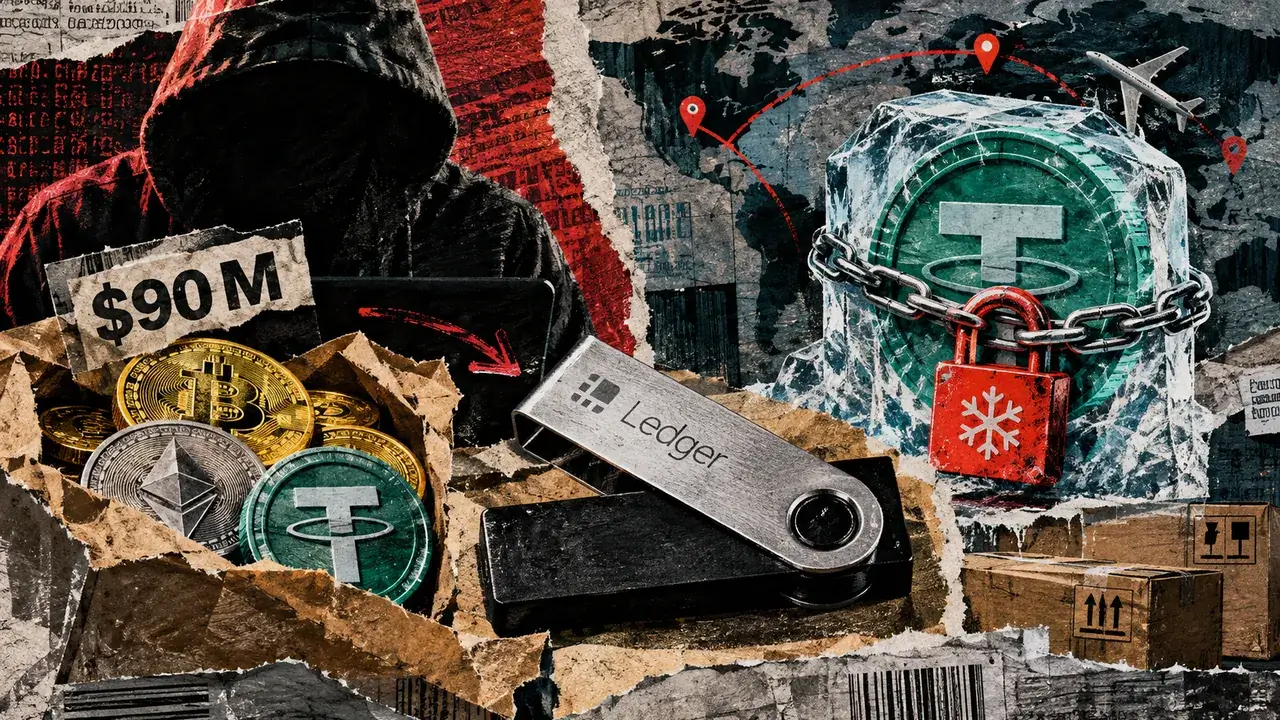
Ledger hack scare nears $90 million as Tether moves to freeze stolen USDT
Suspected Ledger wallet thefts are approaching $90 million as Tether freezes USDT stablecoin linked to the incident, according to...
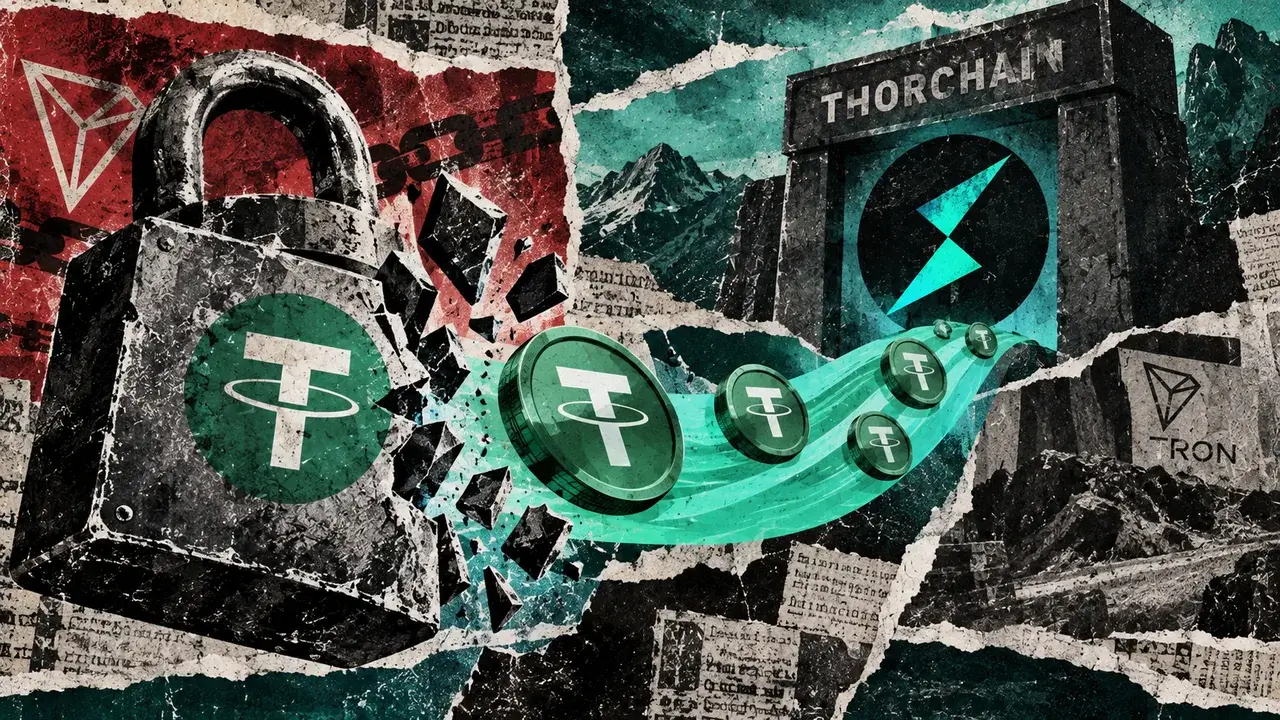
Tether freezes $1.4M in TRON vaults and THORChain stalls
THORChain's TRON operations were interrupted on Oct. 9 after a USDT vault blocklist, according to reports by its co-founder Chad B...
Tether Freezes $1.45M in THORChain USDT Vaults, Then Reverses Blacklist Hours Later
Key Takeaways: The amount of about $1.45 million in USDT was temporarily frozen in THORChain vault addresses. According to THORCha...
TRON captures 23% of stablecoin card volume in Q3 2026
TRON's significant share in stablecoin card volume highlights its growing influence in digital payments, but competition remains f...

Stealing $1.5B in crypto is easy, cashing out is the trap
North Korean hackers stole around $1.5 billion from Bybit in February 2025. While the hack itself has been widely covered and anal...
Ledger theft-linked funds shift from USDT to USDD to dodge Tether freezes
The shift from USDT to USDD underscores vulnerabilities in stablecoin freeze mechanisms, prompting scrutiny on regulatory and secu...