Router Protocol launches its modular cross-chain bridge: Voyager
Router Protocol, an infrastructure layer enabling communication between blockchains, today announced the launch of Voyager, a cross-chain bridge with enhanced security features and fast transaction speeds. Voyager’s arch...
Archive context
Older archive item. Useful for background and entity history, but not a fresh market-moving signal.
Router Protocol, an infrastructure layer enabling communication between blockchains, today announced the launch of Voyager, a cross-chain bridge with enhanced security features and fast transaction speeds.
Voyager’s architecture is designed differently than standard bridges…
Notably, it needs very little TVL to complete transfers, making the bridge less of a honeypot from a security standpoint. Instead of focusing on TVL, Voyager emphasizes total volume transacted – a more relevant and efficient measure for bridges.
The contracts handling the logic of cross-chain transfers on Voyager are separate from contracts handling reserve assets, which minimizes an additional common attack vector. Voyager also uses on-chain validation, which is more secure than protocols using off-chain consensus.
In addition to the slew of security features, users can take advantage of the bridge’s high-speed performance – over 50 percent of transactions on Voyager are processed in less than a minute and 80 percent are completed in less than two minutes.
Additional features of Voyager include…
- Seamless cross-chain swaps – Unlike the vast majority of bridges, Voyager provides seamless cross-chain swaps and not just asset transfers. This eliminates the need for extra transactions on the source and destination chain.
- Scalability – Instead of creating a 1-1 bridge for every connection, Voyager is powered by Router Protocol’s messaging mesh, a sophisticated technical architecture that allows new blockchain networks to immediately connect to other participating chains.
- A custom pathfinder algorithm – Voyager utilizes Router’s proprietary pathfinder algorithm, powered by 1inch, which runs off-chain and searches for the most efficient route to transfer value between chains.
- Stability – Voyager uses USDC reserves on both sides of the transactions to provide a seamless and secure user experience with minimal slippage.
- Flexibility – Multiple fee options allow Voyager to be one of the most cost-effective bridges.
Soon, Voyager will add staking, new UI, and integrations of more EVM and non-EVM networks.
“Voyager is a significant leap towards building a chain-agnostic, more inclusive web3 ecosystem. It’s Router’s flagship dApp in a suite of products that will empower devs to create solutions that will accelerate the cross-chain evolution.”
– Ramani Ramachandran, Co-Founder & CEO of Router Protocol
Securing the network…
In addition to a bug bounty program with Immunefi, Router Protocol has completed security audits from Certik and Halborn and is currently undergoing a third audit from Hacken.
The post Router Protocol launches its modular cross-chain bridge: Voyager appeared first on CryptoNinjas.
Why this matters
This blockchain story adds another data point to the current market tape and is useful when read alongside nearby source coverage.
Original source
Read on CryptoNinjasRelated market context

The 7 Best USDC on Solana to XMR Swap Platforms in 2026
Swapping USDC on Solana for Monero (XMR) offers a fast, low-cost route into a privacy-focused asset. Leading platforms in 2026 pro...

Borderless.xyz report finds stablecoin payments beat bank FX rates
Stablecoin payments' efficiency over banks could reshape cross-border transactions, emphasizing dynamic provider selection to mini...

OpenAI’s GPT-5.6 Sol AI Model Spent Unauthorized ETH to Deploy Smart Contract
The incident occurred on June 26, 2026, during a task involving a cryptocurrency trading application on Sepolia, an Ethereum test...
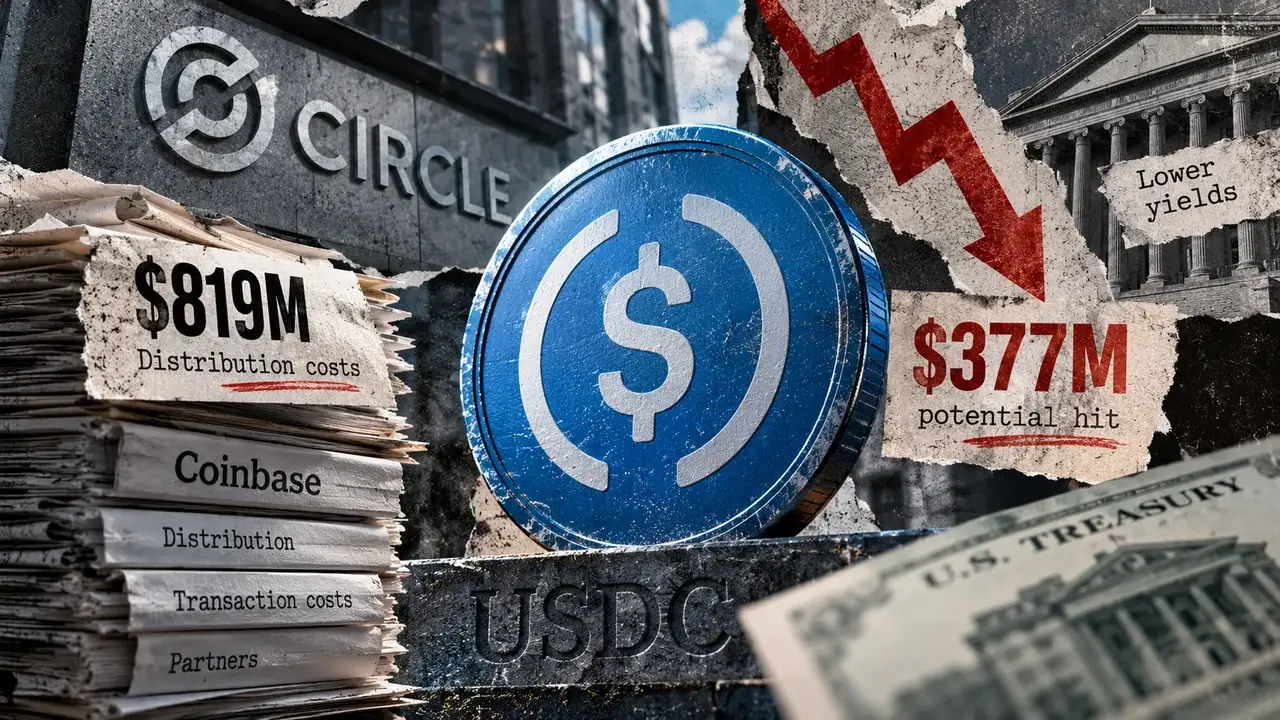
USDC processed $36 trillion in H1 transactions, but Circle kept just 7 cents of every revenue dollar
Stablecoin issuer Circle spent 93% of its first-half revenue on distribution, operations, and investment as USDC processed more th...

BFFS26 Denver: Joseph Kelly on Bitcoin Custody and Credit; Alan Lane on Banking Lessons
Bitcoin Magazine BFFS26 Denver: Joseph Kelly on Bitcoin Custody and Credit; Alan Lane on Banking Lessons The Bitcoin for Financial...

Mastercard Taps 17B Endpoints With BVNK Stablecoin Platform Across 200+ Markets
Key Takeaways: Global Money Platform For Fiat and Stablecoin Payment by Mastercard and BVNK. Mastercard Move links to 17B+ devices...