Sky Protocol Revenue Nears $419M Annualized As USDS Demand Supports DeFi Income
Sky Protocol’s annualized gross revenue has climbed close to $419 million, according to its governance status dashboard, giving DeFi investors another reason to pay attention to protocol fundamentals rather than only tok...
Archive context
Older archive item. Useful for background and entity history, but not a fresh market-moving signal.

Sky Protocol’s annualized gross revenue has climbed close to $419 million, according to its governance status dashboard, giving DeFi investors another reason to pay attention to protocol fundamentals rather than only token prices.
The figure is dynamic and can change as rates, deposits, and protocol activity shift. It should not be treated as a fixed yearly result. But it is still a meaningful snapshot of the income profile behind the Sky ecosystem.
Sky’s revenue is tied to the broader Maker/Sky system, including USDS demand, lending vault activity, and real-world asset exposure.
That makes the number important for a simple reason: DeFi protocols are increasingly being judged on whether they generate real, recurring revenue.
TL;DR- Sky Protocol’s dashboard shows annualized gross revenue near $419 million.
- The figure is dynamic and may fluctuate with rates, deposits, and demand.
- Revenue is linked to USDS, lending activity, and real-world asset exposure.
For much of crypto’s history, protocol valuation has leaned heavily on narrative.
A token might rally because of a new roadmap, a hot sector, a major listing, or a broader market cycle. That still happens. But investors are increasingly looking at more traditional business-style questions.
Does the protocol generate revenue? Where does that revenue come from? Is it sustainable? Who benefits from it? How sensitive is it to interest rates, incentives, or market cycles?
Sky sits directly inside that conversation.
The protocol is tied to one of DeFi’s longest-running stablecoin systems. Its revenue is not just a vanity metric. It reflects demand for stablecoin products, lending vault activity, and the system’s exposure to yield-generating assets.
That is why a dashboard figure near $419 million annualized gets attention.
It suggests there is meaningful economic activity behind the protocol, not only governance complexity or token speculation.
Why USDS Demand MattersUSDS is central to the Sky ecosystem.
Stablecoins are one of crypto’s strongest use cases because they provide on-chain dollar liquidity. Traders use them for settlement. DeFi protocols use them as collateral and liquidity. Users in some markets use them as digital dollar substitutes.
If USDS demand grows, the Sky system can benefit through lending, savings products, and collateral structures.
But stablecoin demand is competitive. USDT, USDC, DAI, USDS, PYUSD, and newer stablecoins all compete for liquidity. Users compare trust, yield, integrations, redemption confidence, and network availability.
That means Sky cannot rely on history alone.
It needs attractive products and credible risk management. Revenue growth is useful, but users need to believe the system is safe and efficient enough to hold or deploy capital.
The revenue figure is therefore a signal, not the entire story.
Real-World Asset Exposure Still Drives DebateSky’s revenue picture is also connected to real-world assets.
RWAs have become a major part of DeFi’s income story because tokenized or off-chain yield sources can help protocols earn revenue linked to Treasury bills, credit products, or other traditional assets.
That can make DeFi revenue more stable than relying only on trading fees or speculative borrowing.
But RWA exposure also introduces new questions.
Who holds the assets? What legal structure sits behind them? What happens if counterparties fail? How transparent are the reserves? How quickly can assets be converted? How does governance manage risk?
Maker and Sky have spent years navigating those questions.
The annualized revenue number shows the potential upside of that approach. But the long-term durability depends on how well the protocol manages the underlying risks.
Annualized Does Not Mean GuaranteedThe most important caveat is that annualized revenue is not the same as guaranteed revenue.
A dashboard can annualize a current run rate, but that run rate may change quickly. Interest rates can fall. Deposits can leave. Borrowing demand can weaken. Governance can adjust parameters. Market stress can change user behavior.
That is why investors need to treat the $419 million figure carefully.
It is useful because it shows the system’s current earning power. It is not a promise that Sky will produce the same revenue over the next 12 months.
Still, the direction is important.
Crypto markets are becoming more comfortable evaluating protocols through revenue, fees, deposits, balance-sheet structure, and user demand. Sky is one of the protocols where that type of analysis makes sense.
For DeFi, that is a sign of maturity.
The next stage of the market may reward protocols that can show not only usage, but durable economics. Sky’s current revenue run rate gives it a strong place in that conversation, provided the system can maintain demand and manage risk as conditions change.
This article is based on Sky Protocol governance status dashboard data.
This article was written by the News Desk and edited by Samuel Rae.
This report is based on information released in disclosures at primary source documentation.
Why this matters
Tether is showing up inside the Stablecoins theme, so this story is worth tracking for follow-through rather than treating it as a one-off headline.
Original source
Read on NewsBTCRelated market context

Chainalysis: USDC-led stablecoins take 44% of Canadian dollar crypto volume
The rise in stablecoin use in Canada highlights a shift towards utility-driven crypto demand, potentially impacting domestic finan...

Blockchain Association backs Treasury stablecoin rule but wants tighter definitions
The Blockchain Association's feedback on Treasury's stablecoin rule highlights the need for precise definitions to prevent regulat...

Tether says its freezes drove a 94% drop in Iran-linked stablecoin volumes
Tether's proactive compliance highlights the potential for stablecoin issuers to influence global financial regulations and enforc...

Bitcoin holds $82K as analyst sees limited selling pressure despite macro risks
Bitcoin's resilience amid macroeconomic challenges suggests potential for recovery, contingent on broader market sentiment and Fed...

Mastercard expands crypto team as stablecoins, not Bitcoin, take center stage
Mastercard's focus on stablecoins over Bitcoin highlights a shift towards integrating blockchain with traditional finance, impacti...
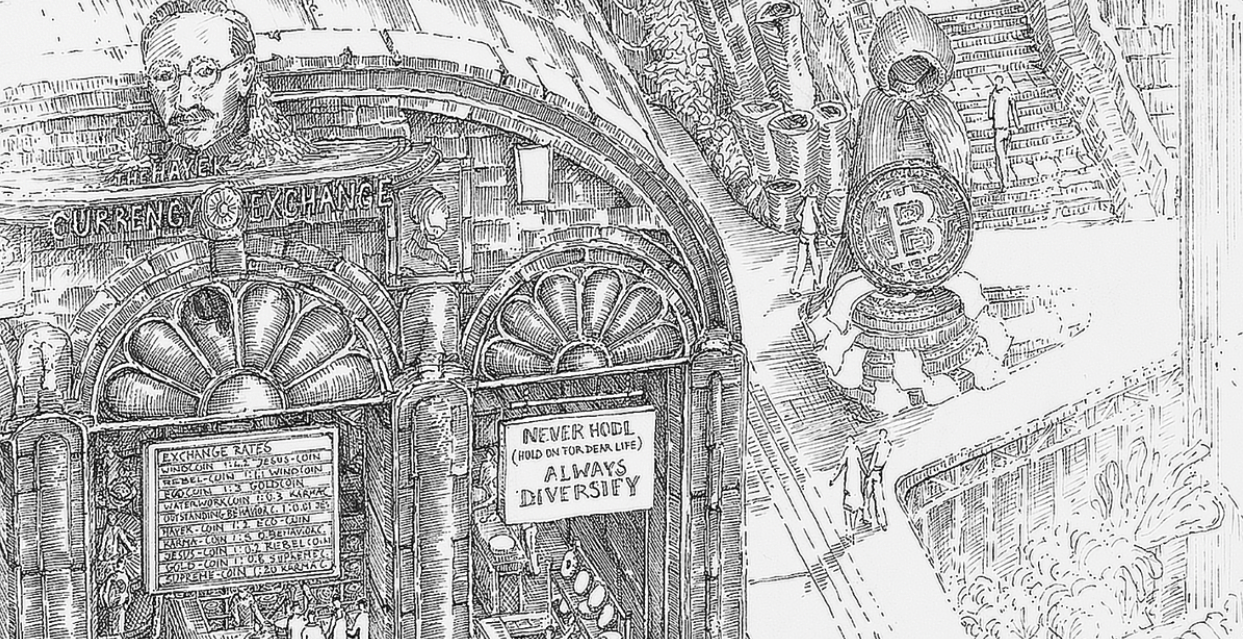
The Architecture of Money: Mapping Financial Power in the Age of Bitcoin
Bitcoin Magazine The Architecture of Money: Mapping Financial Power in the Age of Bitcoin Money determines where we live, what we...