South Korea Blocks Foreign Crypto Exchanges on Google Play Amid Regulatory Crackdown
Key Takeaways: South Korea seems to be protecting its users by limiting access to crypto exchanges not registered with its government. Apps from exchanges like KuCoin, MEXC, and Poloniex are also being blocked from Googl...
Archive context
Older archive item. Useful for background and entity history, but not a fresh market-moving signal.

Key Takeaways:
- South Korea seems to be protecting its users by limiting access to crypto exchanges not registered with its government.
- Apps from exchanges like KuCoin, MEXC, and Poloniex are also being blocked from Google Play.
- The move is in line with South Korea’s tough stance on crypto regulation.
South Korean authorities are further tightening their grip on the digital asset industry, prompting Google to block dozens of foreign crypto exchange apps on the Google Play Store. The campaign targets platforms that have not been properly registered in Korea, including popular exchanges KuCoin, MEXC, Phemex, and Poloniex.
What’s Behind the Ban?The FIU, the country’s financial watchdog, announced on March 26, 2025, that Google had begun restricting access to 17 such apps due to their “unregistered” operations targeting Korean users. As a result, South Korean users cannot install these apps anymore, and those that are already installed will not be updated.
The FIU’s move comes in keeping with South Korea’s tough rules on crypto, which mandates that all exchanges — including foreign ones — must register with local authorities if they are operating in the country. An exchange is deemed to be active in Korea if it provides a Korean-language site, does marketing targeting Korean users or facilitates trades in the Korean won, the FIU said.
Authorities have claimed that unregistered crypto exchanges pose significant risks to users, including potential personal data breaches, hacking incidents, and even use for money laundering. The FIU states that users’ funds and assets are put at risk because these platforms are outside of financial regulations and do not offer investor protection mechanisms. The agency said in a statement that the ban would “help prevent user damage and curb money laundering through virtual assets.”
The FIU is also in discussions with Apple Korea and the Korea Communications Standards Commission to enforce similar restrictions on crypto exchange websites and the App Store.
Expansion of Regulatory ActionThis isn’t the first time that authorities have cracked down on crypto exchanges. Apple pulled several crypto exchange apps from Japan’s App Store at the request of the authorities in early February 2025, the measure being part of a broader effort of governments to rein in digital asset platforms. The mobile applications of Bybit, KuCoin, Bitget, MEXC, and LBank were no longer accessible in Japan. Japan’s Financial Services Agency had previously issued warnings to these exchanges for lack of registration. India had earlier this year blocked access to big platforms such as Binance, Kraken and KuCoin.
More News: South Korea Intensifies Crypto Crackdown: KuCoin and Others Face Scrutiny
Impact on Domestic ExchangesWith curbs on international exchanges, domestic platforms are set to gain. In fact, South Korea’s top exchange, Upbit, was partially suspended by the FIU due to violations of local regulations. The suspension was made against local regulations, as transactions with unregistered crypto service providers were not allowed. The restriction temporarily limits new customers from depositing and withdrawing crypto.
South Korea’s Position on CryptoThis regulatory move notably rests on South Korea’s strong stance with cryptocurrency regulation. More than 9.6 million South Koreans held accounts with the country’s five major licensed exchanges – Upbit, Bithumb, Coinone, Korbit and Gopax – as of the end of last year, local media outlet Chosun today quoted lawmaker Ahn Do-jae as saying. This represents a year-on-year growth of 52.6%. The total amount of crypto held by these firms has surpassed 100 trillion won (approximately $68 billion), indicating solid trust in the market.
South Korea is serious about enforcing crypto regulations, making it increasingly difficult for traders using these exchanges.
The post South Korea Blocks Foreign Crypto Exchanges on Google Play Amid Regulatory Crackdown appeared first on CryptoNinjas.
Why this matters
This blockchain story adds another data point to the current market tape and is useful when read alongside nearby source coverage.
Original source
Read on CryptoNinjasRelated market context
Binance Eyes Hong Kong, South Korea, Taiwan, Brazil Stocks in Global Push
Binance is exploring ways to give users exposure to leading stocks in markets including Hong Kong, South Korea, Taiwan, and Brazil...
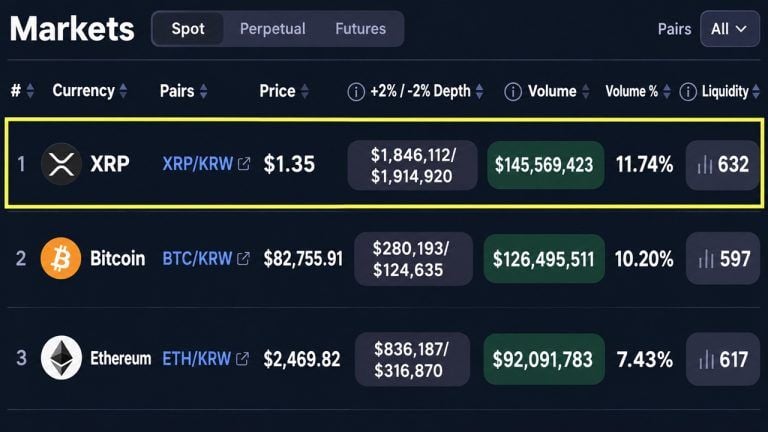
XRP Is Outtrading Bitcoin and Ether on South Korea’s Biggest Exchange
XRP topped Upbit’s spot volume in snapshots taken more than seven hours apart, beating bitcoin and ether in won trading even as it...
Canton Enters South Korea as Meritz Eyes Tokenized Finance Deals
South Korean investment firm Meritz Securities has struck a partnership with the Canton Foundation to explore bringing tokenized K...

The 7 Best USDC on Solana to XMR Swap Platforms in 2026
Swapping USDC on Solana for Monero (XMR) offers a fast, low-cost route into a privacy-focused asset. Leading platforms in 2026 pro...
XRP spot volume surpasses Bitcoin and Ethereum on South Korea’s Upbit
XRP's dominance on Upbit highlights the potential impact of local regulatory shifts on global crypto liquidity and market dynamics...
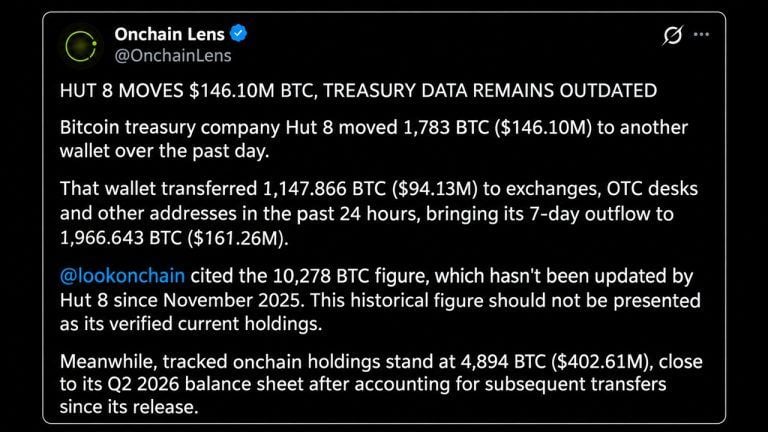
Hut 8 Funnels $161 Million in Bitcoin to Exchanges
A wallet tied to Hut 8 has pushed nearly 2,000 BTC toward exchanges and trading desks in seven days, emptying itself by early Frid...