Starknet Reveals Shieldnet for Enhanced Privacy in DeFi
Key Takeaways: Starknet has unveiled a new framework named Shieldnet, which aims to provide privacy in on-chain transactions by leveraging the new Starknet STRK20 standard. Running on top of STRK20, shielded balances and...
Archive context
Older archive item. Useful for background and entity history, but not a fresh market-moving signal.

Key Takeaways:
- Starknet has unveiled a new framework named Shieldnet, which aims to provide privacy in on-chain transactions by leveraging the new Starknet STRK20 standard.
- Running on top of STRK20, shielded balances and private asset transfers are possible even for ERC-20 assets, without sacrificing DeFi composability and compliance options.
- This marks Starknet as one of the first major Layer-2, Ethereum scaling solutions to embed privacy into the protocol itself, as opposed to standalone applications.
User Score
8.7
Follow us on Google NewsUndoubtedly, one of the most significant issues in the crypto space remains privacy. Starknet is trying to do just that with their new privacy-focused initiative “Shieldnet”, which will allow the launch of confidential transactions and shielded assets right inside Starknet’s Layer-2 ecosystem.
Shielded mode is on.
Join us.https://t.co/wgZT1idhML pic.twitter.com/Cx4P21sjgZ
— StarkWare 🥷 (@StarkWareLtd) June 8, 2026
Shieldnet Introduces Native Privacy to Starknet DeFiStarknet’s approach in launching Shieldnet is a significant milestone in its ongoing journey towards integrating privacy into the core of its operations, not an afterthought. The core of the project is a new token framework, STRK20, which will allow the issuance of encrypted balances and private transfers of assets on the network.
STRK20 is not the same as many other previous privacy solutions which would push the user to transfer funds to isolated systems or dedicated privacy pools; instead, it’s designed to run on Starknet’s current DeFi ecosystem. It enables users to utilize lending, trading, and other decentralized applications without having to share their financial data on-chain.
The protocol-level improvements, which enabled native support for proof verification, a crucial element for enabling confidential transactions at scale, have paved the way for the framework. According to Starknet, the changes make it possible to implement privacy features efficiently without compromising network performance.
Read More: Ethereum Validator Exit Queue Hits 439K ETH After DeFi Exploit Sparks Rush
STRK20 Aims to Solve a Long-Standing DeFi ProblemFragmentation has been one of the greatest challenges to cryptocurrencies that prioritize privacy. In the past, users were forced to decide between privacy and liquidity since the privacy systems were not integrated into the mainstream DeFi.
In contrast, STRK20 adopts a novel strategy where privacy becomes a feature that can be utilized directly on Starknet. Shielded assets can be part of the larger ecosystem, maintaining composability between protocols, instead of building isolated liquidity pools.
Selective disclosure mechanisms are also a priority for Starknet, enabling users to disclose transactions only when necessary by law. The design aims to solve that issue without compromising on transparency and privacy as far as users are concerned.
strkBTC Serves as the First Real-World TestThe first asset launched on the privacy framework is a token backed by Bitcoin, and it has the ability to provide optional protection for balances and transfers, strkBTC. The asset gives Bitcoin miners the opportunity to use DeFi while maintaining the privacy of their transactions when necessary.
Starknet is particularly impressed by the ability of strkBTC to achieve privacy while still enabling on-chain finance. The users can switch between transparent and shielded modes while maintaining access to trading, lending and yield-generating opportunities throughout the network.
Read More: Chainlink Powers CBTC on Canton, Unlocking Verified 1:1 BTC Collateral
The post Starknet Reveals Shieldnet for Enhanced Privacy in DeFi appeared first on CryptoNinjas.
Why this matters
Bitcoin is showing up inside the DeFi theme, so this story is worth tracking for follow-through rather than treating it as a one-off headline.
Original source
Read on CryptoNinjasRelated market context
Starknet Moves Toward Post-Quantum Layer 1 as Voters Back Ethereum Split
Starknet is taking its first formal steps toward potentially becoming an independent, quantum-resistant Layer 1 blockchain, follow...
Chainlink Enters Korea’s $68B Market Through LG CNS Partnership
Chainlink has partnered with LG CNS, the technology contractor behind the Bank of Korea’s Project Hangang, to expand regulated dig...
Chainlink partners with LG CNS to drive Korean won stablecoin expansion
LG CNS is set to integrate Chainlink's cross-chain, data, and orchestration infrastructure into its digital asset platform.
Tech giant LG CNS taps Chainlink to scale Korea’s tokenized finance and stablecoin markets
The partnership could accelerate Korea's digital finance evolution, enhancing global competitiveness and fostering secure, interop...
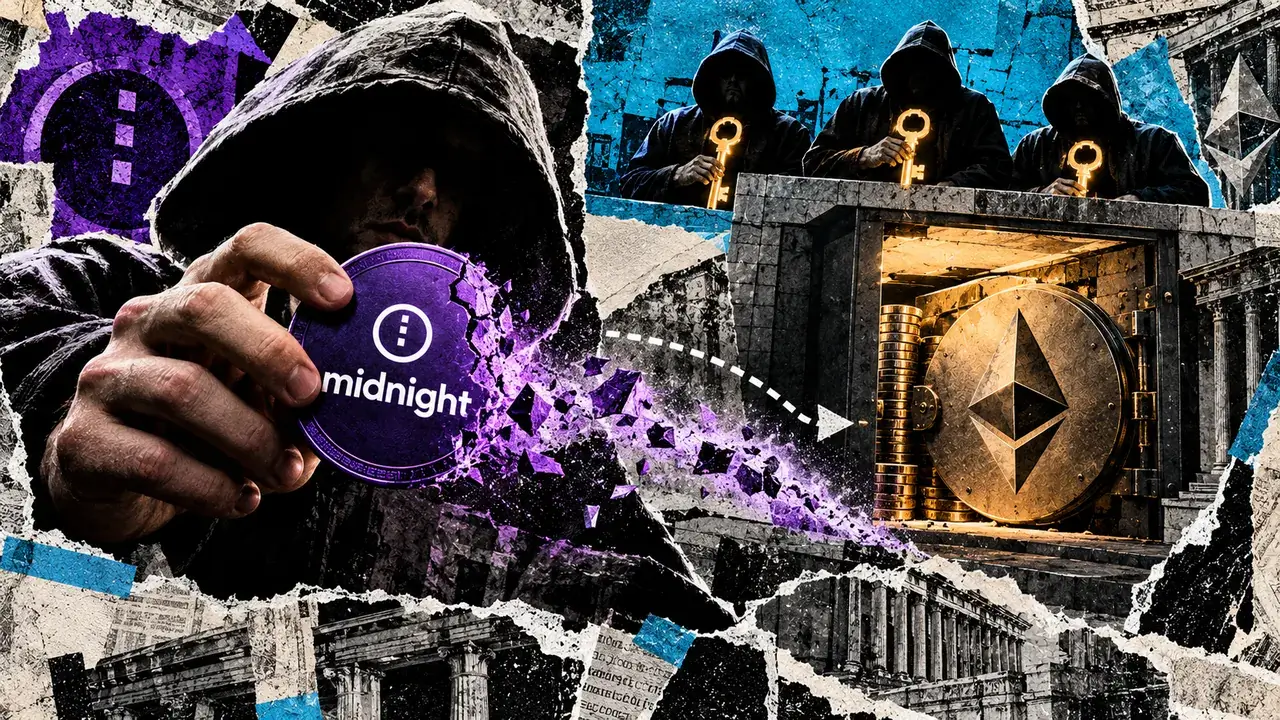
A Midnight privacy-vault demo needs outside signers to release Ethereum tokens
SIG’s Ethereum example burns a shielded claim before payout, while restoring it after failure requires an attested outcome. Read t...
Starknet votes to explore quantum-resistant layer 1 blockchain
Starknet's exploration of quantum-resistant blockchain could set a precedent for future-proofing digital security against emerging...