Tether and UN Collaborate to win the Digital Economy in Africa
Key Takeaways: Tether has collaborated with the United Nations office on drugs and crime (UNODC) in fighting fraud and cybercrime of digital assets in the African continent. The partnership helps the UNODC Strategic Visi...
Archive context
Older archive item. Useful for background and entity history, but not a fresh market-moving signal.

Key Takeaways:
- Tether has collaborated with the United Nations office on drugs and crime (UNODC) in fighting fraud and cybercrime of digital assets in the African continent.
- The partnership helps the UNODC Strategic Vision of Africa 2030, based on cybersecurity education among the young generation and funding of human trafficking victims.
- This project is the continuation of a big Interpol operation that disclosed more than 260 million of illegal crypto and fiat funds belonging to criminal networks in Africa.
The issuer of the largest stablecoin in the world, Tether, has entered into a strategic alliance with the United Nations to enhance the level of security to the ever-growing sphere of digital finances in Africa. Such a partnership would deal with the increasing front of cyber-enabled offenses and enhance financial transparency in the region.
Tether and the United Nations Join Forces to Safeguard Africa’s Digital Economy
Learn more: https://t.co/qKyZLH8j63
— Tether (@tether) January 9, 2026
Enhancing the Cybersecurity FrameworkThis is the collaboration between the United Nations Office on Drugs and Crime (UNODC). With now being the third-fastest-growing cryptocurrency market in the world, transnational organized crime groups have taken it as an increasingly attractive market target. The partnership aims at alleviating such risks by offering technical proficiency and resources to the local authority and the general populace.
One of the main pillars of the agreement is the assistance of the UNODC Strategic Vision of Africa 2030. This long term roadmap confirms the need to protect digital assets so as to guarantee economic resilience. More recent statistics provided by Interpol show just the magnitude of the problem; a coordinated effort in the region recently identified over 260 million dollars in illegal funds, which proves that along with the rapid adoption of digital assets, the sophistication of criminal organizations becomes more advanced.
With the help of the transparency that blockchain offers, Tether and the UNODC are planning to create stronger legal and financial frameworks. This involves the development of more effective systems of monitoring illegal movements and the increase of the ability of law enforcement agencies to investigate crimes using blockchains.
School Programs and Youth PowerIn addition to law enforcement, the partnership also puts a significant focus on proactive education. The two organizations in Senegal have implemented a multi-phased program on youth-related cybersecurity. The project will also involve virtual boot camp and coaching to empower the upcoming generation with the necessary tools to navigate in the digital economy without harm.
Plan B Foundation has backed the learning aspect and is a close collaboration between Tether and the City of Lugano. The participants of such programs will be able to receive micro-grants and mentorship to create their own digital projects. It is aimed at creating a culture of security awareness that should help prevent fraud before it strikes, and not just responding to its attacks.
Investing in Vulnerable PopulationsThe partnership goes into the humanitarian space where it tries to resolve the intersection of digital finance and human trafficking. Tether is funding a few civil society organizations which directly aid victims of trafficking in such countries as Nigeria, the Democratic Republic of the Congo, Malawi, Ethiopia, and Uganda.
This funding belongs to the UN Voluntary Trust Fund of Victims of Trafficking in Persons (UNVTF). Through its support of these NGOs, Tether is contributing to emergency shelter, medical, and legal assistance of survivors. The program also aims at preventing re-victimization through provision of vocational training and economic empowerment to people who have fallen in the hands of trafficking networks.
The Rising Influence of Africa in World Crypto TradingThe time in which this partnership is formed is when the development of digital assets in Sub-Saharan Africa is a time of high growth. Chainalysis reported that the region received more than 205 billion on-chain value during the mid-2025 to mid-2024, increasing by 52 percent per year. Retail activity contributes to this growth to a great extent; as people hedge their positions against the devaluation of local currencies and inflation by using stablecoins such as USDT.
Stablecoins have emerged as an important substitute of cross-border payment and individual savings in markets such as Nigeria and South Africa. According to statistics, the percentage of the volume of crypto transactions in the region attributed to stablecoins has currently reached about 43%. Such a high degree of integration into everyday life makes the prosperity of anti-trust efforts such as the Tether-UNODC collaboration the key to keeping people confident in their digital financial instruments.
Read More: Tether to Launch $86B USDT on Bitcoin via RGB Protocol, Unlocking Private Native Stablecoin Payments
Infrastructure and Regulatory EvolutionThe call of enhancing security is also in line with an evolving regulatory landscape. A number of African countries are in the process of putting up legal structures on Virtual Asset Service Providers (VASPs). An example is the Kenyan legislation to regulate the digital asset business that was recently enacted, which is set to establish a more definite legal landscape in the country, both by local start-ups and foreign investors.
Tether has also been busy in developing the underlying infrastructure which allows this growth. Recently, the company took a strategic investment in Kotani Pay, an on-ramp and off-ramp solution that links Web3 users and local payment channels on the continent. Tether is simplifying the process of integrating mobile money with stablecoins and in the process enabling unbanked populations to engage in the global economy.
Such synergetic activities, including top-tier UN alliances and the bottom-up infrastructure development, have been an indication of a mature market. Although threats like fraud and regulatory uncertainty still exist, the presence of international organizations like the UNODC is one of the signals that digital assets can be regarded as an unchangeable and substantial component of the economic future in African countries.
Read More: Circle Joins Binance-Led Travel Rule Network, Expands Compliance to 100+ VASPs
The post Tether and UN Collaborate to win the Digital Economy in Africa appeared first on CryptoNinjas.
Why this matters
Tether is showing up inside the Stablecoins theme, so this story is worth tracking for follow-through rather than treating it as a one-off headline.
Original source
Read on CryptoNinjasRelated market context
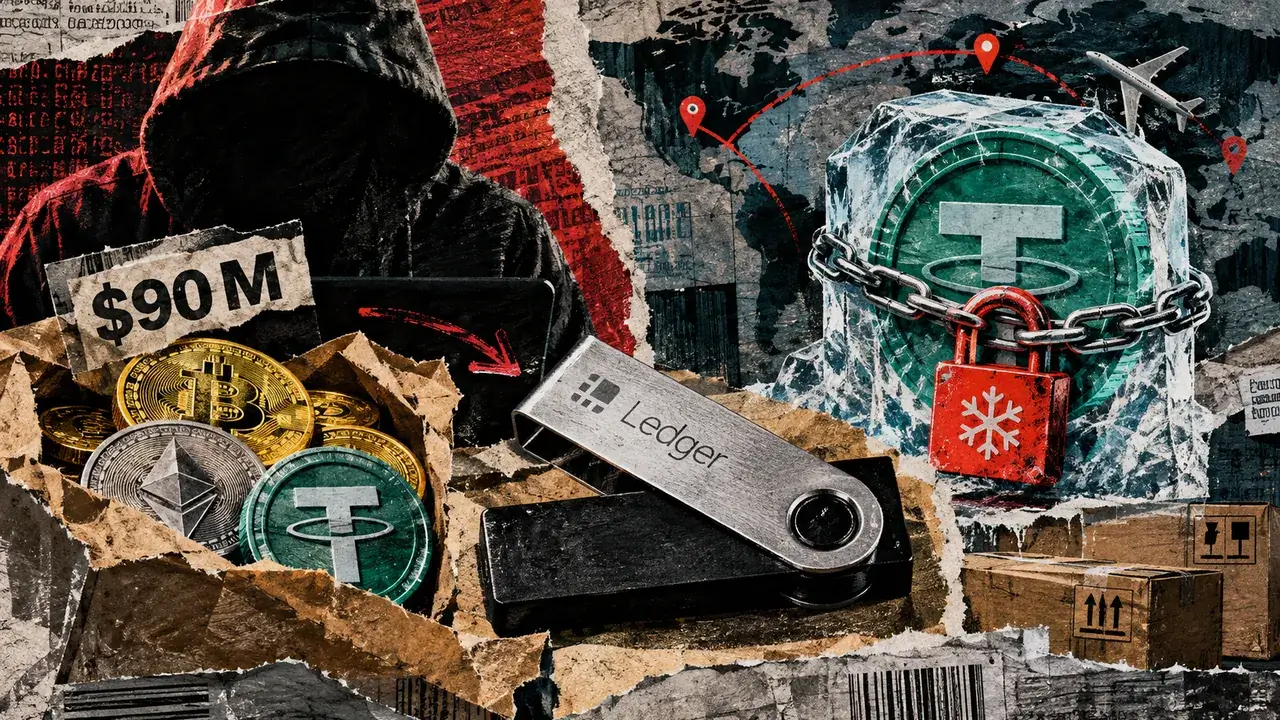
Ledger hack scare nears $90 million as Tether moves to freeze stolen USDT
Suspected Ledger wallet thefts are approaching $90 million as Tether freezes USDT stablecoin linked to the incident, according to...
Tether Freezes $1.45M in THORChain USDT Vaults, Then Reverses Blacklist Hours Later
Key Takeaways: The amount of about $1.45 million in USDT was temporarily frozen in THORChain vault addresses. According to THORCha...

DOJ scrutinizes Binance compliance with its 2023 settlement
The DOJ's scrutiny of Binance's compliance could impact global crypto regulations and influence future enforcement actions against...
Ledger theft-linked funds shift from USDT to USDD to dodge Tether freezes
The shift from USDT to USDD underscores vulnerabilities in stablecoin freeze mechanisms, prompting scrutiny on regulatory and secu...
Tether froze 1.45 million USDT in THORChain vaults, then reversed course three hours later
The incident highlights the vulnerability of DeFi protocols to centralized issuer actions, emphasizing the need for diversified as...
Tether freezes USDT linked to Ledger user thefts near $90 million
The freeze highlights the need for robust supply chain security and raises concerns about the limitations of centralized control i...