The Future of DeFi: Integrating Traditional Finance and Decentralized Finance
Decentralized Finance, or DeFi, has been one of the bitcoin industry's most talked-about topics in recent years. DeFi is the use of blockchain technology to build financial applications that do not require traditional fi...
Archive context
Older archive item. Useful for background and entity history, but not a fresh market-moving signal.

Decentralized Finance, or DeFi, has been one of the bitcoin industry's most talked-about topics in recent years. DeFi is the use of blockchain technology to build financial applications that do not require traditional financial intermediaries such as banks.
This improves access to financial services, lowers expenses, and increases transparency. DeFi, on the other hand, is still in its early stages and faces major challenges in becoming more mainstream.
One significant problem is integrating traditional finance with DeFi. The integration of traditional finance and DeFi is viewed as a crucial step in the blockchain industry's evolution.
This integration has the potential to help both the traditional finance sector and the DeFi space. Traditional finance could benefit from blockchain technology's efficiency, transparency, and security, while DeFi could gain access to a wider variety of financial assets and more sophisticated financial instruments.
Stablecoins are one method for integrating conventional finance and DeFi. Stablecoins are digital assets with a fixed worth, typically pegged to a fiat currency such as the US dollar. Stablecoins enable the exchange of value on blockchain networks without the volatility connected with cryptocurrencies like Bitcoin. Traditional financial assets, such as stocks, bonds, and real estate, could be tokenized and exchanged on blockchain networks using stablecoins.
Decentralized exchanges are another method to integrate conventional finance and DeFi. (DEXs). DEXs are cryptocurrency exchanges that do not rely on a single authority or intermediary.
They enable cryptocurrency and other digital asset trading without the use of conventional financial intermediaries, such as banks or brokerages. Investors can trade cryptocurrencies and other digital assets in a more decentralized and secure way by using DEXs. However, integrating conventional finance with DeFi presents challenges.
The Regulatory Climate Is a Major Challenge
Traditional financial institutions are prone to a variety of regulatory requirements, and integrating with DeFi may raise compliance and regulatory oversight concerns. Furthermore, conventional financial institutions may be hesitant to integrate with DeFi due to security, reputation, and operational risk concerns.
DeFi's Scalability Issues
Another problem is DeFi's scalability. While the DeFi space has grown rapidly in recent years, the existing infrastructure of blockchain networks may restrict the scale of DeFi applications. As more users and activities are added to blockchain networks, the network's speed and efficiency may suffer.
This may restrict DeFi's ability to gain widespread adoption. To address these issues, efforts are being made to improve the scalability of blockchain networks and to provide more legal clarity regarding the integration of conventional finance and DeFi.
One example is the creation of layer 2 scaling solutions for blockchain networks, which enable greater transaction throughput while maintaining security and decentralization. There are also efforts ongoing to develop regulatory frameworks that support the integration of traditional finance and DeFi.
The European Union, for example, recently proposed a new regulatory framework for crypto assets, with the goal of providing greater legal clarity for conventional financial institutions seeking to integrate with the DeFi space.
Traditional Finance and DeFi: How Compatible Are They?
Traditional finance and decentralized finance (DeFi) are two different approaches to managing financial transactions. Traditional finance has been the norm for centuries, while DeFi is a newer approach that has gained popularity in recent years. Both approaches have their strengths and weaknesses, but how compatible are they?
Their compatibilities
One compatibility between traditional finance and DeFi is that both approaches offer access to a wide range of financial products and services. Traditional finance institutions offer a variety of financial products, such as loans, mortgages, and savings accounts, while DeFi offers a wide range of decentralized financial products, such as decentralized exchanges, stablecoins, and lending protocols. This means that users have a choice between the two systems depending on their financial needs and preferences.
Moreover, one shouldn’t overlook the massive potential for collaboration between the two systems. Some traditional financial institutions have already started to explore the use of blockchain technology and cryptocurrencies, which could open up new opportunities for collaboration between traditional finance and DeFi. For example, banks could use blockchain technology to increase the efficiency and security of their payment processing systems, while DeFi protocols could benefit from partnerships with traditional financial institutions to improve regulatory compliance and adoption.
Their incompatibilities
There are also several incompatibilities between traditional finance and DeFi. One major incompatibility is the lack of regulatory oversight in DeFi. Unlike traditional finance, DeFi operates without a central regulatory body, which can lead to potential risks, such as fraud, money laundering, and market manipulation. While DeFi protocols have implemented various security measures, there is still a need for greater regulatory oversight to ensure user protection.
Another incompatibility is the lack of interoperability between the two systems. Traditional financial institutions operate on centralized systems that are not compatible with blockchain technology. This means that users cannot easily transfer funds between traditional finance and DeFi, and there is a need for greater integration between the two systems to enable seamless transactions.
Wrapping up
The integration of conventional finance and DeFi is regarded as a critical step in the evolution of the blockchain industry.
While there are obstacles to this integration, efforts are ongoing to overcome these obstacles and build a more seamless and secure bridge between the traditional finance sector and the DeFi space.
As blockchain technology matures, the potential for DeFi to disrupt conventional finance and expand financial inclusion to a broader audience grows.
This article was written by Finance Magnates Staff at www.financemagnates.com.Why this matters
This blockchain story adds another data point to the current market tape and is useful when read alongside nearby source coverage.
Original source
Read on Finance MagnatesRelated market context

Binance launches ETF Wealth Management on Binance Earn, bridging crypto and traditional finance
Binance's ETF integration could redefine crypto exchanges as comprehensive financial platforms, merging digital assets with tradit...
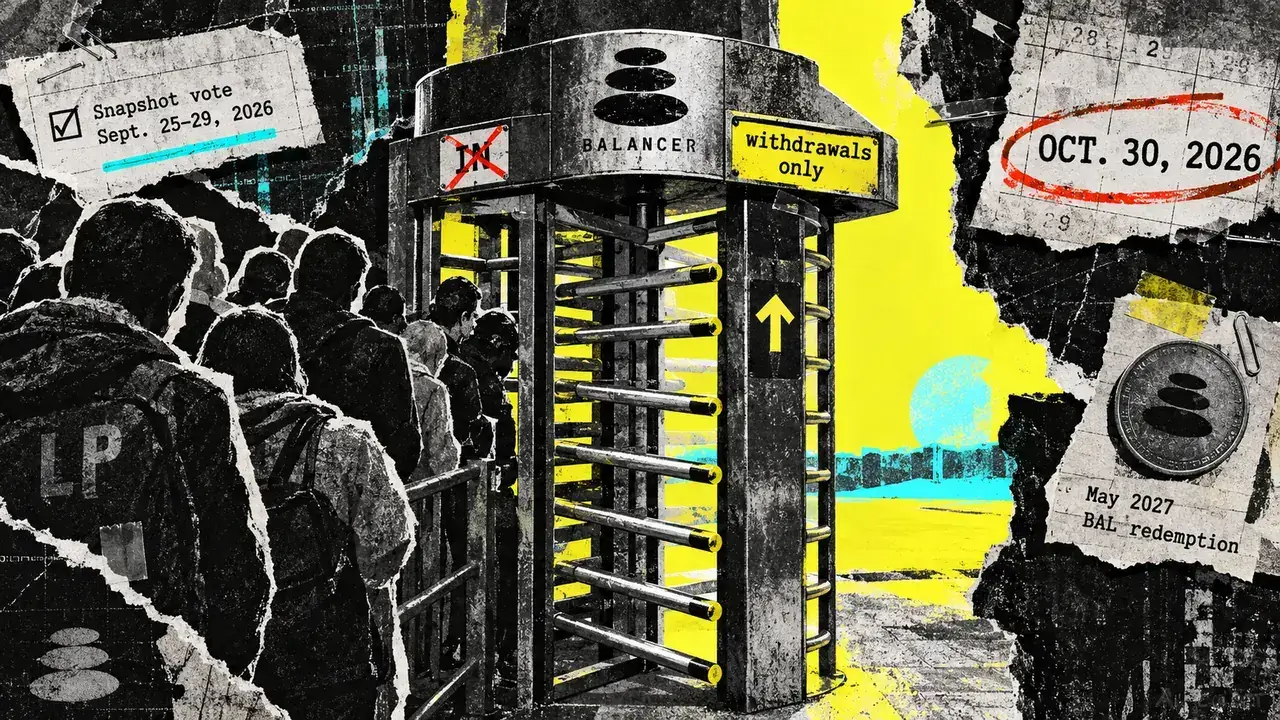
A DeFi giant that once held $3 billion is now proposing to wind itself down
DeFi platform Balancer is proposing an orderly shutdown after a cost-cutting overhaul failed to revive revenue following last year...
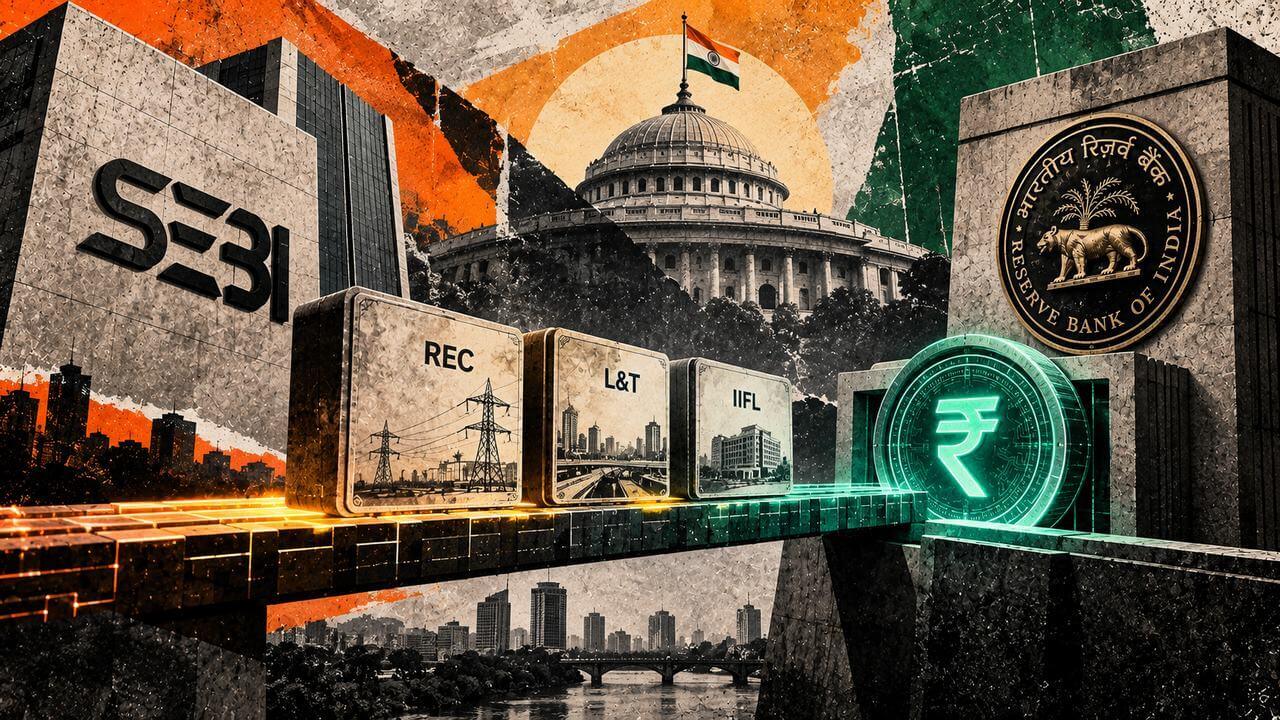
India’s tokenized bond pilot starts with institutions, with retail access planned next
India’s securities regulator has launched a pilot that places corporate bonds and their cash settlement on linked digital rails, m...

Kraken Lets Users Earn DeFi Yield on Nvidia and ETF xStocks
Kraken has launched on-chain yield vaults for three tokenised securities, enabling qualified clients to earn variable rewards from...

Spark Liquidity Layer ranks as largest on-chain capital allocator with $2.5B TVL
The rise of Spark Liquidity Layer highlights DeFi's evolving integration with traditional finance, potentially increasing regulato...

Coinbase criticizes senators for opposing Clarity Act, warns US risks losing digital finance race
The US risks falling behind in digital finance innovation, potentially ceding leadership to regions with clearer regulatory framew...