The Velocity of Value: How Blockchain is Reshaping Micro-Payments
Blockchain has opened up payment models that were awkward and/or uneconomic under older rails. This is especially true for digital content, gaming, tipping, and machine-to-machine commerce (where AI agents search for, co...
Archive context
Older archive item. Useful for background and entity history, but not a fresh market-moving signal.

Blockchain has opened up payment models that were awkward and/or uneconomic under older rails. This is especially true for digital content, gaming, tipping, and machine-to-machine commerce (where AI agents search for, compare, and purchase goods and services).
Without blockchain, each of these models would be far harder to sustain: blockchain offers the infrastructure necessary for fast, low-friction, low-value transactions.
Why Micropayments StruggledThe European Central Bank has noted, “some stablecoin initiatives are attempting to address the issue of micropayments” in a report entitled, “A big future for small payments?”. The ECB recalled that the concept of micropayments has existed since at least 1960, before the internet provided a boost in interest. While micropayments were discussed for years, the old models had awkward economics and clumsy user experiences.
The ECB paper points out that many earlier attempts failed because users faced too much friction, platforms were fragmented, and transaction costs were high for very small amounts. The idea made sense on paper, but the payment flow didn’t feel worth it for small values being exchanged.
Blockchain helps by changing how settlement works. Stripe describes blockchain-based payments as useful for improving settlement, reconciliation, and recordkeeping, which removes some of the back-office work that slows down traditional payments. Instead of relying on several intermediaries for every transfer, blockchain systems quickly move value across a shared ledger.
BlockchainThe original Lightning paper described a network of micropayment channels that lets people send transactions outside the main chain and settle later, which gives the system speed and lower cost. That’s well suited to tiny, repeated payments where recording every single transfer on the base blockchain would be too slow and expensive.
With micropayments, a reader could pay for one article, a gamer could unlock a new clothing item or vehicle, or a platform could control access by the second rather than trying to force a year’s subscription. Researchers have also explored Lightning-based micropayments for Q&A and knowledge markets, where small payments can reward useful answers and content without requiring a minimum payment threshold. Ellis Solaiman and Jorge Robins wrote in a 2024 paper that recent advancements (including the Lightning Network) foster an Internet of Value where transferring small amounts can be as simple as sharing data.
Use CasesThe ECB also gives the example of internet access offered in public places like airports, where people sometimes pay extortionate fees for WiFi hotspot access, even though they’re only using the service for a few seconds to read emails or send messages to friends and colleagues.
Gaming is another good fit. The ECB highlights gaming as an industry where micropayments already play a part, since gamers often pay for small digital items or short-lived features. Blockchain supports that by making payments quicker and less intrusive – especially useful for gamers in different countries who need smooth cross-border payments. Crypto is also already widely used in other gaming contexts: in iGaming, casino review sites highlight the platforms accepting crypto that are licensed, offer a wide game selection, and provide quality customer service.
Micropayments are also suited to automated systems. The ECB notes that machine-to-machine (MSM) payments allow internet of things (IoT) devices to interact and communicate, and suggests they are “likely candidates” to impact the payment industry.
What Gets In The WayPeople need wallets that are easy to understand, merchants need stable pricing, and businesses need clear compliance and accounting processes. Volatility is another concern, which is why many payment discussions now involve stablecoins or other assets designed to reduce price swings.
Public blockchains can be slow and costly for lots of tiny payments, so micropayment systems often move those transactions into off-chain channels. A simple example is a payment channel that lets two people send many small transfers back and forth, then settle the final balance later on the main chain. Another example is the Lightning Network using payment channels to move value quickly without recording every tiny transaction on the base layer.
These systems still depend on the underlying blockchain for final settlement, but they avoid putting every small payment directly on the main network. (Avoiding putting every small payment on the main network is good because it keeps the base chain from getting clogged, which helps fees stay lower and transactions confirm faster for everyone.)
The challenge for blockchain systems is hiding enough of the complexity that the system feels simple, while keeping settlement, routing, and security reliable enough – and understandable enough – for people to trust it.
The post The Velocity of Value: How Blockchain is Reshaping Micro-Payments appeared first on CryptoNinjas.
Why this matters
Stripe is showing up inside the Stablecoins theme, so this story is worth tracking for follow-through rather than treating it as a one-off headline.
Original source
Read on CryptoNinjasRelated market context

HSBC and Ant Digital test AI-agent payments with tokenized deposits
AI-agent payments with tokenized deposits could revolutionize financial transactions, enhancing efficiency and security in digital...

Samsung Wallet Brings USDC to 82M Galaxy Devices With Coinbase, Solana and Sui Support
Key Takeaways: Samsung Wallet will support 82 million U.S. Galaxy to add transfers on USDC. Coinbase will keep USDC in their Coinb...

Stealing $1.5B in crypto is easy, cashing out is the trap
North Korean hackers stole around $1.5 billion from Bybit in February 2025. While the hack itself has been widely covered and anal...
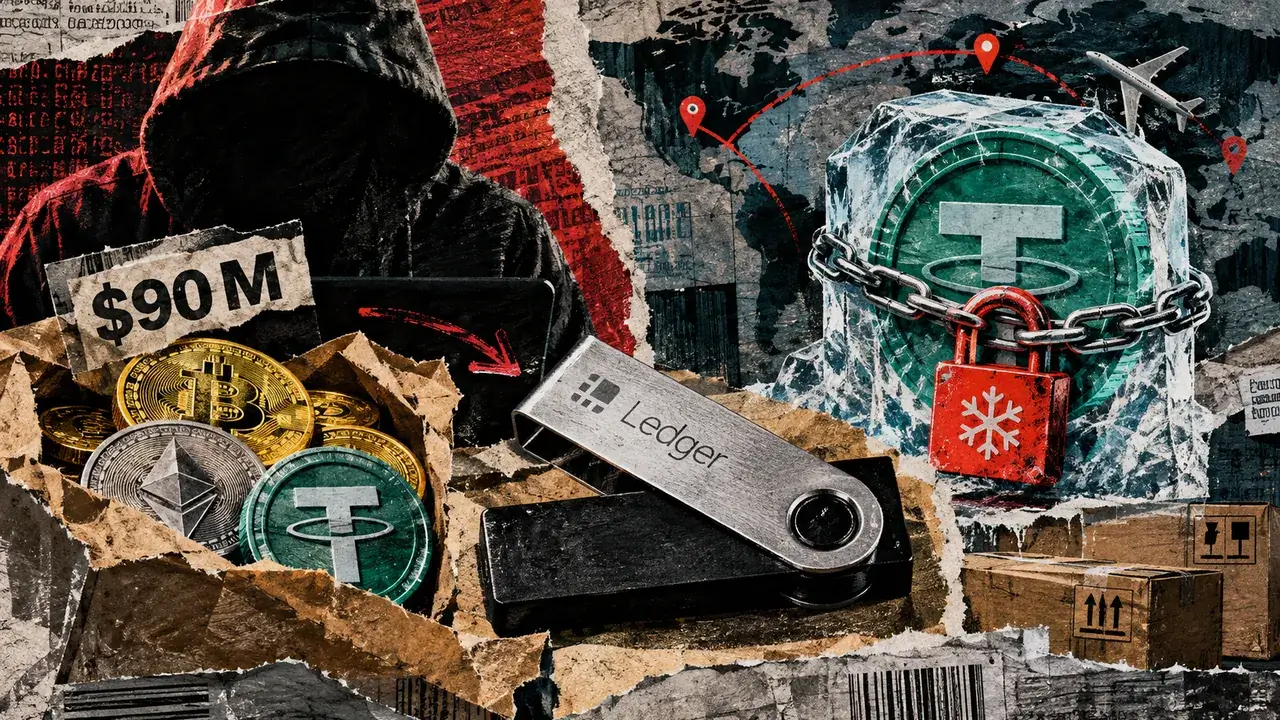
Ledger hack scare nears $90 million as Tether moves to freeze stolen USDT
Suspected Ledger wallet thefts are approaching $90 million as Tether freezes USDT stablecoin linked to the incident, according to...
Circle Brings USDC and EURC Into SAP Workflows Powering 84% of Global Commerce
Key Takeaways: Circle and Tereina are introducing USDC and EURC to the SAP payment flow. USDC will process eligible dollars while...

XRP News: Ripple Challenges Wall Street for a Slice of $256B ETF Market
The U.S. leveraged ETF market has 593 funds and more than $256 billion in assets, including XRP, and Ripple Prime is making itself...