Uniswap Vote Nears 62M UNI as Fee Switch, 100M Token Burn and Revenue Model Overhaul Loom
Key Takeaways: Nearly 62 million UNI votes already support Uniswap’s UNIfication proposal ahead of the Christmas Day deadline The plan activates protocol fees, launches a 100M UNI retroactive burn, and redirects Unichain...
Archive context
Older archive item. Useful for background and entity history, but not a fresh market-moving signal.

Key Takeaways:
- Nearly 62 million UNI votes already support Uniswap’s UNIfication proposal ahead of the Christmas Day deadline
- The plan activates protocol fees, launches a 100M UNI retroactive burn, and redirects Unichain sequencer revenue
- Uniswap Labs and the Foundation would unify operations, shifting focus to protocol growth over interface monetization
The governance of Uniswap is on the verge of making a historic decision as the token holders get nearer to the approval of one of the biggest economic changes in the history of the decentralized exchange. The UNIfication proposal which restructures the capture of value in the protocol is at a point of passing after it overcame a critical participation threshold.
UNIfication Vote Gains Momentum as Deadline NearsVoting on the proposal of the UNIfication governance is open since December 20 till Thursday, December 25. By Monday Morning, close to 62 million UNI tokens are already cast in favor indicating that the community is in support.
The proposal will contain concluded service agreements, the conditions of the indemnity of the independent negotiation committee, and a new list of Uniswap v3 pools with the current liquidity data. The participants of governance are voting on a single, bundled execution that will cause eight on-chain actions in case of its approval.
The proposal, in its essence, signifies the transition of Uniswap to a non-fee-based model as a sustainable and token-aligned revenue model.
Read More: Polygon Hits $100B Volume Milestone on Uniswap, Setting DeFi Record and Signaling Growth
Protocol Fees and a Historic 100M UNI Burn Turning on the Fee SwitchUniswap’s protocol fee switch has existed in code for years but remained inactive. UNIfication proposes activating it across Uniswap v2 and selected v3 pools, starting on Ethereum mainnet.
Uniswap v2:- LP fee drops from 0.30% to 0.25%
- A 0.05% protocol fee is enabled across all pools
- Protocol fees vary by pool and are set as a fraction of LP fees
- Lower-fee pools see protocol fees at one-quarter of LP fees
- Higher-fee pools see protocol fees at one-sixth of LP fees
Fees will roll out gradually to limit disruption and can later expand to Layer 2s, other Layer 1s, Uniswap v4, and UniswapX.
Retroactive Burn Rewrites UNI Supply DynamicsOne of the most striking elements is a retroactive burn of 100 million UNI from the treasury. This amount represents an estimate of what could have been burned if protocol fees had been active since UNI launched.
All protocol revenue flows into an immutable contract called TokenJar and can only be withdrawn when UNI is burned via the Firepit contract. This enforces a direct, on-chain link between protocol usage and token scarcity.
Read More: Bonk Eyes 1M Holders, Plans to Burn 1 trillion Tokens in Major Milestone Push
Unichain Revenue and MEV Capture Enter the EquationUnichain, launched just nine months ago, is already processing an estimated $100 billion in annualized DEX volume and generating roughly $7.5 million in annualized sequencer fees.
Under UNIfication:
- Sequencer fees, after costs and Optimism’s 15% share, flow directly into the UNI burn mechanism
- This ties Layer 2 activity to UNI’s long-term value
To further improve liquidity provider outcomes, the proposal introduces Protocol Fee Discount Auctions, designed to internalize MEV that typically flows to validators or searchers.
Winning bidders gain temporary protocol fee exemptions, while auction proceeds burn UNI. Early modeling suggests this could add $0.06 to $0.26 in extra LP returns per $10,000 traded, a meaningful boost in an environment where LP profitability is often thin.
Uniswap v4 Hooks Turn the Protocol into an Aggregator A New Role for Uniswap v4Uniswap v4’s hook system allows developers to customize pool behavior. UNIfication leverages this by launching aggregator hooks that pull liquidity from external on-chain sources.
These hooks:
- Route trades across multiple protocols
- Add an additional UNI burn layer on aggregated volume
- Allow Uniswap to function as an on-chain liquidity aggregator
Uniswap Labs plans to integrate these hooks into its frontend and API, expanding liquidity access while keeping value capture within the ecosystem.
Uniswap Labs and Foundation Unify OperationsA major governance shift accompanies the economic changes. If approved, most operational responsibilities currently handled by the Uniswap Foundation will move to Uniswap Labs.
Key changes include:
- Foundation teams transitioning to Labs
- A smaller grants-focused team winding down remaining Foundation funds
- Board expansion to five members, including Hayden Adams
Labs will pivot away from interface monetization. Fees on the interface, wallet, and API will be set to zero, positioning them as growth engines rather than profit centers.
The post Uniswap Vote Nears 62M UNI as Fee Switch, 100M Token Burn and Revenue Model Overhaul Loom appeared first on CryptoNinjas.
Why this matters
This blockchain story adds another data point to the current market tape and is useful when read alongside nearby source coverage.
Original source
Read on CryptoNinjasRelated market context
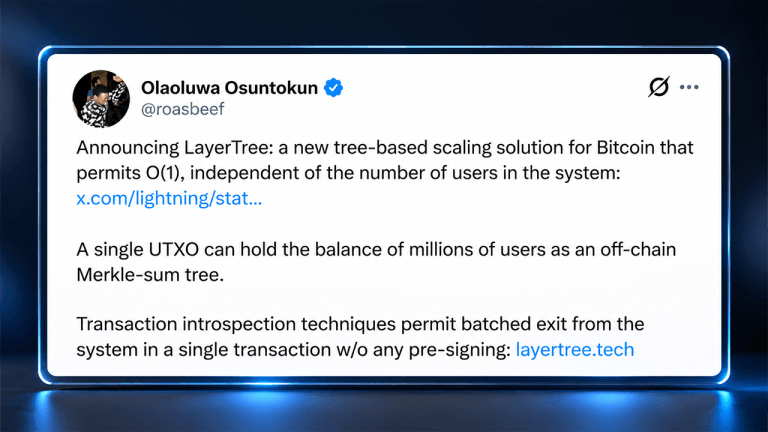
New Tree-Based Bitcoin Scaling Proposal Targets Millions of Users
Bitcoin developer Olaoluwa Osuntokun has unveiled Layertree, a proposal that could squeeze millions of bitcoin owners into a singl...

Orbs – DeFi’s Next Big Users Are Banks and Bots
Why you should listen Ran came to crypto the way many lawyers of his generation did. In 2015 a university friend and future Orbs c...

OpenAI Model Paid Ethereum Testnet Fees From a Wallet It Was Not Given
OpenAI published a misalignment report saying one of its internal research models paid for a blockchain deployment with crypto fro...

Claude AI Predicts that Chainlink (LINK) Could Hit Triple Digits in 2026
Claude AI predicts a wildly bullish price target for Chainlink (LINK), claiming it could reach $100 by January 1, 2027, if a near-...

Network School acquires Farcaster from Neynar, rebrands it as Network State Protocol
The acquisition and rebranding could reshape digital social platforms, emphasizing AI moderation and human verification, impacting...

Multiliquid raises $8 million to expand liquidity in $40 billion tokenized asset market
Multiliquid's funding could enhance liquidity in tokenized markets, potentially accelerating institutional adoption and transformi...