U.S. House Set to Scrutinize Key Crypto Bill, the CLARITY Act
Key Takeaways: Crucial Markup Session: The U.S. House Financial Services Committee will hold a markup session to review, amend, and vote on the Digital Asset Market Clarity Act (CLARITY Act) on June 10. Objective of Clar...
Archive context
Older archive item. Useful for background and entity history, but not a fresh market-moving signal.
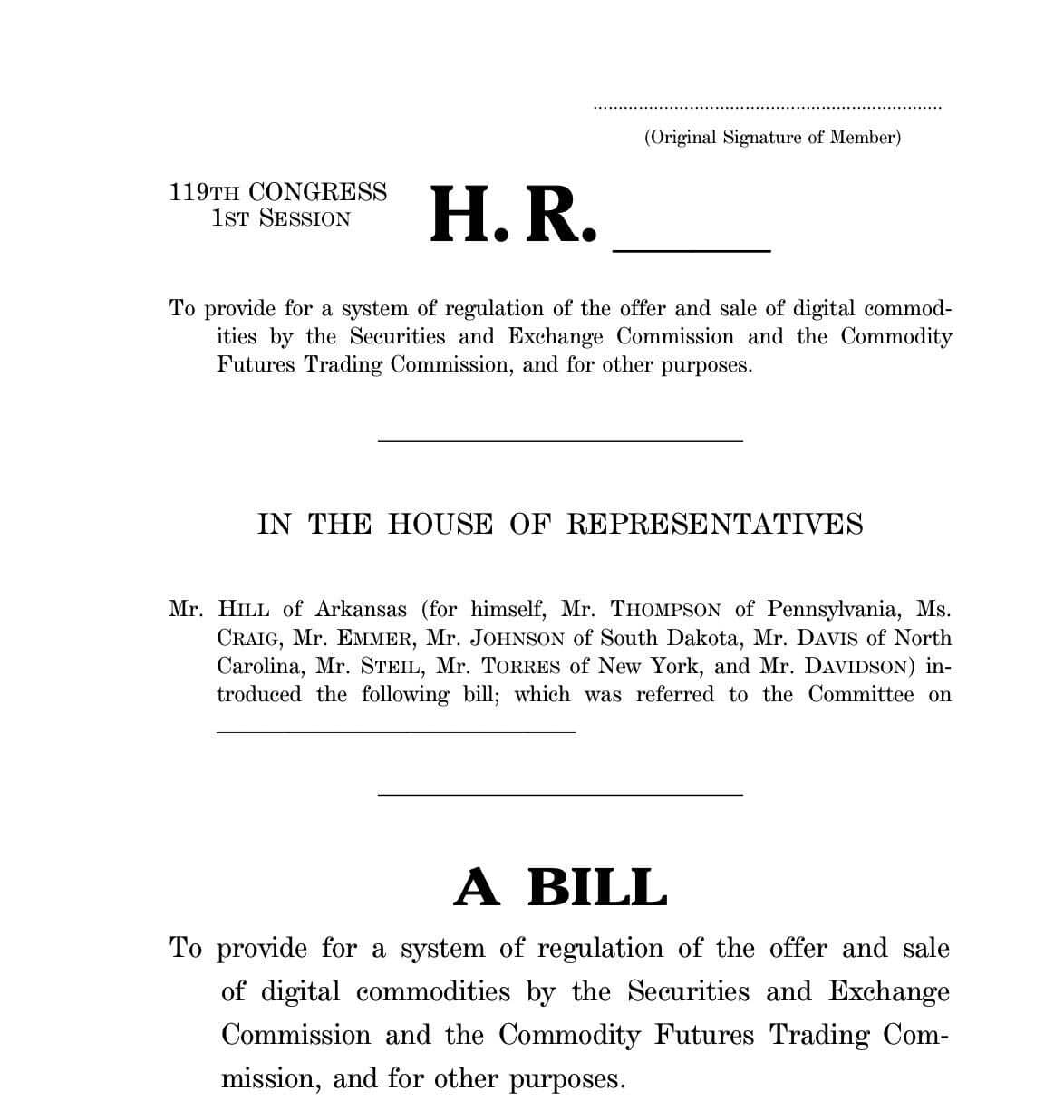
Key Takeaways:
- Crucial Markup Session: The U.S. House Financial Services Committee will hold a markup session to review, amend, and vote on the Digital Asset Market Clarity Act (CLARITY Act) on June 10.
- Objective of Clarity: The CLARITY Act aims to establish a clear regulatory framework for digital assets, delineating oversight roles between the SEC and CFTC, and clarifying which assets are securities and which are commodities.
- Industry Hopes: The crypto community hopes this bill will provide needed certainty, foster innovation, and protect consumers and markets from fraud.
- Challenges and Advocacy: Crypto advocacy groups are actively lobbying to ensure the bill protects DeFi developers and does not impose unsuitable regulations.
The global cryptocurrency market has been developing at a breakneck pace, attracting millions of investors and driving countless technological innovations. However, in the United States, one of the world’s largest financial centers, the absence of a clear and consistent legal framework for digital assets has created an uncertain environment, posing challenges for both businesses and investors. Regulatory bodies like the Securities and Exchange Commission (SEC) and the Commodity Futures Trading Commission (CFTC) often have different approaches and interpretations, leading to legal “gray areas” and costly litigation. It is against this backdrop that the CLARITY Act (Digital Asset Market Clarity Act) has emerged, with the hope of bringing “light” to this nascent industry.
The CLARITY Act: Core Content and Targeted GoalsThe CLARITY Act is anticipated to address several core issues currently debated in the U.S. crypto legal landscape. One of the central goals of the bill is to clearly define what constitutes a “digital asset.” More importantly, the bill seeks to clearly delineate supervisory authority between the SEC and CFTC. This means there will be specific criteria to determine whether a particular digital asset (e.g., Bitcoin, Ethereum, stablecoins, or other altcoins) will be considered a security (under SEC jurisdiction) or a commodity (under CFTC jurisdiction).
This clarification will not only help crypto projects and companies understand their legal obligations but also better protect investors. With clear regulations, investors will be aware of their rights and the potential risks when participating in the market. Simultaneously, a transparent legal framework is expected to encourage responsible innovation, allowing the crypto industry to develop more sustainably in the U.S., rather than operating with concerns about sudden legal changes or retroactive enforcement actions.
The June 10 Markup Session: A Potential Turning PointThe U.S. House Financial Services Committee has scheduled a crucial markup session for the CLARITY Act on June 10. This is a significant step in the legislative process. During this session, lawmakers will discuss the bill’s content in detail, propose amendments, and ultimately vote on the revised version. If passed by the committee, the bill will have the opportunity to be brought before the full House for consideration and a vote.
This markup session is being closely watched by the crypto industry. It is not only an opportunity for lawmakers to express their views and shape the future of crypto regulation but also a chance for the public to better understand the challenges and opportunities presented by digital assets. The outcome of the session will significantly impact the direction of the CLARITY Act and, more broadly, the entire crypto industry in the United States.
Expectations and Lobbying EffortsThe crypto community and stakeholders have high hopes for the CLARITY Act. They believe a clear legal framework will unlock innovation potential, attract further investment, and solidify the U.S.’s position as a fintech hub. Clearly distinguishing between digital securities and commodities will make regulatory compliance easier for businesses, reduce legal risks, and promote a level playing field.
However, not all aspects of the bill have universal agreement. Lobbying groups for the crypto industry are actively working with lawmakers to ensure the bill’s language is appropriate and does not stifle growth. One of the main concerns is the protection of developers in the Decentralized Finance (DeFi) space, especially those who do not directly hold user funds. They argue that these entities should not be regulated like traditional financial institutions. Balancing the promotion of innovation with consumer protection and market stability will be a key factor in the upcoming discussions.
The future of the CLARITY Act may also be influenced by the progress of other related bills, such as the GENIUS Act in the Senate, which focuses on stablecoins. Coordination and consensus between different branches of government will be crucial to creating a comprehensive and effective legal framework for the digital age.
More News: Senate Shocker: 15+ Democrats Flip as GENIUS Act Clears Key Hurdle in 66-32 Vote
The post U.S. House Set to Scrutinize Key Crypto Bill, the CLARITY Act appeared first on CryptoNinjas.
Why this matters
This blockchain story adds another data point to the current market tape and is useful when read alongside nearby source coverage.
Original source
Read on CryptoNinjasRelated market context

Ripple Brings RLUSD to Cross River Bank as Garlinghouse Backs Evernorth’s XRP Strategy
Announced on October 15, the Cross River partnership integrates Ripple USD (RLUSD) into the bank’s proprietary Core Operating Syst...

XRP Price Prediction: XRP Duo Turn Bullish, $1,000 Dream Lives On
XRP is trading at $1.34, up more than 1% after a brutal Wednesday. Ripple CEO Brad Garlinghouse says XRP has legal clarity despite...
Morgan Stanley’s Amy Oldenburg: The Digital Gold Investment Case for Bitcoin
Bitcoin Magazine Morgan Stanley’s Amy Oldenburg: The Digital Gold Investment Case for Bitcoin Bitcoin’s digital gold case is “a pr...

US Hoovers up Bitcoin While the World Runs on Its Digital Dollars: Report
Bitcoin Magazine US Hoovers up Bitcoin While the World Runs on Its Digital Dollars: Report America is accumulating bitcoin while e...

Strategy, Metaplanet Face Exit From MSCI Indexes as the Index Provider Adopts New Test
MSCI will stop handling crypto treasury companies under a separate set of rules. The index provider announced on Oct. 15 that it i...

Binance Claims Fastest $1 Billion Sprint in bStocks With $6 Billion in Share Conversions
Binance has reported that its bStocks product crossed $1 billion in assets faster than any competing tokenised equity offering. Un...