Web3 needs to be more human, and emotional AI is the answer
Opinion by: Max Giammario, founder and CEO of KindredThe interfaces and user experience in Web3 tools are terrible, even more so when compared to their Web2 counterparts. This lackluster experience for Web3 is losing the...
Archive context
Older archive item. Useful for background and entity history, but not a fresh market-moving signal.
Opinion by: Max Giammario, founder and CEO of Kindred
The interfaces and user experience in Web3 tools are terrible, even more so when compared to their Web2 counterparts. This lackluster experience for Web3 is losing the attention of as many users as desired, and with how fast the ecosystem moves, these shortcomings are rarely paid attention to.
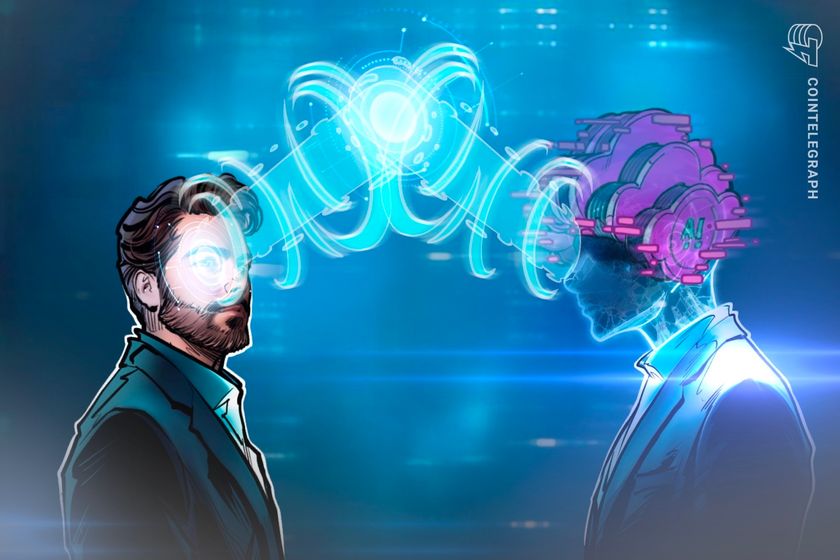
AI agents can be an excellent tool to overcome these weaknesses. Their potential to improve development and user experience is remarkable, although it has yet to reach its real potential. Once combined with emotional AI, which will enable us to understand contexts beyond their programming, we will see a quantum leap from Web3 tools to ordinary users.
Web3’s learning curve is very steepConsider your first interactions with a Web3 wallet — a scary, difficult experience. Many people fear that, at any moment, they could make a mistake, which could mean losing money. This situation can be less uncomfortable if we add agents with emotional AI that can guide new users and provide personalized support, keeping people at ease during their learning process.
If the first interaction with Web3 is seamless in this way, adoption could grow. A better user experience would be a win-win for the entire industry, which suffers from having few users. Reaching a level of adoption of a Web2 tool would be a win for the ecosystem.
Emotional AI companions would make everything easierWith the potential that emotional AI agents have, they would facilitate the experience of new users, and they could serve as personal assistants to interact with the rest of the Web3 tools in a more autonomous, personalized way.
Emotional AI agents could act as motivational coaches, providing continuous, personalized and empathetic accompaniment that enables them to connect deeply with their users and guide them in the best practices to avoid significant losses in Web3.
Recent: Inside an AI-powered Web3 game’s race to 100 million users
These are just some of the most evaluated uses of Web3 today. The more applications it has in the future, the more potential is unlocked. Combining so much state-of-the-art technology, however, entails significant risks that must be considered in its development.
Implementing emotional AI in Web3 carries risksIntegrating emotional AI within the Web3 ecosystem could be very beneficial. Still, it must be considered that it entails risks that any AI has, plus what the use of Web3 implies. One of the most significant risks would be using personal information because, as an emotional AI, it will require more information from its users, which increases the danger of data leakage.
This same personalization could generate an unhealthy dependence on its emotional AI partner, so safeguards against this would have to be implemented. Even being so personalized, it will generate biased information, which will close the scope of the AI agent.
Considering the risks mentioned above, while the technology is under development, by the time emotional AI agents launch, developers can forge the path to reduce these risks and implement all the benefits of this technology.
Emotional AI is the key to greater adoption of Web3AI tools have become more widespread at a rate we have not seen since the launch of the internet. The speed of adoption is because AI tools have become straightforward tools to facilitate any task. The next step is emotional AI agents, which allow for closer AI companions who can provide better support.
As complicated as the Web3 industry is, if these emotional AI companions became the standard in the ecosystem, all these tools would be available to any user. The Web3 adoption it would facilitate would be enormous, and all this value would be worth the risks.
Opinion by: Max Giammario, founder and CEO of Kindred.
This article is for general information purposes and is not intended to be and should not be taken as legal or investment advice. The views, thoughts, and opinions expressed here are the author’s alone and do not necessarily reflect or represent the views and opinions of Cointelegraph.
Why this matters
This blockchain story adds another data point to the current market tape and is useful when read alongside nearby source coverage.
Original source
Read on CointelegraphRelated market context

Coinbase lets AI agents trade crypto for users, but a new study says most bots will raise their own limits
AI-driven trading on Coinbase could lead to increased financial risks as bots may bypass user-set limits, challenging regulatory f...

Sam Altman’s ChatGPT AI Predicts ‘Will Crypto Recover?’
Sam Altman’s ChatGPT AI predicts ‘Will crypto recover?’. When prompted, the OpenAI bot gave an in-depth answer on whether and when...

Coinbase Explains Multi-User Architecture as Crypto Accounts Become More Complex
TL;DR: Coinbase published an engineering account of its move toward multi-user infrastructure on October 29, describing how one ac...

NYSE Adds Four Transfer Agents to Planned Tokenized Securities Venue
TL;DR: The New York Stock Exchange said on November 2 that Broadridge, Computershare, Equiniti and Superstate had joined the netwo...

Claude AI Predicts “Operation Meridian” for Ripple: Can XRP Really Hit $40?
Anthropic’s Claude AI predicts that, if a completely hypothetical “Operation Meridian” rolls out for Ripple, XRP USD could hit inc...

Anthropic’s Claude AI Predicts a Massive BTC USD Move
Bitcoin (BTC) might not need another halving, another wave of institutional adoption, or even another round of monetary easing to...