Zimbabwean Blockchain Startups Launch Service to Help Migrants Efficiently Move Funds Across Borders
Two Zimbabwean startups, Flexid and Uhuru Wallet, recently launched a platform that offers digital identity and remittance services to migrants living and working in South Africa. The two startups hailed what they’ve des...
Archive context
Older archive item. Useful for background and entity history, but not a fresh market-moving signal.

Two Zimbabwean startups, Flexid and Uhuru Wallet, recently launched a platform that offers digital identity and remittance services to migrants living and working in South Africa. The two startups hailed what they’ve described as the “first cross-chain collaboration between the two companies.”
Harnessing the Benefits of the BlockchainThe Zimbabwean blockchain startup Flex ID and the South Africa-based Whatsapp remittance platform, Uhuru Wallet, recently said they have launched a platform that offers “combined digital identity and remittance services to millions of Zimbabwean immigrants in South Africa.”
In a statement shared with Bitcoin.com News, the two startups hailed what they described as the “first cross-chain collaboration between the two companies.” As revealed in the statement, Flex ID, which was co-founded by Victor Mapunga, harnesses the Algorand blockchain, while the Uhuru Wallet is built on the Stellar blockchain.
Remarking on the two startups’ joint solution, Trust Jakarasi, the CEO and founder of Uhuru Wallet, said:
We are excited to partner with FlexID to offer our customers a more streamlined and secure remittance experience. By combining our strengths in digital identity and remittance services, we can better serve the needs of Zimbabwean immigrants in South Africa.
Some of the challenges which the two startups are hoping to overcome via the new partnership include “providing a seamless and secure remittance experience” for Zimbabwean immigrants. Through this working arrangement, the startups also hope to handle or overcome the problem of high sending fees, limited access to formal financial services, as well as identity verification issues.
Limited Access to Financial Services
Mapunga, in the meantime, spoke of the virtues of blockchain as well as the importance of deploying the technology.
“By leveraging blockchain technology, we can provide a secure and efficient way for users to verify their identity and access financial services, no matter where they are,” the CEO of Flex ID insisted.
Although South Africa is ranked among the biggest senders of remittances in sub-Saharan Africa, it costs anywhere between 5% and 20% to send money to Zimbabwe when using registered money transfer agencies. This, in turn, forces many Zimbabwean migrants to use alternatives such as couriers or unregistered remittance platforms.
The emergence of a blockchain-based solution widens options for Zimbabwe migrants and will likely help drive down the average cost of remitting funds.
Register your email here to get a weekly update on African news sent to your inbox:
What are your thoughts on this story? Let us know what you think in the comments section below.
Why this matters
This blockchain story adds another data point to the current market tape and is useful when read alongside nearby source coverage.
Original source
Read on Bitcoin NewsRelated market context
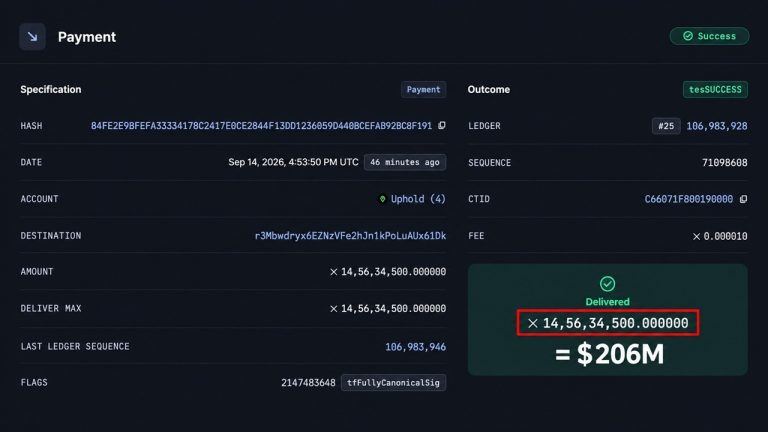
$206M in XRP Just Left an Uphold Wallet. Here’s What Happened Next
A single 145,634,500 XRP transfer worth about $206 million emptied a labeled Uphold wallet on Sept. 14, but onchain records point...

DeFi governance gap allows one wallet to request 98% of Ampleforth treasury’s USDC balance
Ampleforth, a DeFi protocol governed by FORTH token holders, saw Proposal 54 canceled on-chain before its voting window opened. Th...

Altcoins gained 21% and still lost ground to Bitcoin. What would finally turn the tables?
Glassnode reported that altcoin market capitalization climbed 21% over the past month, while altcoins' share of the combined Bitco...

Thailand’s dominant e-wallet TrueMoney partners with Fireblocks to embed THBT wallet in its app
TrueMoney's THBT wallet initiative could revolutionize digital payments in Southeast Asia, enhancing financial inclusion and cross...

A new XRPL upgrade could concentrate XRP ownership inside banks instead of retail wallets
A proposed XRP Ledger (XRPL) upgrade could let banks and fintechs absorb XRP costs so customers never need to hold the token. The...

XRP News: XRPL Records 2K Transactions from 20 Wallets
The XRP Ledger processed a record 3,254 transactions in ledger 106,965,249 yesterday, but 2,000 of the news came from just 20 acco...