$21B tokenized RWA market doubtful, institutions uninterested — Plume CEO
Amid the intensifying global race to tokenize real-world assets, the market is still too nascent for institutional adoption, according to Chris Yin, the co-founder and CEO of Galaxy-backed RWA platform Plume.Institutiona...
Archive context
Older archive item. Useful for background and entity history, but not a fresh market-moving signal.

Amid the intensifying global race to tokenize real-world assets, the market is still too nascent for institutional adoption, according to Chris Yin, the co-founder and CEO of Galaxy-backed RWA platform Plume.
Institutional capital is yet to enter the RWA market, and it will take some time for institutions to see its value, Yin told Cointelegraph on the sidelines of Token2049 in Dubai.
“These things move incredibly slowly, you have to show value, you have to show adoption first,” Yin said, comparing RWA’s currently developing stages with the early days of Bitcoin (BTC) and stablecoins.
“Only now, 10 years later, are they beginning to think about using the stablecoin. The same thing is going to happen in tokenized assets or tokenization,” Yin said.
Tokenized RWAs are far smaller than $21 billionYin questioned the accuracy of existing market estimates, which suggest the RWA sector is worth more than $21 billion.
“I tend to think that one, all the data is wrong, and two, the perspective that most people have is wrong with this, which is I take this $21 billion in assets,” Yin said.
According to the exec, the real RWA market cap figure is “more like” $10 billion, mostly including Treasury bills and gold, and just a “bit of private credit.”
RWA.xyz suggests that the total market capitalization of the RWA market amounted to roughly $17.4 billion as of April 27, with private credit accounting for almost 60% of all RWAs, while Treasury’s and commodities share was 27% and 8%, respectively.
Private credit is not the main driver for RWAsEstimating the size of the global RWA market is extremely difficult, especially on the private side, where data is “fragmented and often inaccessible,” Stobox co-founder Ross Shemeliak told Cointelegraph.
According to Stobox’s estimations, tokenized Treasurys and bonds must account for the majority of RWAs today, or between 60–65%.
“Crucially, 99.9% of all companies in the world are private, and nearly all of them are untapped candidates for tokenization,” Shemeliak said, adding that such companies typically struggle with access to capital and liquidity.
“Tokenization provides an entirely new mechanism for fundraising, investor engagement, and cap table transparency,” he noted.
Institutions are here for the moneyPlume CEO Yin highlighted the nature of institutional capital, which tends to move in while markets reach a bigger scale in order to make some money.
“I think people tend to forget what's going on with institutions and the real world,” Yin said. “So the reason why tokenized assets are interesting to them is because they are looking for an angle to make more money, not to save money, not to do efficiency.”
Plume CEO Chris Yin at Token2049 in Dubai. Source: Plume
“Nobody cares about that, especially Larry Fink, who runs a $12 trillion asset manager,” Yin said, adding that BlackRock’s money market fund has been successful, but its $2.5 billion assets are tiny given the company’s net assets.
Related: Deloitte predicts $4T tokenized real estate on blockchain by 2035
With the current modest size of the RWA market, the industry should currently rely more on the native community, Yin said, adding:
“There are zero institutions putting money onchain. They are trying to actually suck money out of the ecosystem. Their products try to sell new things to crypto. Not putting money here.”“Yes, RWA tokenization is small today, just like Bitcoin was in 2013,” Stobox’s Shemeliak admitted.
However, tokenized assets are “fundamentally institutional from day one” as they provide regulated securities, yield-bearing instruments, and financial contracts that require legal compliance and governance.
“Tokenizing RWAs without institutional involvement is like trying to build a stock exchange without regulators, custodians or settlement layers,” he said, adding:
“The innovation may start with startups and Web3 protocols, but for serious volume, you need institutions, fund managers, underwriters, legal advisors, and regulated platforms.”Magazine: Ethereum is destroying the competition in the $16.1T TradFi tokenization race
Why this matters
This cryptocurrency story adds another data point to the current market tape and is useful when read alongside nearby source coverage.
Original source
Read on CointelegraphRelated market context

Binance Wallet Opens $4.7T Pre-IPO Market Access Through PancakeSwap Tokenized Deals
Key Takeaways: Binance Wallet now provides eligible users a chance to participate in PancakeSwap Pre-Access campaigns for tokenize...

ECB Launches Pontes to Drive Tokenization
The European Central Bank (ECB) has announced that the Eurosystem will launch Pontes today (Monday), marking a major milestone in...

Ondo’s Oasis Pro Joins DTCC Fund/SERV In Tokenized Fund Milestone
TL;DR Oasis Pro Markets has joined DTCC’s Fund/SERV network. It becomes Fund/SERV’s first member built specifically around tokeniz...

WisdomTree And MoonPay Expand US Access To Tokenized Funds
TL;DR WisdomTree is integrating MoonPay into its tokenized-fund platform. MoonPay says its ecosystem reaches more than 30 million...
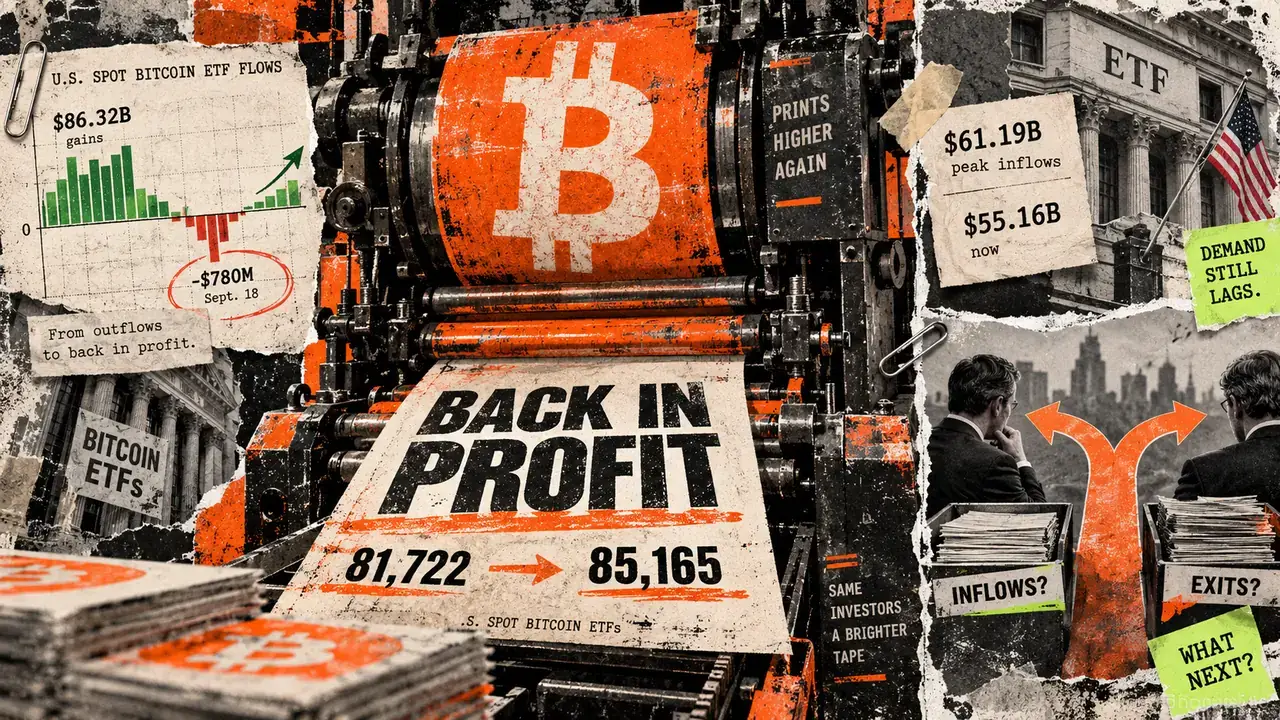
Bitcoin hits $86,000 putting ETF investors back in profit after $86 billion wipeout
Bitcoin’s rally toward $86,000 has pushed US spot exchange-traded fund (ETF) investors back into profit after months underwater. D...

Robinhood Crypto Chain’s $146M Tokenized-Stock Bet Faces Its First Fee Test
Robinhood crypto chain had attracted $146 million in tradeable tokenized stocks, just weeks before the free-gas promotion that hel...