Afghanistan’s Taliban Government Shuts 16 Crypto Exchanges
Afghanistan's Taliban government is cracking down on the local cryptocurrency industry as it closed at least 16 exchanges operating from the country’s western Herat province. However, the names of the shuttered exchanges...
Archive context
Older archive item. Useful for background and entity history, but not a fresh market-moving signal.

Afghanistan's Taliban government is cracking down on the local cryptocurrency industry as it closed at least 16 exchanges operating from the country’s western Herat province. However, the names of the shuttered exchanges were not revealed.
As reported by Ariana News, the crackdown came in response to the cryptocurrency trading ban imposed by the new Taliban government three months before.
“Da Afghanistan’s Bank (central bank) stated in a letter that digital currency trading has caused lots of problems and is scamming people, therefore, they should be closed. We acted and arrested all the exchangers involved in the business and closed their shops,” the Head of the Counter-Crime Unit of Herat police, Sayed Shah Sa’adat said.
Growing Interest in Crypto in Afghanistan
Afghanistan’s financial system collapsed after the withdrawal of US troops from the country and then the takeover of the Taliban. The hardline government-led central bank of Afghanistan even reportedly banned online foreign exchange trading, citing it as illegal and fraudulent.
The interest in cryptocurrencies skyrocketed among local Afghans with the collapse of the country’s economy. However, the international sanctions on the Taliban government made it very tough to purchase cryptocurrencies.
The Afgan authorities, however, stood on the stance that the cryptocurrency industry is full of fraud and scams, making the crackdown very essential.
Ghulam Mohammad Suhrabi, the Head of Herat Money Exchangers’ Union, said: “Digital currency accounts are outside the country and are purchased from the companies. Our people are not familiar with it, so it is better not to use it. This currency is new in the market and has high fluctuation [rates].”
Meanwhile, the South Korean authorities are pushing to block access to 16 international crypto exchange platforms, including KuCoin and MEXC, that operate in the country without any local authorization.
This article was written by Arnab Shome at www.financemagnates.com.Why this matters
This cryptocurrency story adds another data point to the current market tape and is useful when read alongside nearby source coverage.
Original source
Read on Finance MagnatesRelated market context
Tax on Bitcoin Gains? Dutch Government to Introduce Capital Gains Tax From 2028
Bitcoin Magazine Tax on Bitcoin Gains? Dutch Government to Introduce Capital Gains Tax From 2028 Dutch people could soon be paying...

Sparkling Launches the Trading App That Comes With an Agent
Abu Dhabi, UAE, September 30th, 2026, Chainwire Trade crypto, perpetual futures, prediction markets and tokenized US stocks from o...

Robinhood Readies 10x Crypto Perps for US Traders and Unveils AI Trading Agents in Its App
Robinhood plans to let eligible U.S. customers trade crypto perpetual futures in its app with up to 10x leverage, part of a batch...

Binance’s CZ discusses industry growth and lists HYPE token for spot trading
Binance's listing of HYPE token highlights the growing integration of decentralized exchanges, signaling a maturing crypto industr...
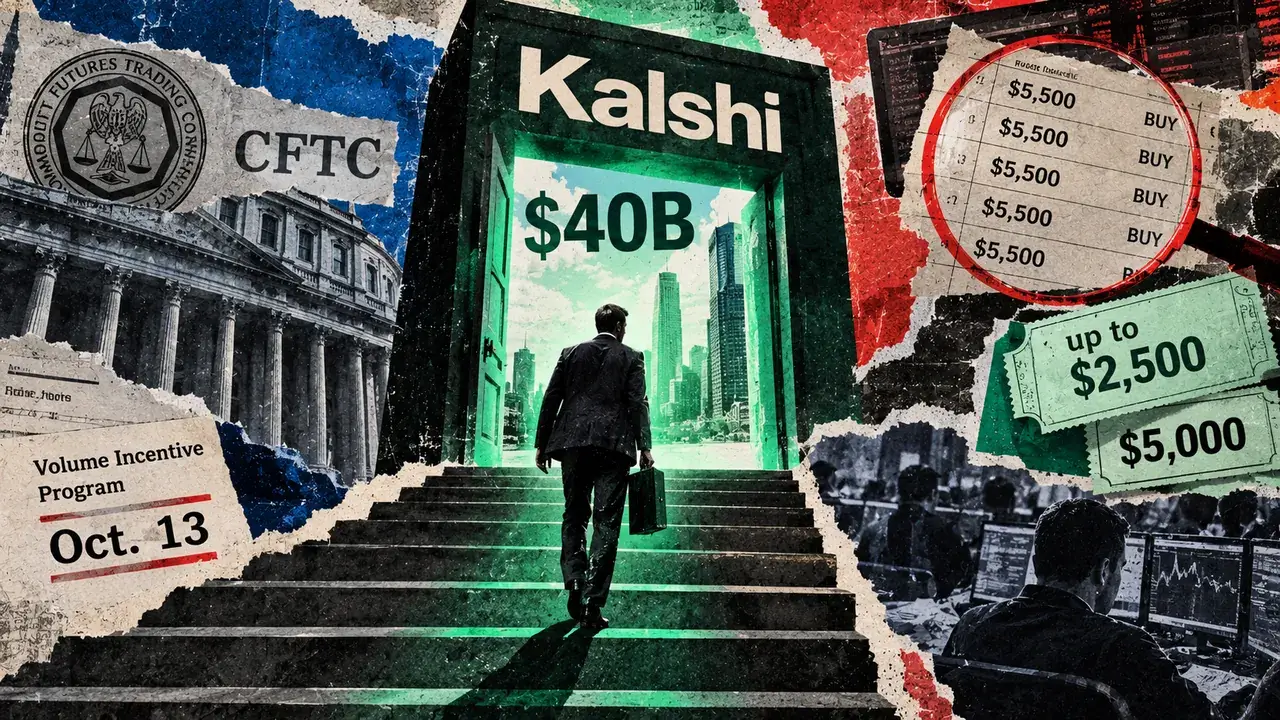
Kalshi’s $40 billion growth story hits tough questions about its trading volume
Kalshi is ending a trader-volume incentive program nearly a year early as scrutiny of activity in its crypto markets intensifies....
FCA Opens Five-Month Authorisation Window for UK Crypto Firms
The UK's financial regulator has given crypto companies five months to apply for FCA authorisation if they want their applications...