Appeal of Crypto Is ‘Illusory’ – Boosting Financial Risks of Developing Markets
A recent report published by the Bank for International Settlements (BIS) has revealed that cryptocurrencies may pose financial risks to emerging economies. Financial risks for developing markets? Even though some argue...
Archive context
Older archive item. Useful for background and entity history, but not a fresh market-moving signal.

A recent report published by the Bank for International Settlements (BIS) has revealed that cryptocurrencies may pose financial risks to emerging economies.
Financial risks for developing markets?Even though some argue that digital assets can help address issues such as high-fee payment transactions and inflation, the report suggests that they cannot solve the financial challenges faced by developing countries.
The report was produced by the BIS’s Consultative Group of Directors of Financial Stability (CGDFS), which has members from Brazil, Canada, and the United States. It is important to note that the opinions expressed in the report are not necessarily the views of the BIS.
The report stated the following:
“Crypto assets hold out the illusory appeal of being a simple and quick solution for financial challenges in EMEs (emerging market economies). They have been promoted as low-cost payment solutions, as alternatives for accessing the financial system and as substitutes for national currencies in countries with high inflation or high exchange rate volatility.”
The same report also revealed this:
“However, crypto assets have so far not reduced but rather amplified the financial risks in less developed economies. Therefore, they should be assessed from a risk and regulatory perspective like all other assets. This will become even more pressing if crypto assets are more widely adopted by retail investors and if links with the traditional financial system increase.”
A recent report has disclosed that developing countries possess several options to reduce the perceived negative impacts of cryptocurrencies. However, the report cautions that a complete prohibition on digital assets may be too severe and lead to unintended consequences.
Authorities can choose from various policy options to address risks associated with crypto assets, including outright bans, containment, and regulation.
If they prove effective, bans and containment may prevent financial stability risks.
But if central banks and regulators react excessively prohibitive, it may drive activities underground and make it challenging to influence responsible actors in the sector. In general, new approaches should not be automatically labeled as ‘dangerous’ solely because they differ from the norm.
Why this matters
This cryptocurrency story adds another data point to the current market tape and is useful when read alongside nearby source coverage.
Original source
Read on CryptoGazetteRelated market context

MEXC Leads SOL and DOGE Market-Price Liquidity in CoinGecko’s 2026 CEX Report
Mutsamudu, Comoros, September 30, 2026 – MEXC, a pioneer in 0-fee digital asset trading, led the exchanges studied in order book l...
Tax on Bitcoin Gains? Dutch Government to Introduce Capital Gains Tax From 2028
Bitcoin Magazine Tax on Bitcoin Gains? Dutch Government to Introduce Capital Gains Tax From 2028 Dutch people could soon be paying...

XRP News: Brazil $4T Financial Infrastructure Expands Onto XRPL
CSD BR, a Brazilian financial-market infrastructure operator overseeing more than 22 trillion reais in registered assets, has been...

Senate Republicans introduce crypto tax bill targeting digital assets
The bill's focus on crypto taxation may signal a shift towards detailed regulatory frameworks, influencing market sentiment and fu...
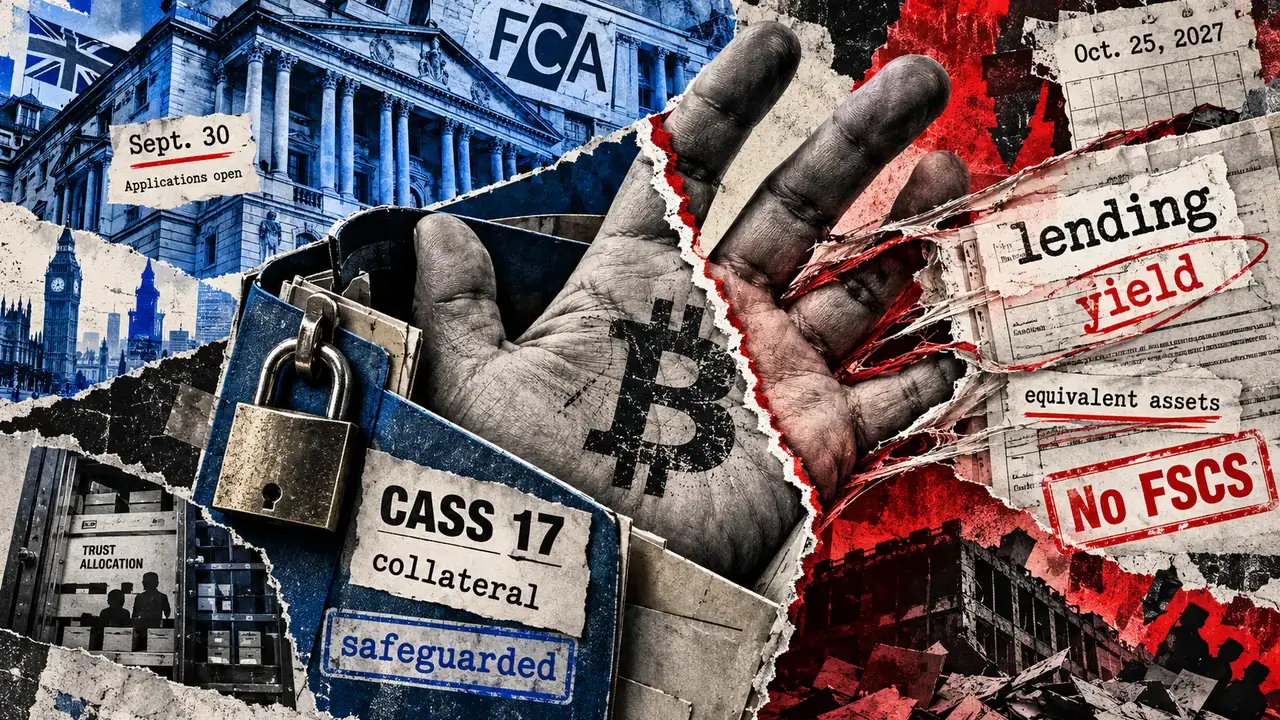
UK’s 2027 crypto rules let firms remove trust protection from Bitcoin lent for yield
UK crypto firms can now apply for authorization as of Sept. 30, bringing Bitcoin holders closer to a rulebook that will treat coin...

Coinbase builds financial accounts for super intelligence
Coinbase's AI-focused financial infrastructure could revolutionize autonomous transactions, potentially reshaping financial market...