Arthur Hayes Dumps Entire Zcash Bag, Keeps WLD Bet Alive
Arthur Hayes says Maelstrom has sold its entire Zcash position after new disclosures around the Orchard Pool vulnerability sharpened the perceived risk around ZEC’s monetary integrity. The move effectively ends his recen...
Archive context
Older archive item. Useful for background and entity history, but not a fresh market-moving signal.

Arthur Hayes says Maelstrom has sold its entire Zcash position after new disclosures around the Orchard Pool vulnerability sharpened the perceived risk around ZEC’s monetary integrity. The move effectively ends his recent “Holy Trinity” trade across ZEC, NEAR and HYPE, while leaving Worldcoin as the AI-linked bet he says the fund still holds.
“The Holy Trinity is dead,” Hayes wrote on X. “Sadly due to the Orchard Pool exploit, I had to dump our entire ZEC bag.”
Why Is Hayes Dumping Zcash Now?The post followed a detailed statement from Zooko Wilcox, Jason McGee and Taylor Hornby, who described the issue as “The Orchard Counterfeiting Vulnerability.” According to their summary, Hornby discovered a critical vulnerability in Zcash’s Orchard pool on May 29 and disclosed it to Zcash Open Development Lab, which then coordinated an emergency response completed on June 2. The key line was stark: the vulnerability “could have been exploited to undetectably create an unlimited amount of counterfeit ZEC within Orchard.”
That disclosure changed the market framing. Earlier ecosystem messaging had emphasized that the vulnerability had been remediated, that there was no evidence of exploitation, and that user funds remained safe. But Wilcox, McGee and Hornby added an important caveat: because of Orchard’s privacy properties, there is no way to cryptographically prove whether the vulnerability was exploited while it existed. That distinction sits at the center of Hayes’ decision to exit.
“While I think it’s extremely unlikely of any minting, it cannot be formally cryptographically proved impossible,” Hayes wrote. “The privacy from AI, govt, big tech narrative demands perfection not improbability. I read about the exploit yday, and didn’t appreciate how it violated my narrative mental map.”
Josh Swihart, founder and CEO of Zcash Open Development Lab, offered his own explanation in a post titled “Never Again.” He described the Orchard bug as a failure in one of the system’s rules: the rule was written loosely enough that it could accept false information and still pass. In other words, the problem was not a privacy leak but a soundness failure in the proof system, the kind of issue that can undermine confidence in whether invalid value creation was possible inside a shielded pool.
The emergency fix required coordinated network action rather than a simple wallet or application patch. ZODL and the broader Zcash ecosystem moved to disable Orchard actions temporarily and then restore them with a corrected circuit. The remediation may have closed the vulnerability, but for a privacy asset, the reputational damage came from the residual uncertainty: no evidence of counterfeiting is not the same as a cryptographic proof that counterfeiting never occurred.
Hayes said the roughly 30% selloff in ZEC forced him to reassess the position. “The 30% dump made me rethink, and I had to take profit on the entire position,” he wrote. His stated logic was not that exploitation had happened, but that the privacy thesis he had attached to ZEC required a higher standard than probabilistic reassurance.
The sale completes a rapid reversal from Hayes’ May 22 “Holy Trinity” call, when he grouped HYPE, ZEC and NEAR as a three-token basket. “When you are in position, trading is easy, sit back and watch number go up,” he wrote at the time, naming “HYPE, ZEC, NEAR the holy trinity.”
HYPE represented the on-chain derivatives and protocol revenue trade, NEAR the AI and chain-abstraction angle, and ZEC the privacy leg. A day before the ZEC sale, Hayes had already said he dumped his entire HYPE and NEAR positions, citing higher energy prices, looming major AI IPOs and political risk around artificial intelligence as reasons for taking profit.
Still, Hayes did not close the door on Zcash. “We will consistently re-evaluate our thinking and if my assumptions are proven incorrect, will rebuy, hopefully at lower prices,” he wrote. “Privacy is priceless and I have no issue eating humble pie and rebuying much higher.”
For now, Worldcoin is the remaining public expression of his AI-linked rotation. “We still hold WLD and are excited for Lord Elon to pump our bags,” Hayes added. That follows his recent public call for a WLD bull market, linking the move to renewed speculation around AI assets and an OpenAI IPO.
At press time, ZEC was down more than 45% in 24 hours.
Why this matters
Zcash is showing up inside the Security Incidents theme, so this story is worth tracking for follow-through rather than treating it as a one-off headline.
Original source
Read on NewsBTCRelated market context
Hyperliquid surpasses $1B revenue, $1B used for HYPE buybacks
Hyperliquid's strategic buybacks enhance HYPE's market value, reflecting strong financial health and boosting investor confidence...

AI Could Weaken Ethereum Security as Cryptographic Risks Grow, Vitalik Buterin Warns
Buterin urged developers to prepare for potential AI vulnerabilities in both conventional and quantum-resistant cryptography, whil...

Being right about Bitcoin won’t save your 3x leveraged ETF position
Bitcoin's next recovery could vindicate your investment thesis but leave your leveraged fund deep in the red, because the fund's d...
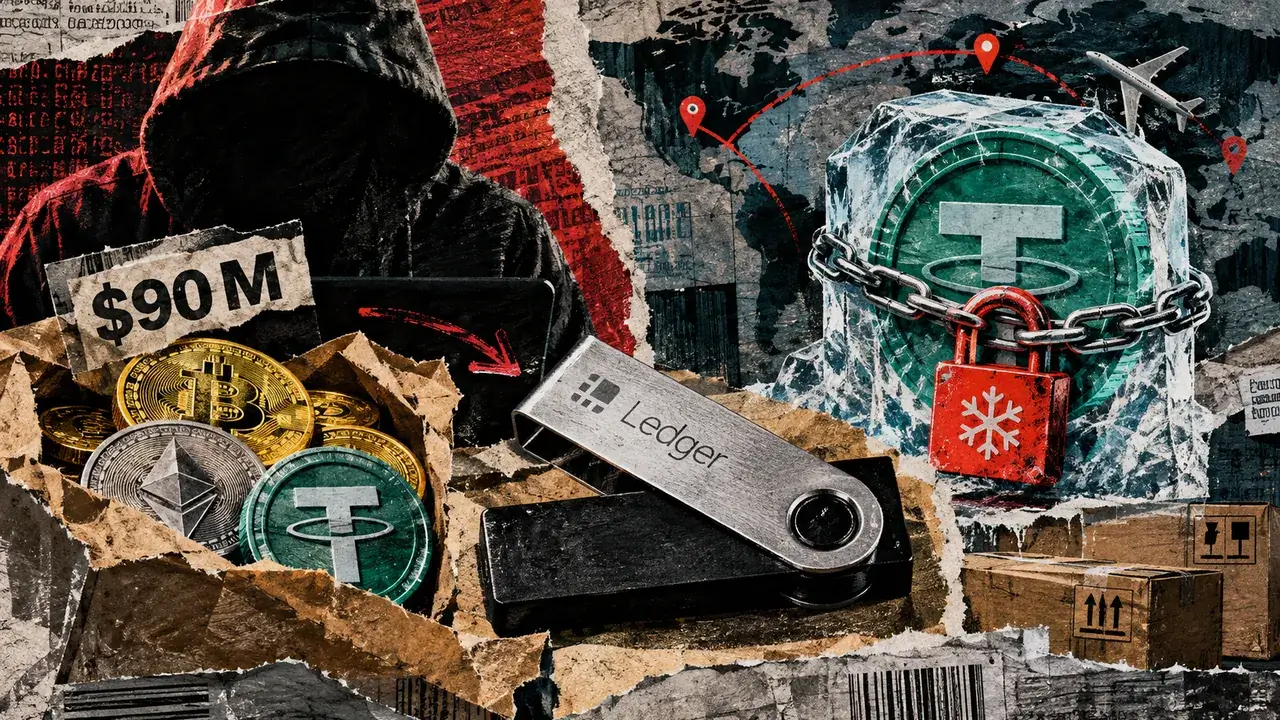
Ledger hack scare nears $90 million as Tether moves to freeze stolen USDT
Suspected Ledger wallet thefts are approaching $90 million as Tether freezes USDT stablecoin linked to the incident, according to...
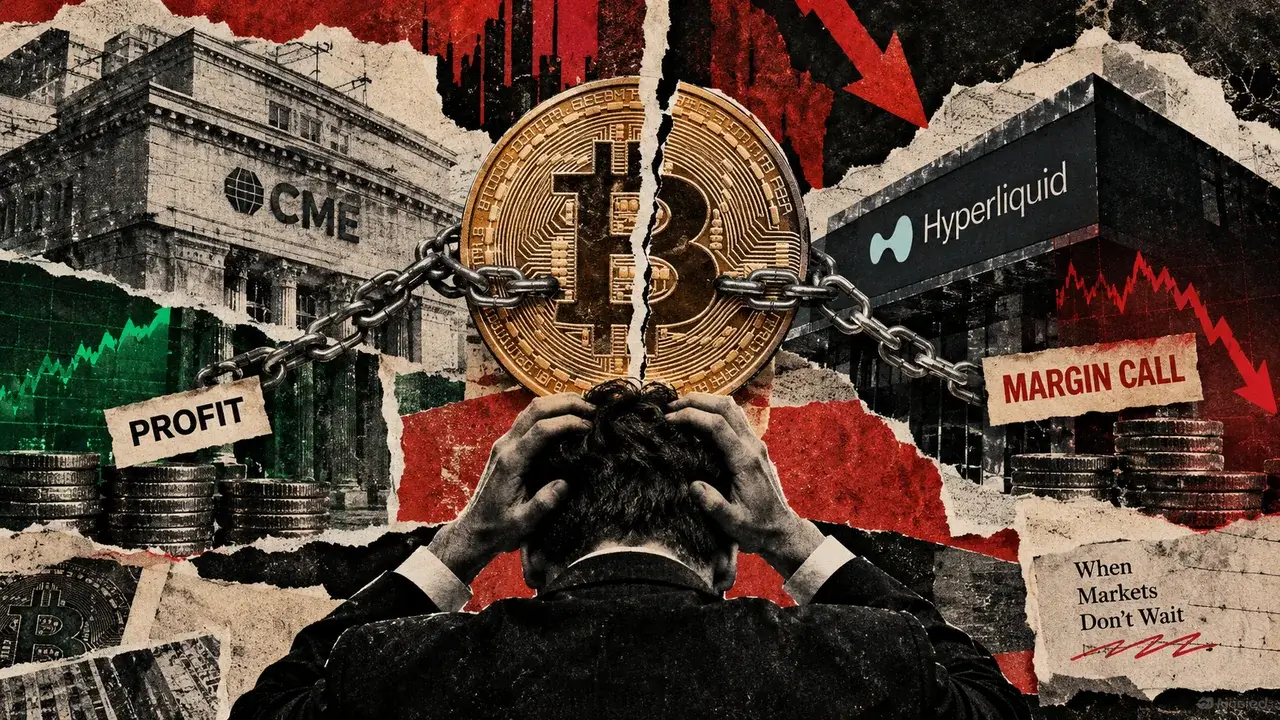
Bitcoin hedge funds face a liquidation trap when their collateral is split across markets
Here's a hypothetical situation: a hedge fund is making money, but one of its exchanges is about to liquidate its position anyway....
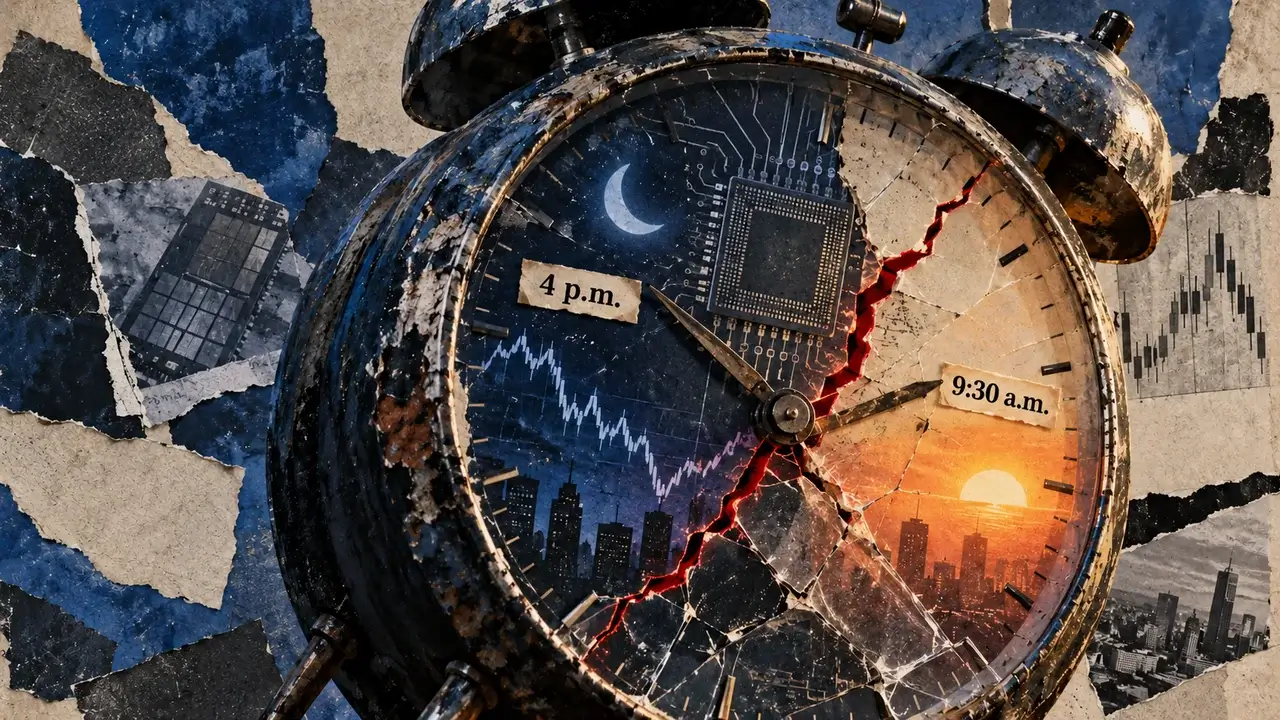
What happens when crypto trades stocks while Wall Street sleeps?
Wall Street closes at 4 p.m., but apparently that's becoming more of a suggestion than a rule. You can now spend the evening watch...