Arthur Hayes Outlines Why Zcash Could Surge To $10,000–$20,000 Fast
Arthur Hayes thinks Zcash can move an order of magnitude faster than most investors expect—and he spelled out why in a Coin Bureau interview released on November 3. The former BitMEX CEO ties the new Zcash bull case to a...
Archive context
Older archive item. Useful for background and entity history, but not a fresh market-moving signal.

Arthur Hayes thinks Zcash can move an order of magnitude faster than most investors expect—and he spelled out why in a Coin Bureau interview released on November 3.
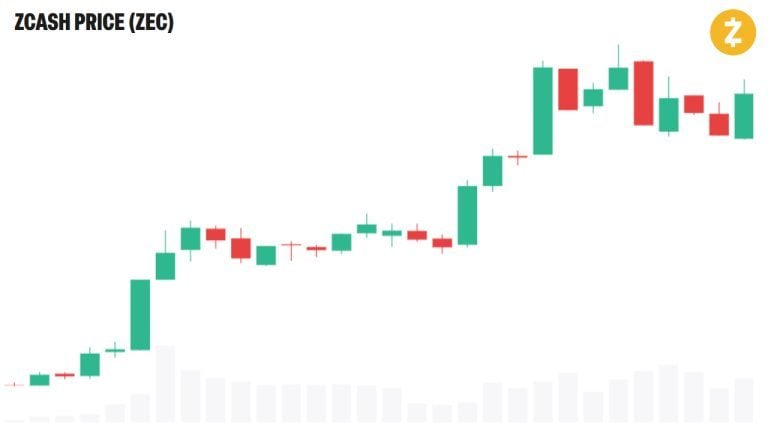
The former BitMEX CEO ties the new Zcash bull case to a three-part story that mixes technical maturation, visible shifts in on-chain behavior, and a looming supply inflection. “I think that 10% to 20% of the value of Bitcoin quite quickly is something that Zcash could achieve,” he said—an estimate that, at current Bitcoin prices, translates to roughly $10,000–$20,000 per ZEC.
Why Zcash Could Skyrocket To $10,000-$20,000For Hayes, the technology is no longer the 2016 experiment that divided the market over ceremony theater and cryptographic trust. He recounted being “deep into Zcash in 2016” when BitMEX listed a pre-genesis futures market and spot prices briefly printed around “$3,000 a coin on Poloniex” before supply filled in.
What’s changed, he argues, is the removal—by protocol upgrades—of the original single biggest credibility drag. “One of the big issues with Zcash back then was this trusted setup issue… but essentially, I think it was the Halo 2 upgrade recently removed or maybe a few years ago removed that trusted setup issue.” That, in his telling, reframes Zcash from a clever but encumbered R&D project into a privacy asset whose cryptography now clears the institutional sniff test.
He couples that with direct user-level experience. Hayes says he installed Zashi, Zcash’s flagship wallet, and used Near Intents flows to shield and swap, which he likened to an industrial-strength mixer. “When you do that, it’s essentially like Tornado Cash on steroids,” he said, emphasizing that the resulting output asset “appears, but it’s not linked to any other transaction.”
Costs remain a friction—“It’s definitely not cheap yet”—but he points to trend data he has reviewed showing a secular rise in actual privacy usage: “the amount of shielded transactions is approaching I think 30%, up from like a few percentage points when I cared about Zcash a long time ago.” In other words, the privacy feature set is not just theoretically stronger; it is being used.
The demand narrative rests on a simple claim: in the age of on-chain forensics and AI-enabled pattern recognition, true cash-like privacy is a product with differentiated utility. Hayes draws a sharp line between pseudonymity and privacy. “I believe in privacy coins… I think Bitcoin being synonymous is actually a good thing because I want to be able to track Bitcoin, but I also want to have internet cash where there is no traceability of that.”
He contrasts Zcash with Monero’s recent headlines, citing reports that “the Japanese authorities were able to deanonymize Monero by… linking together different disparate parts of some information.”
Scarcity is the third pillar. Hayes flags the Zcash halving “coming up in a few weeks, November,” framing it as the timing catalyst that could supercharge reflexivity if investor attention and liquidity arrive in tandem. The supply cut is not the entire story for him—he dismisses halving dogma in Bitcoin—but he does view a synchronous demand narrative plus a mechanical issuance drop as unusually potent for a small-float asset when a privacy bid is already rising on-chain.
Liquidity and access are precisely why he sees the setup as asymmetric. Zcash is not broadly quotable, which is a risk and an opportunity. “I hit up… eight or nine OTC brokers. Only two brokers would quote me Zcash,” he said, describing how hard it was to acquire size through traditional venues. He expects that, if the price begins to trend, the path will run through permissionless rails rather than regulated exchanges. “If the price rises high enough… I can buy it on one of these decentralized exchanges and that’ll be how you really get access… just like how Bitcoin was back [then].”
Hayes also addresses the change in his own posture, including what catalyzed it. He credits a dinner during Token2049 with Naval Ravikant, who “started shilling me on Zcash,” prompting him to push past his 2016-era objections and re-underwrite the protocol. “I bought a few million bucks on the spot at that point,” he said, adding that he kept buying “even though I bought it after the 80% pump when Naval sent out that tweet.”
Hayes believes the upside can compress into weeks rather than years. In his words: “I’ve bought a lot of it… I’m still buying it. I think that this is probably going to be one of my better trades of the cycle.”
At press time, ZEC traded at $464.
Why this matters
This cryptocurrency story adds another data point to the current market tape and is useful when read alongside nearby source coverage.
Original source
Read on NewsBTCRelated market context
Privacy Coins Outrun Bitcoin as Market Rotates Into Zcash and Monero
Privacy coins have broken away from a weak crypto market, with zcash and monero delivering gains while bitcoin remains below its O...
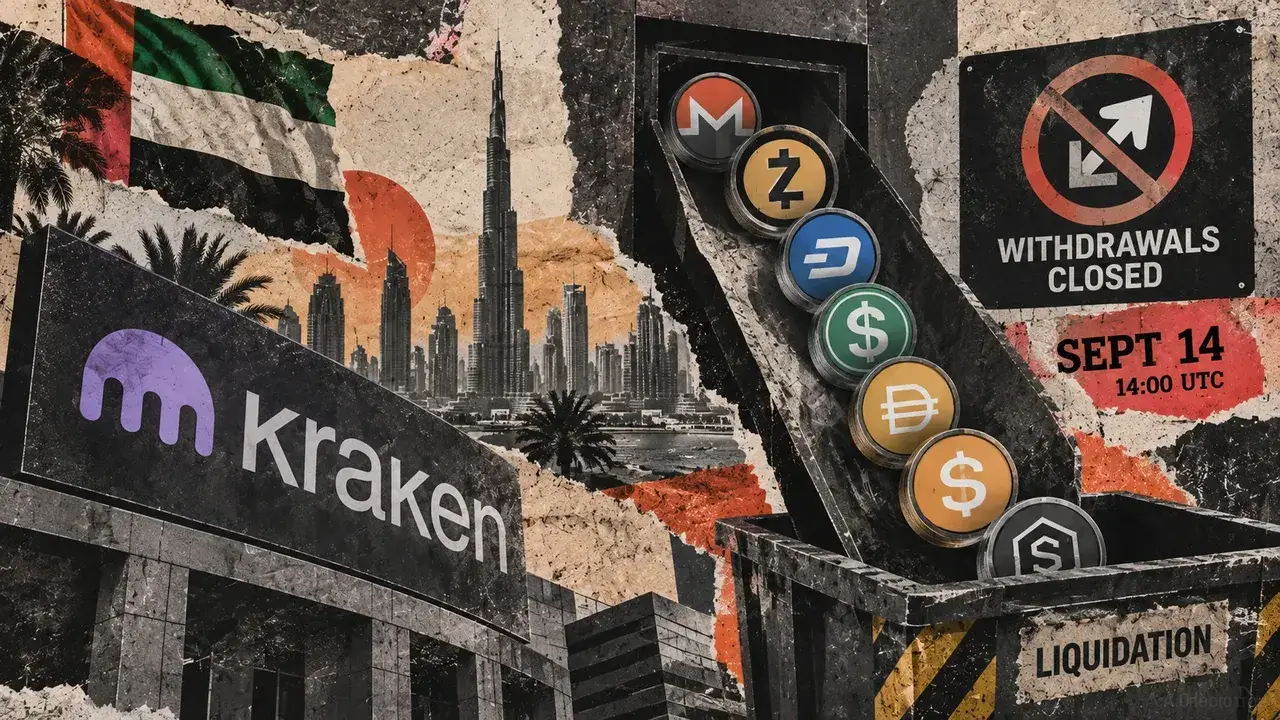
Seven assets enter Kraken liquidation window after withdrawals close Monday
Kraken will close withdrawals for seven crypto assets held by its United Arab Emirates customers at 14:00 UTC on Monday, Sept. 14,...
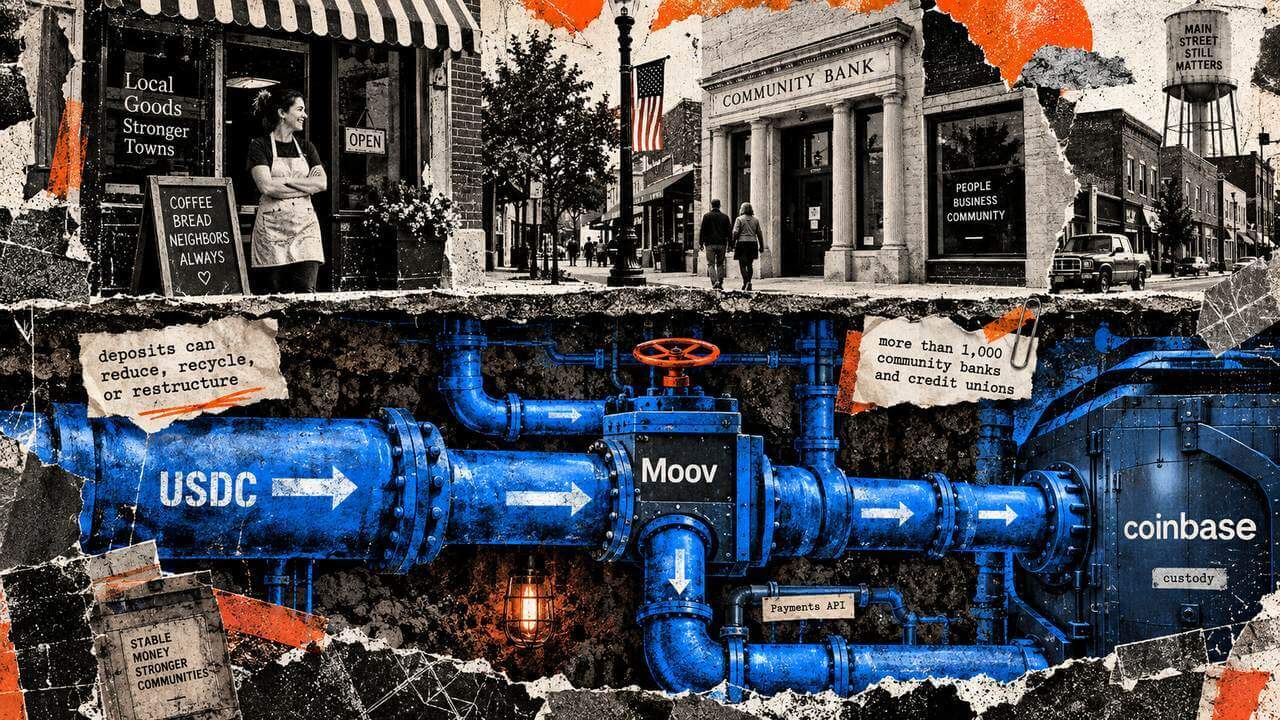
Coinbase gives community banks a stablecoin bridge while supplying infrastructure underneath
Coinbase’s new partnership with payments platform Moov gives community banks and credit unions a route to offer stablecoin service...

SEC Stock-Token Exemption Will Likely Let Companies Opt Out, Securitize’s Brett Redfearn Says
Brett Redfearn, president of Securitize and director of the SEC’s Division of Trading and Markets from 2017 to 2020, expects the a...

Ethereum Price Prediction: Supply Shock Could Send ETH Above $3,000
Ethereum trades at just above $2,500, but the flat 24-hour print masks a more interesting story underneath that could flip its pri...

Bitcoin Price Signal Upside as Rally Meets Fed Risk
Bitcoin price has clawed back to above $70,000 from $60,000 in late August, and traders are now assigning an approximately 85% pro...