Arthur Hayes Sees 20x Upside For NEAR, 5x For Zcash Within One Year
Arthur Hayes said NEAR and Zcash form the core of his privacy trade, arguing that crypto markets are beginning to reprice assets tied to private value transfer, AI-era sovereignty and real protocol economics. In an inter...
Archive context
Older archive item. Useful for background and entity history, but not a fresh market-moving signal.

Arthur Hayes said NEAR and Zcash form the core of his privacy trade, arguing that crypto markets are beginning to reprice assets tied to private value transfer, AI-era sovereignty and real protocol economics. In an interview with The Rollup, the Maelstrom CIO said NEAR could offer “20x potential,” while Zcash may have “5x potential” over the next year, framing both assets as part of a broader reaction to “big tech, big government” and AI-driven surveillance.
Hayes’ thesis starts with a macro shift. Earlier this year, he said he had been cautious because Bitcoin appeared to be pricing in an “AI deflationary credit event,” with monetary authorities unlikely to print aggressively until a crisis forced their hand. That changed, he argued, after the Iran conflict crystallized a liquidity-positive setup for markets.
“Governments print money to win war. AI is part of war. The AI capex will be underwritten, both in the United States and China, by the governments,” Hayes said. He added that governments in the US, China and Europe would likely fund a wartime economy and AI infrastructure through monetary expansion, with some of that liquidity leaking into Bitcoin and selected crypto assets.
Why NEAR And Zcash?Hayes’ strongest comments were reserved for privacy. He once again confirmed Zcash as his “second biggest bag” and said the asset had become investable again after earlier concerns around its trusted setup, issuance profile and developer subsidy faded into the background. The old Zcash trade, in his view, was too early and too messy. The new one is cleaner, more liquid and more relevant to the current political and technological moment.
“There’s nothing wrong with wanting to have private money over the internet,” Hayes said. “And that’s what Zcash represents, that’s what Monero represents. And as we are learning the ability for big tech, big government and AI to essentially know everything about us and to trace everything that’s going on in our lives, to have pure, just cryptographically proven privacy with money is going to be super needed.”
Hayes said his renewed interest in Zcash accelerated after a conversation with Naval Ravikant during Tokyo 2049. According to Hayes, Ravikant argued that Monero’s ring signatures were weaker than commonly assumed and referenced a Japanese law-enforcement case involving deanonymization. Hayes said he bought $1 million of Zcash “right then and there,” then continued accumulating as he researched the thesis further.
The price target came as Hayes connected Zcash to NEAR’s role in making private value transfer more usable across assets and chains. He argued that shielded Zcash alone is important, but the larger opportunity comes when users can move from shielded ZEC into other assets, including stablecoins, through NEAR Intents.
“Within the ZODL app, I can now send any crypto asset I want to anyone across the Internet in an anonymous way. From Shielded Zcash, using Near Intents. Now I’m into, you know, USDT on Tron and I’ve sent it to whoever I’m going to send it to in an anonymous fashion. That’s huge,” Hayes said.
That is where his upside estimates diverge. Hayes said Zcash remains the primary expression of the privacy trade, but NEAR may offer the more asymmetric setup because it is tied to the execution layer behind confidential transfers. “I think Near has a 20x potential where, you know, Zcash might have a 5x potential over the next year or something like that,” he said. “So you scale the capital that you allocate accordingly to the risk.”
NEAR co-founder Illia Polosukhin reinforced the economic side of that argument, saying NEAR Intents is approaching $20 billion in lifetime volume, with $18.9 billion cited during the interview, and has generated $33 million in fees. He said NEAR takes a fee from every transaction and uses it to buy back NEAR, while the ecosystem has already halved inflation and may push for further reductions as revenue grows.
Hayes also tied the trade to token structure. He said NEAR benefits from being “fully diluted,” avoiding the large overhang of venture allocations that still weighs on many L1 assets. For a token expected to move in an upmarket, he argued, that clean supply profile matters.
The risk, in Hayes’ own framing, is macro. He said he intends to hold until the broader liquidity backdrop changes, but warned that reduced government support for AI capex or a worsening war scenario would alter the setup. For now, he sees privacy, AI-linked sovereignty and exchange revenue as the trades with the clearest market validation.
At press time, Zcash traded at $624.
Why this matters
Zcash is showing up inside the Stablecoins theme, so this story is worth tracking for follow-through rather than treating it as a one-off headline.
Original source
Read on NewsBTCRelated market context
Ledger hack scare nears $90 million as Tether moves to freeze stolen USDT
Suspected Ledger wallet thefts are approaching $90 million as Tether freezes USDT stablecoin linked to the incident, according to...
Tether Freezes $1.45M in THORChain USDT Vaults, Then Reverses Blacklist Hours Later
Key Takeaways: The amount of about $1.45 million in USDT was temporarily frozen in THORChain vault addresses. According to THORCha...
Tether freezes $1.4M in TRON vaults and THORChain stalls
THORChain's TRON operations were interrupted on Oct. 9 after a USDT vault blocklist, according to reports by its co-founder Chad B...
Tether freezes USDT linked to Ledger user thefts near $90 million
The freeze highlights the need for robust supply chain security and raises concerns about the limitations of centralized control i...
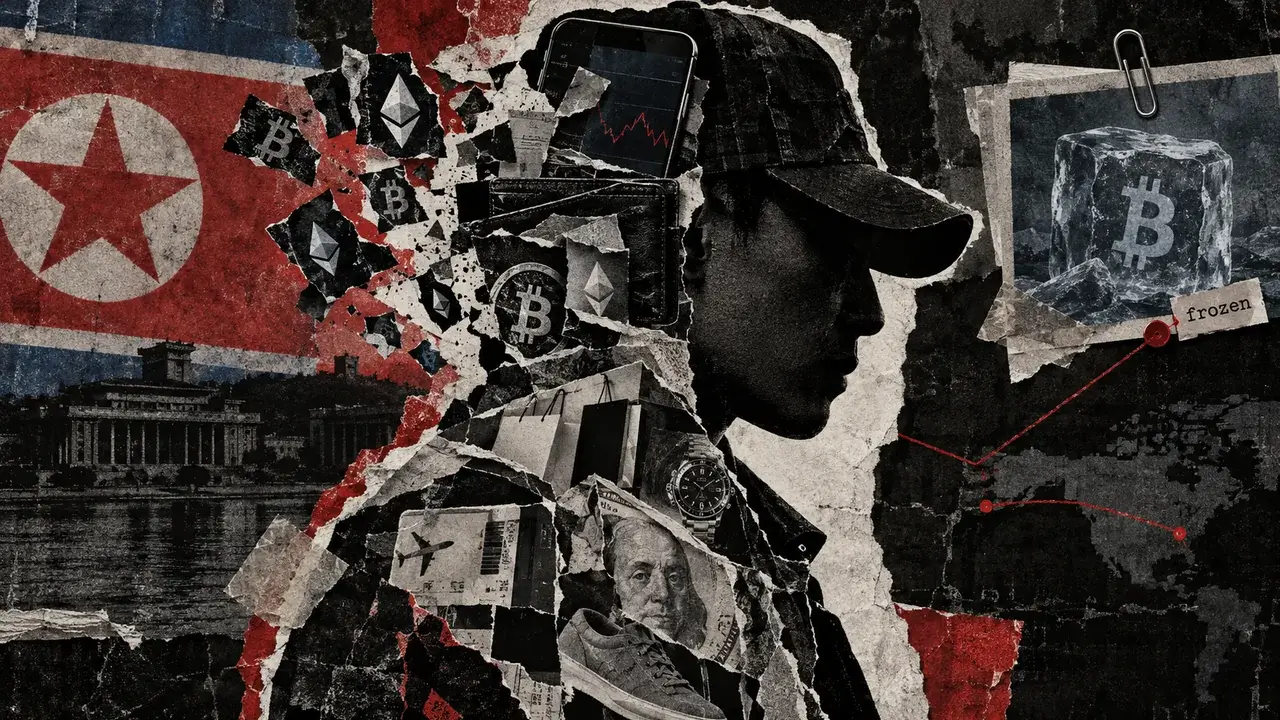
Stealing $1.5B in crypto is easy, cashing out is the trap
North Korean hackers stole around $1.5 billion from Bybit in February 2025. While the hack itself has been widely covered and anal...
Ledger theft-linked funds shift from USDT to USDD to dodge Tether freezes
The shift from USDT to USDD underscores vulnerabilities in stablecoin freeze mechanisms, prompting scrutiny on regulatory and secu...