“Avoid On-Chain Transactions”: Ledger CTO Issues Urgent Warning After JavaScript Attack
A large-scale supply chain attack on the JavaScript ecosystem has prompted an urgent warning from Ledger’s chief technology officer, Charles Guillemet, who advised users without hardware wallets to avoid on-chain transac...
Archive context
Older archive item. Useful for background and entity history, but not a fresh market-moving signal.
A large-scale supply chain attack on the JavaScript ecosystem has prompted an urgent warning from Ledger’s chief technology officer, Charles Guillemet, who advised users without hardware wallets to avoid on-chain transactions until further notice.
On September 8, hackers compromised the npm account of Josh Goldberg, a well-known open-source maintainer known as “Qix,” publishing malicious updates to 18 widely used packages, including chalk, debug, strip-ansi, and color-convert.
These utilities underpin much of the modern web and collectively account for more than 2.6 billion weekly downloads, according to npm statistics.
Researchers Uncover Crypto-Clipper Malware Hidden in Popular npm LibrariesYep, I've been pwned. 2FA reset email, looked very legitimate.Only NPM affected. I've sent an email off to @npmjs.bsky.social to see if I can get access again.Sorry everyone, I should have paid more attention. Not like me; have had a stressful week. Will work to get this cleaned up.
— Josh Junon (@bad-at-computer.bsky.social) 2025-09-08T15:15:45.497ZSecurity researchers quickly found that the new versions contained a “crypto-clipper” malware.
The payload works by intercepting browser functions and swapping out legitimate cryptocurrency wallet addresses with attacker-controlled ones.
In some cases, the malware actively hijacks wallet communications, modifying transactions before they are signed.
The attack was first uncovered after a build error exposed obfuscated code hidden in one of the updated packages.
Analysis showed that the malware employed a two-pronged strategy: passively replacing wallet addresses using sophisticated algorithms to mimic the look of real ones and actively intercepting transactions from browser-based wallets like MetaMask to redirect funds.
The scale of the attack is unprecedented. Packages such as chalk are downloaded nearly 300 million times a week, while debug sees around 358 million weekly downloads.
Collectively, the targeted libraries are embedded deep within the dependency trees of tools like Babel, ESLint, and countless other projects, raising concerns that the fallout could affect developers and users worldwide.
In a post on X, Ledger CTO Charles Guillemet described the incident as a “large-scale supply chain attack” and warned that the malicious payload had already reached billions of downloads.
“If you use a hardware wallet, pay attention to every transaction before signing and you’re safe,” he wrote.
There’s a large-scale supply chain attack in progress: the NPM account of a reputable developer has been compromised. The affected packages have already been downloaded over 1 billion times, meaning the entire JavaScript ecosystem may be at risk.
The malicious payload works…
“If you don’t use a hardware wallet, refrain from making any on-chain transactions for now.” Guillemet added that it was still unclear whether the attackers were also attempting to steal wallet seed phrases.
The attackers reportedly gained access through a phishing campaign that targeted npm maintainers with emails impersonating the platform’s support team.
The fraudulent messages claimed that accounts would be locked unless two-factor authentication credentials were updated by September 10. Clicking the link redirected victims to a fake login page designed to steal credentials.
Once in control of Goldberg’s account, the attackers pushed malicious versions of core packages used across millions of applications.
Aikido Security, which analyzed the attack, said the injected code functioned as a browser-based interceptor capable of altering website content, tampering with API calls, and rewriting payment destinations without alerting users.
npm has since removed many of the compromised versions, but security experts warn that transitive dependencies make it difficult to ensure complete protection.
Developers are being urged to immediately audit their projects, pin safe versions of dependencies, and rebuild lockfiles.
The attack shows the fragility of the open-source ecosystem, which relies heavily on trust between maintainers and developers.
With billions of downloads affected and active wallet addresses linked to stolen funds already surfacing on-chain, researchers are describing the incident as one of the most severe supply chain compromises in the JavaScript ecosystem’s history.
Crypto Hacks Surge Past $3B in 2025 as Phishing and Laundering Tactics EscalateThe crypto sector is facing its most severe security crisis yet, with hackers stealing over $3 billion across 119 incidents in the first half of 2025, according to new data from blockchain analytics firm Global Ledger.
Hackers are stealing more crypto and moving it faster. One laundering process took only 2 minutes 57 seconds. Can the industry cope?#CryptoSecurity #Web3 #Blockchain #DeFihttps://t.co/lGwutYsT6Q
— Cryptonews.com (@cryptonews) August 12, 2025The figure is one and a half times greater than total losses in 2024, placing the industry on track to break annual records.
The report shows the speed of these attacks as a new threat. In some cases, stolen funds were moved within four seconds of an exploit, far faster than most exchange alert systems.
Nearly 70% of hacks saw funds moved before the breach became public, while one in four had assets fully laundered before any statement or alert was issued.
On average, it takes 37 hours for an incident to be publicly reported, leaving investigators trailing attackers who often cash out within minutes. Only 4.2% of stolen assets, around $126 million, were recovered in the first six months of the year.
Recent incidents underline the scale of the problem. In July, hackers infiltrated Brazil’s national payment system through provider C&M Software, stealing about $180 million from reserve accounts and quickly routing funds through crypto exchanges.
In June, hardware wallet maker Trezor warned of a phishing exploit that abused its customer support system to send fake emails requesting wallet backups.
@Trezor issues urgent alert after hackers exploited support form to send phishing emails requesting wallet backups, part of industry-wide attack wave targeting trusted platforms.#Cryptohack #Trezorhttps://t.co/vlCXJIuLOf
— Cryptonews.com (@cryptonews) June 23, 2025Around the same time, CoinMarketCap and Cointelegraph suffered front-end compromises that pushed phishing pop-ups and fake airdrop promotions to users.
Despite the surge in attacks, bug bounty programs continue to show promise. Platforms like Immunefi report more than $120 million in payouts to white-hat hackers, preventing an estimated $25 billion in potential losses.
But with laundering times now measured in seconds, analysts warn the industry’s defenses are struggling to keep pace.
The post “Avoid On-Chain Transactions”: Ledger CTO Issues Urgent Warning After JavaScript Attack appeared first on Cryptonews.
Why this matters
This cryptocurrency story adds another data point to the current market tape and is useful when read alongside nearby source coverage.
Original source
Read on CryptonewsRelated market context

Binance hackers move 81% of stolen Solana, route funds via THORChain
The Binance attackers moved most of the stolen SOL and continued laundering funds through THORChain after the protocol resumed swa...

XRP wallets holding 1 million tokens climb to 2,147, highest of 2026
Increased accumulation by large XRP holders suggests potential long-term confidence, despite current price stagnation and market v...
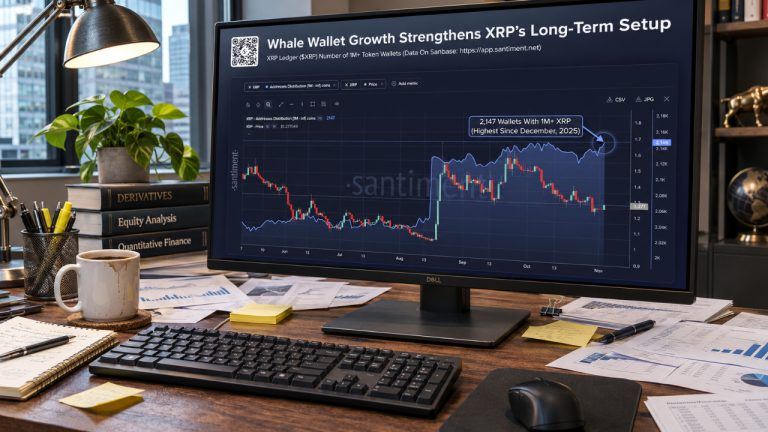
XRP Millionaire Wallets Hit 2026 High Despite Price Weakness
XRP wallets holding at least 1 million tokens reached their highest count of 2026, according to Santiment. The analytics firm inte...

DPRK Hackers Perfected Their Fake Interview Playbook Over Dozens of Attacks Before Binance
Summary Binance disclosed that a DPRK fake employment scheme was behind the $6 billion heist: Attackers used a fabricated job… The...
Quickex Launches Private Swap to Reduce Direct On-Chain Linkage Between Wallets
PANAMA CITY, November 3rd, 2026 — Quickex, a cryptocurrency swap service operating since 2018, has launched Private Swap, a featur...
Solana Microscope Offers Open-Source Monitoring for Complex On-Chain Operations
TL;DR: The Solana Foundation has described Microscope, an open-source monitoring approach for teams managing on-chain programmes a...