Banks in Russia to Lose $700 Million a Year Due to Digital Ruble, Experts Say
Russian banks may be the main losers from the introduction of a digital ruble while retailers will save on acquiring fees, analysts have predicted. The benefits for consumers using the new digital currency are not that o...
Archive context
Older archive item. Useful for background and entity history, but not a fresh market-moving signal.

Russian banks may be the main losers from the introduction of a digital ruble while retailers will save on acquiring fees, analysts have predicted. The benefits for consumers using the new digital currency are not that obvious as they may not be paid any interest or cashback.
Launch of Russia’s Digital Ruble Said to Result in Losses for Banking InstitutionsCommercial banks may lose up to 50 billion rubles annually (almost $715 million) when a digital version of the ruble is introduced, according to a forecast produced by financial experts at Yakov and Partners, the former Russian division of management consultancy McKinsey.
Meanwhile, retail chains could potentially increase their income by up to 80 billion rubles each year, believe the authors of the research, quoted by the Russian edition of Forbes. At the same time, consumers may receive no interest on their balances or cashback for their transactions.
The specialists see the digital ruble occupying a niche in the domestic retail payments market, taking over part of the share of card payments. Banks’ losses will be mostly due to shrinking revenues from the commission they get for processing such payments. Retailers will profit from saving on the acquiring fees and from instant payments that faster than card transfers.
The benefits for consumers are not guaranteed as the concept of the Russian central bank digital currency (CBDC), an electronic cash, does not envisage the accrual of interest on the holdings, unlike bank deposits. They will also likely lose the cashback that banks currently pay for operations with their cards, the report notes and elaborates:
The digital ruble has no obvious advantages in terms of convenience in everyday use, and international experience shows that the reduction in the cost of acquiring does not lead to price reductions or slowdown in price growth, only to an increase in retailers’ profits.
The digital ruble, issued by the Bank of Russia, is supposed to become the third form of the Russian national fiat, after cash and electronic money. It is meant to be used as a means of payment and a store of value but it is not aimed at replacing deposits or bank payments.
The project was first announced in October 2020 and a prototype was finalized in December, the following year. The pilot phase started in January of 2022, with the monetary authority planning to begin trials with real transactions and users in April 2023 and aiming for full launch in 2024. A bill on the digital ruble was submitted to the Russian parliament this past January.
Do you agree with the study that Russian banks will face losses as a result of the implementation of the digital ruble? Tell us in the comments section below.
Why this matters
This cryptocurrency story adds another data point to the current market tape and is useful when read alongside nearby source coverage.
Original source
Read on Bitcoin NewsRelated market context
Bitcoin Price Prediction: Michael Saylor Says BTC Will Reach $100K in 12 Months as 4-Year Bull Run Begins
Speaking on the Schwab Network, Saylor said the cryptocurrency was entering a new bull market and predicted that the broader rally...
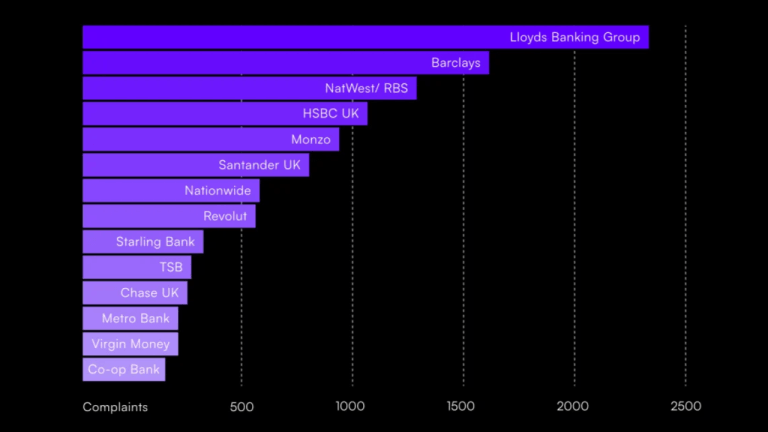
UK Banks Flooded With Crypto User Complaints, Led by Lloyds and Barclays
Evidence of banks restricting services for crypto asset users keeps piling up on both sides of the Atlantic. A new report highligh...

Stablecoin transfers quadruple to $891B as US banks adopt technology
The surge in stablecoin transfers highlights a shift towards digital finance, potentially reshaping global banking and economic dy...

Stablecoin transfers quadruple to $891B as US banks expand adoption: Report
Coinbase reports growing adoption by banks and businesses, even as stablecoin market capitalization remains largely unchanged over...

OCC Finalizes GENIUS Act Stablecoin Rules, Leaves Rewards Fight Open
Bitcoin Magazine OCC Finalizes GENIUS Act Stablecoin Rules, Leaves Rewards Fight Open The Office of the Comptroller of the Currenc...

OCC’s Final Stablecoin Rule Backs Off Yield Test, Scraps Automatic Redemption Extension
The Office of the Comptroller of the Currency (OCC) will not presume that stablecoin issuers break the GENIUS Act’s yield ban when...