Bill Allows Russian Financial Platforms to Operate Blockchains, Issue Digital Assets
A draft law filed in the Russian parliament permits operators of platforms providing financial services to also run blockchain platforms. The legislation will allow them to combine their regular activities in the traditi...
Archive context
Older archive item. Useful for background and entity history, but not a fresh market-moving signal.
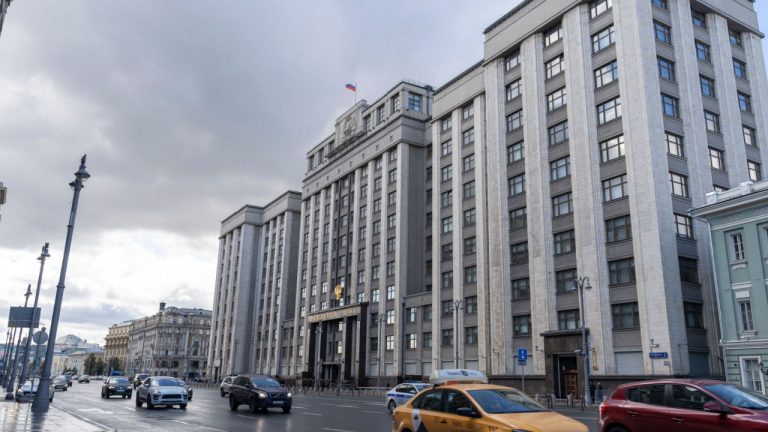
A draft law filed in the Russian parliament permits operators of platforms providing financial services to also run blockchain platforms. The legislation will allow them to combine their regular activities in the traditional financial market with issuing digital assets.
New Law Opens Door to Blockchain Space for Russian Financial Service ProvidersThe State Duma, the lower house of parliament in Russia, has adopted on first reading a bill allowing financial marketplaces, as defined by another Russian law, to also function as blockchain platforms facilitating the issuance and exchange of digital financial assets (DFAs).
The legislative initiative comes from a group of lawmakers headed by the chairman of the parliamentary Financial Market Committee, Anatoly Aksakov, crypto news outlets Bits.media and RBC Crypto reported. Its main purposes is to help the development of tokenized cashless payments, the digital ruble, and DFAs.
The latter are regulated by the law “On Digital Financial Assets,” which went into force in January, 2021, and mostly covers digital assets with an issuer. Transactions with decentralized cryptocurrencies like bitcoin are yet to be legalized in Russia.
The new bill builds on the law “On Conducting Financial Transactions Using Financial Platforms,” which came into effect in 2020. It describes the said financial platforms as information systems that provide financial organizations with an opportunity to meet consumers online.
On these platforms, individual investors have access to financial instruments, banking and insurance services, as well as services offered by companies working in the securities market. The possibility to integrate financial and blockchain services will expand the types of activities that their operators can perform and the range of products and services they can provide, the sponsors noted.
Amid Western financial restrictions, the Russian government has been exploring ways to develop its digital assets market. The Central Bank of Russia has already added several entities to its register of authorized DFA issuers. These are the tokenization service Atomyze, the fintech company Lighthouse, as well as Sberbank and Alfa-Bank, Russia’s largest state-owned and private bank, respectively.
Do you think the new law will stimulate the development of blockchain technologies and digital assets in Russia? Tell us in the comments section below.
Why this matters
This cryptocurrency story adds another data point to the current market tape and is useful when read alongside nearby source coverage.
Original source
Read on Bitcoin NewsRelated market context

Visa and Mesh Unlock Crypto Spending Across 175 Million Merchant Locations Worldwide
Key Takeaways: Visa is partnering with Mesh to provide crypto and stablecoin payments at over 175 million merchant locations. The...
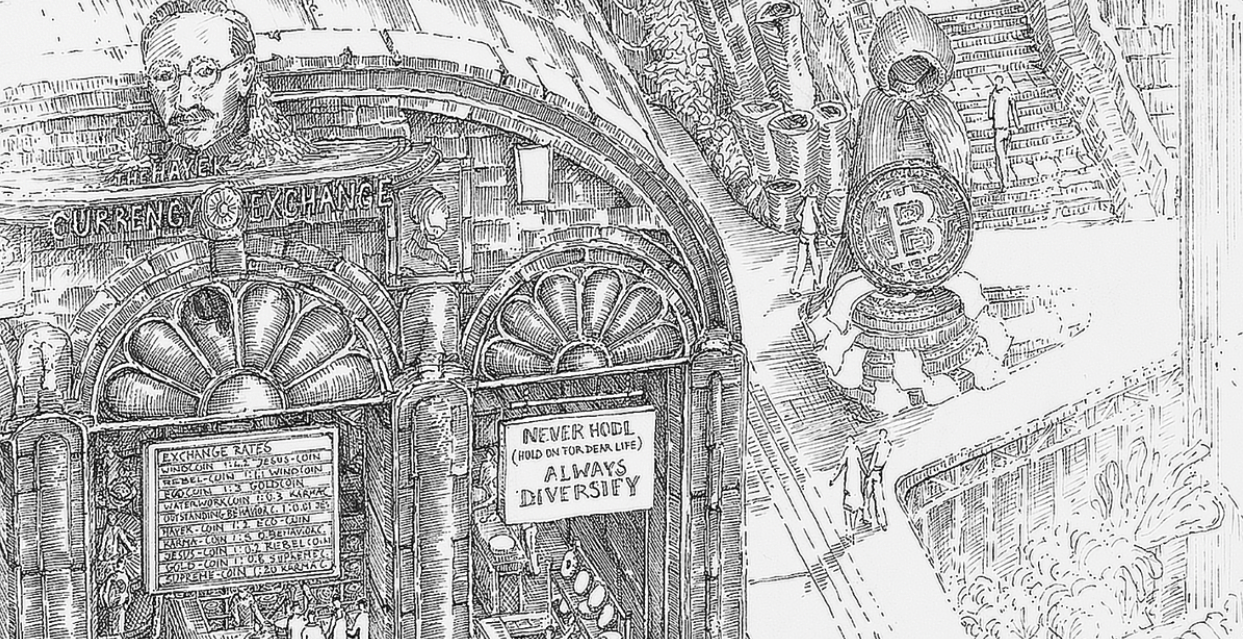
The Architecture of Money: Mapping Financial Power in the Age of Bitcoin
Bitcoin Magazine The Architecture of Money: Mapping Financial Power in the Age of Bitcoin Money determines where we live, what we...

Super League Stockholders Approve Metaplanet’s 2,100 BTC Investment, Paving Way for ‘Superplanet’
Bitcoin Magazine Super League Stockholders Approve Metaplanet’s 2,100 BTC Investment, Paving Way for ‘Superplanet’ Super League st...

The Math Behind the $210 XRP Price Target
Using approximately 63.13 billion circulating XRP, multiplying the supply by a $210 price produces a value of about $13.26 trillio...

StakerX’s AI Agent Surpasses Passes $40M Staked Assets on Solana Within Three Months of Launch
Zug, Switzerland, October 19th, 2026, Chainwire StakerX’s AI Agent Surpasses Passes $40M Staked Assets on Solana Within Three Mont...

JPMorgan Picks Ethereum for JPM Coin, Citing the Network’s Liquidity and Client Use
JPMorgan is launching JPM Coin, its dollar deposit token, on Ethereum and will offer it to the bank’s institutional clients there,...