Binance Co-CEO Breaks Silence, Provides Insight On October 10 Liquidation Event
Binance is pushing back against claims that it played a central role in the massive liquidation wave that swept through crypto markets on October 10, an event widely described as the largest in the industry’s history. In...
Archive context
Older archive item. Useful for background and entity history, but not a fresh market-moving signal.

Binance is pushing back against claims that it played a central role in the massive liquidation wave that swept through crypto markets on October 10, an event widely described as the largest in the industry’s history.
In the aftermath of roughly $19 billion in wiped‑out positions, some market participants accused the exchange of manipulating prices for its own gain.
Binance co‑CEO Richard Teng has now addressed those allegations directly, insisting the platform was not “the sole trigger” of the turmoil and that the selloff hit the entire digital asset ecosystem.
Binance Co-CEO Breaks Down $19B Liquidation EventSpeaking about the incident, Teng said the sharp downturn was not isolated to Binance. Both centralized and decentralized exchanges experienced comparable spikes in liquidations at the same time, he noted. According to him, intense selling pressure emerged across trading venues as volatility surged.
Teng attributed the market shock to external forces rather than internal exchange activity. He pointed to a mix of macroeconomic and geopolitical developments, including new US tariffs on China and broader uncertainty in global financial markets.
These factors, combined with highly leveraged positions across crypto derivatives markets, created what he described as a “classic leverage flush.”
Teng drew comparisons to traditional markets, noting that US equities lost $1.5 trillion in value on the same day, with about $150 billion in liquidations occurring in equities alone. By contrast, the crypto market—significantly smaller in size—saw $19 billion in forced position closures, spread across all major exchanges.
While acknowledging that many users suffered losses, Teng said Binance took steps to support affected customers, adding that other exchanges did not implement similar measures. He also stressed that there were no signs of abnormal mass withdrawals from Binance during the episode.
According to the company, there were no indications of internal technical failures or systemic weaknesses. The price action, Teng argued, was driven by exogenous market forces rather than any exchange‑specific issue.
SAFU Fund Hits $1 Billion In BTCDespite the volatility, Teng struck a cautiously optimistic tone about the broader trajectory of digital assets. He said institutional investors continue to allocate capital to the sector, describing their participation as evidence that “smart investors are putting money to work.”
While retail demand has softened compared to last year, he said investment from institutions and corporations remains resilient. In his view, the long‑term development of the industry should be judged by its fundamentals rather than short‑term price swings.
Alongside its comments on the liquidation event, the exchange announced it has completed a previously outlined $1 billion Bitcoin purchase plan for its Secure Asset Fund for Users (SAFU).
The exchange acquired 4,545 BTC worth approximately $304.58 million, bringing the reserve wallet’s total holdings to 15,000 BTC, currently valued at about $1.005 billion.
Binance also stated that if the fund’s value falls below $800 million due to market declines or legal expenses, it will automatically replenish the balance back to $1 billion.
At the time of writing, the exchange’s native token, BNB, is trading at $605. It has registered losses of 5% and 29% over the last seven and fourteen days, respectively.
Featured image from OpenArt, chart from TradingView.com
Why this matters
Binance is showing up inside the Market Structure theme, so this story is worth tracking for follow-through rather than treating it as a one-off headline.
Original source
Read on NewsBTCRelated market context
Bitcoin hedge funds face a liquidation trap when their collateral is split across markets
Here's a hypothetical situation: a hedge fund is making money, but one of its exchanges is about to liquidate its position anyway....
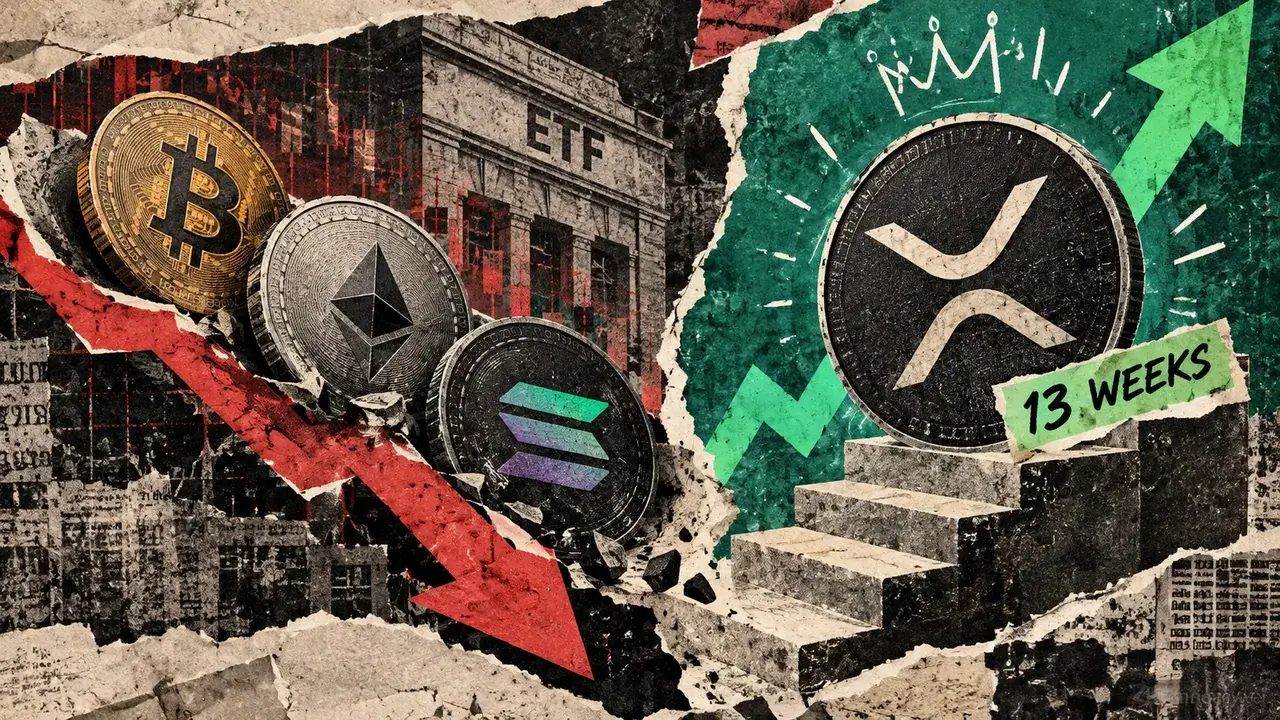
XRP ETFs extend a 13-week inflow streak as Bitcoin, Ethereum and Solana funds shed $1.25 billion
US-listed XRP ETFs extended their inflow streak to 13 weeks as Bitcoin, Ethereum and Solana funds suffered nearly $1.25 billion in...

Stealing $1.5B in crypto is easy, cashing out is the trap
North Korean hackers stole around $1.5 billion from Bybit in February 2025. While the hack itself has been widely covered and anal...

Kyrgyzstan orders liquidation of USDKG issuer and Coin Nomad Exchange
Kyrgyzstan's liquidation of key crypto entities may undermine its digital finance ambitions, affecting investor confidence and reg...
Bitcoin slides toward $82.5K as over $2.4 billion in crypto liquidations hit longs
The recent Bitcoin downturn highlights the volatility and risks in crypto markets, impacting investor confidence and broader finan...
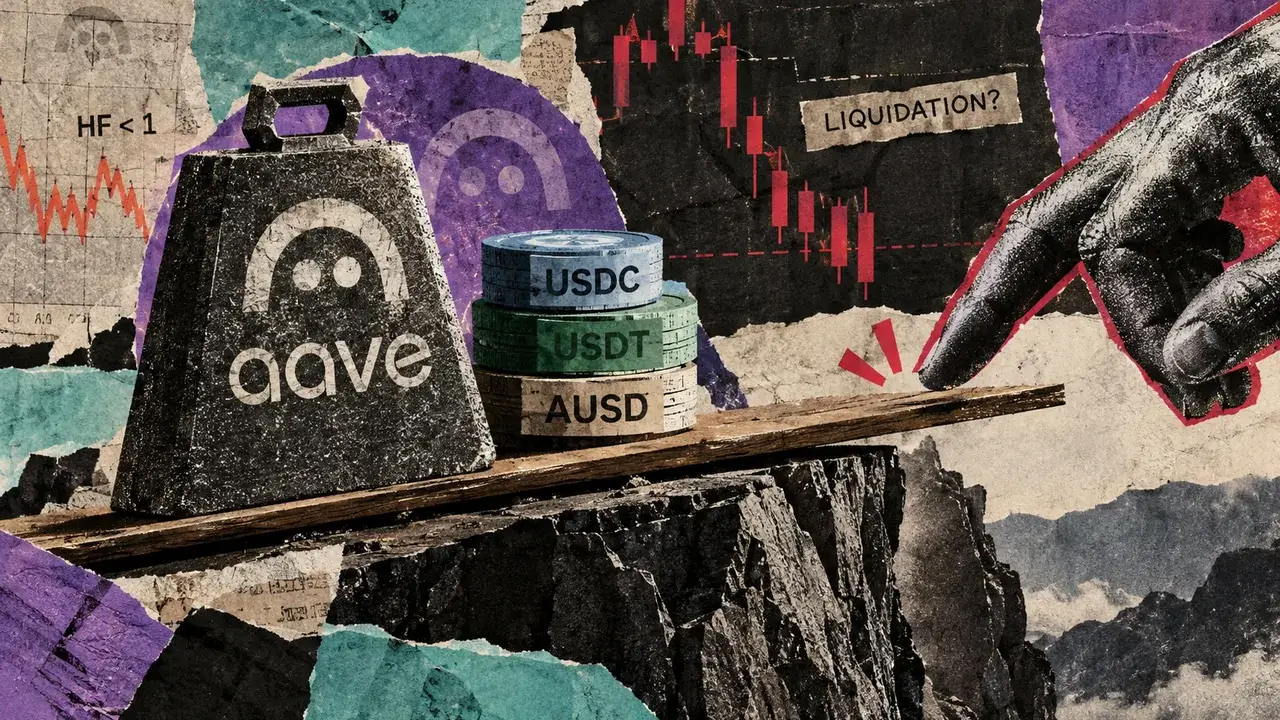
Some Aave loans sit near liquidation with collateral that can take hours to cash out
Some Aave loans backed by yield-bearing collateral had narrow liquidation buffers in LlamaRisk’s Oct. 9 snapshots. Every top PT-AU...