Building Trust With U.S. Regulators Is Essential For Advancing Crypto Adoption
After being considered the Wild Wild West for years, crypto adoption in the United States is quickly gaining traction.Most notably, institutions are flooding into the crypto space due to the rise of tokenized treasuries...
Archive context
Older archive item. Useful for background and entity history, but not a fresh market-moving signal.

After being considered the Wild Wild West for years, crypto adoption in the United States is quickly gaining traction.
Most notably, institutions are flooding into the crypto space due to the rise of tokenized treasuries and real-world asset (RWA) tokenization. The current market capitalization of tokenized US treasuries stands at a whopping $7.4 billion.
A number of US states are also looking at implementing a Strategic Bitcoin Reserve (SBR). This would allow states to hold Bitcoin (BTC) as part of their investment strategy. Both Texas and New Hampshire have recently signed a bill to add Bitcoin to their balance sheets.
Congratulations to those who worked really hard on educating #txlege @TXGOPCaucus and all the stakeholders required to get this bill across the finish line
Big shoutout to @lee_bratcher @TXblockchain_ for launching what I like to call 'The 2nd Reserve in Texas'
tbt… https://t.co/yDdHWop1rj
Moreover, the regulatory landscape in the US is finally becoming crypto-friendly. The US Securities and Exchange Commission (SEC) recently clarified that protocol staking is not a securities transaction under US law when performed under certain conditions.
Policies implemented under the Trump administration have further accelerated the institutionalization of cryptocurrencies. The repeal of The Staff Accounting Bulletin (SAB) 121 has enabled traditional financial institutions to offer custodial services for digital assets. Citibank is actively exploring adding crypto custody, while JPMorgan Chase plans to offer crypto investments to its clients through a third-party custodian.
Crypto Companies Work With RegulatorsAlthough the crypto sector continues to make strides, industry experts believe that none of this would be possible without working with policymakers and regulators.
Margaret Rosenfeld, chief legal officer at Everstake, told Cryptonews that working with US regulators has become essential for cryptocurrency companies.
“Effective crypto regulation depends on more than legal theory, as it requires a deep understanding of the underlying technology,” Rosenfeld said. “Without that technical fluency, there’s a risk of applying legacy financial frameworks to decentralized systems in ways that don’t fit and ultimately hinder innovation.”
Rosenfeld explained that the decentralized staking provider, Everstake, helped to educate the SEC on staking. She noted that this influenced the SEC’s decision to clarify that protocol staking is not a security.
“At Everstake, we didn’t just send lawyers into the SEC – we brought engineers and operators to the table. We explained the technical structure of staking, validator responsibilities, and how non-custodial delegation works. That kind of technical fluency is critical for good policy. Without it, regulators are left applying legacy frameworks to new infrastructure in ways that can miss the mark,” Rosenfeld commented.
Rosenfeld noted that providing both legal and technical insight can help regulators gain a clearer understanding of what they are evaluating.
“Soon after our meeting, the SEC issued guidance acknowledging for the first time that some staking models – like those we operate – fall outside the scope of securities regulation. It was a meaningful step forward and a real example of how collaborative, technically informed engagement can shape better policy,” she said.
Blockchain Advocacy Groups Educate PolicymakersBlockchain advocacy groups also work closely with US policymakers to ensure that legislation is passed to push forward with crypto adoption in the country. Most recently, the Texas Blockchain Council helped push for the passing of the Texas SBR.
Lee Bratcher, founder and president of the Texas Blockchain Council, told Cryptonews that the Texas Blockchain Council worked with legislative champions, policy advisors, and industry stakeholders to ensure that Senate Bill 21 (SB21) was not only technically sound, but also politically feasible.
“The groundwork we’ve laid over the past few years helped pave the way for this breakthrough,” Bratcher said. “Our success was rooted in years of building trust with lawmakers, demystifying Bitcoin, and linking it to core values like fiscal conservatism, sovereignty, and energy innovation.”
Texas Governor @GregAbbott_TX just signed the Texas Strategic Bitcoin Reserve bill! The future of finance is digital and the future of capital formation is in Texas!! pic.twitter.com/jhgLxKTLTK
— Lee ₿ratcher (@lee_bratcher) June 22, 2025Bratcher further remarked that US states should not only tailor their messaging to local political and economic contexts, but also to core ideas. In this case, Bratcher pointed out that the Texas Blockchain Council educated policymakers on how Bitcoin can serve as a modern reserve asset, which he believes is gaining bipartisan traction.
“Given the bi-partisan support for this bill, Texas Governor Abbott determined that it would go into effect immediately rather than the typically September 1st effective date,” Bratcher said.
Texas Senator Charles Schwertner also partnered with the Texas Blockchain Council to pass SB21. Chairman Schwertner told Cryptonews that Texas is currently the only state with a direct $10 million appropriation for acquiring Bitcoin. He added that working with the Texas Blockchain Council enabled him to learn how a SBR allows Texas to diversify its investment approach.
The Texas Blockchain Council further anticipates that the Texas Comptroller’s Office and the Texas Treasury Safekeeping and Trust Company will begin developing a prudent Bitcoin acquisition and custody strategy.
Major US Crypto Exchange Builds Trust With Lawmakers To Boost Crypto AdoptionUS-based cryptocurrency exchange Coinbase also regularly dedicates time to educate policymakers.
In February the SEC dropped its lawsuit against Coinbase, ending a contentious years-long legal battle. The leading cryptocurrency exchange has since submitted a number of documents and requests to drive mainstream adoption of cryptocurrency in the US.
For example, the Coinbase website shows that on May 30 the exchange submitted a request to urge the US Treasury to exclude unrealized crypto gains and losses from the Corporate Alternative Minimum Tax (CAMT). CAMT imposes a 15% minimum tax on the adjusted financial statement income (AFSI) of large corporations for taxable years.
In addition to focusing on US policies, Coinbase recently secured a Markets in Crypto-Assets (MiCA) license from the Luxembourg Commission de Surveillance du Secteur Financier. This enables the exchange to offer crypto products across European Union countries and will likely result in further influence on EU crypto regulations.
Challenges To Consider Before Crypto AdoptionWhile it’s notable that crypto companies and advocacy groups are helping shape US regulations, a number of challenges remain.
For instance, Rosenfeld pointed out that one of the biggest challenges is the technical complexity of blockchain infrastructure.
“When regulators lack technical fluency in how protocols work, it’s easy for overly broad or misapplied rules to take hold – sometimes unintentionally stifling innovation,” she said.
In order to overcome this, Rosenfeld believes that crypto entities need more dialogue that includes not just lawyers and lobbyists, but also engineers and protocol builders.
“Regulators are now willing to listen when industry participants take the time to explain the underlying mechanics. That’s the path forward: collaboration built on mutual education and transparency,” she stated.
The post Building Trust With U.S. Regulators Is Essential For Advancing Crypto Adoption appeared first on Cryptonews.
Why this matters
This cryptocurrency story adds another data point to the current market tape and is useful when read alongside nearby source coverage.
Original source
Read on CryptonewsRelated market context

EU targets MiCA loophole that lets crypto exchanges serve 27 countries with one license
EU finance ministers agreed to shift oversight of major crypto companies to a central watchdog, reshaping supervision under MiCA....
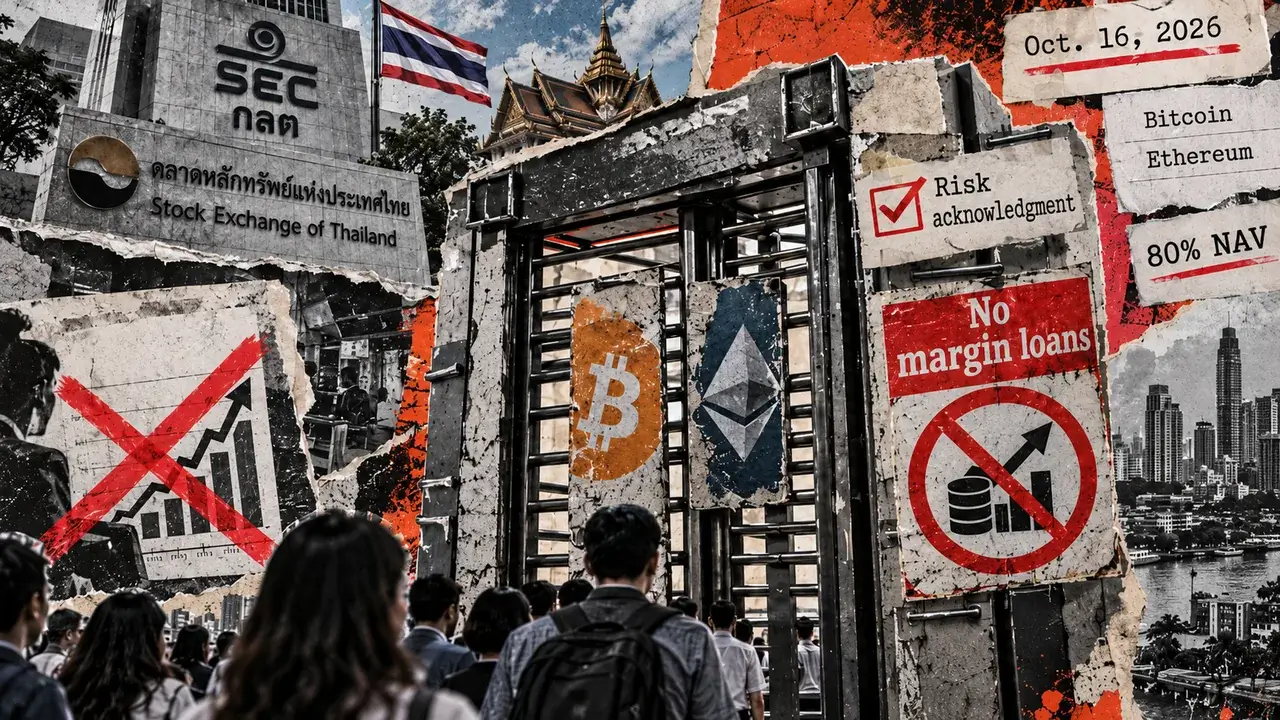
Thailand wants a piece of the $120 billion Bitcoin and Ethereum ETF market, but on its own terms
Thailand has finalized rules allowing domestic Bitcoin and Ethereum ETFs while restricting retail access to competing overseas inv...

Crypto Exchange Bybit Moves From Stock CFDs to Real US Shares
Bybit opened trading in more than 1,000 US-listed stocks and exchange-traded funds today (Monday), with purchases paid in the USDC...

Standard Chartered brings Ripple’s RLUSD into banking custody after $765 million quarterly surge
Standard Chartered has launched custody for Ripple's RLUSD stablecoin as it prepares to expand its use as collateral for instituti...

Most Tokenized Stock Trading Happens Outside U.S. Market Hours, IMF Finds
More than half of all trading in tokenized U.S. stocks happens while Wall Street is closed, according to new data from the Interna...

FTX’s former Bitcoin mining bet gets new life as parent raises €800 million for AI
SWI Group has raised €800 million to expand AI infrastructure, advancing its plan to repurpose FTX-backed Bitcoin miner Genesis Di...