Central Bank of Bolivia Selling Dollars Directly to Citizens as Devaluation Fears Rise
The Central Bank of Bolivia is now selling dollars directly to citizens in order to curb what it is calling a speculative attack that has increased the demand of the population for foreign currency. This rise in demand h...
Archive context
Older archive item. Useful for background and entity history, but not a fresh market-moving signal.
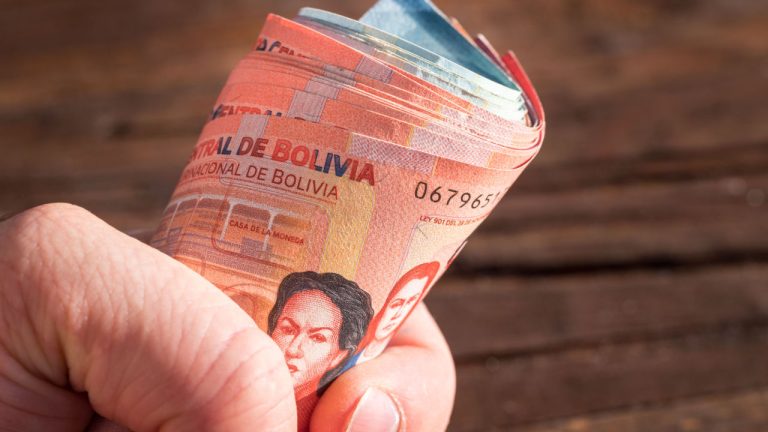
The Central Bank of Bolivia is now selling dollars directly to citizens in order to curb what it is calling a speculative attack that has increased the demand of the population for foreign currency. This rise in demand has been caused by several factors which led the population to believe there might be a devaluation move coming.
Central Bank of Bolivia Sells Dollars to Appease Local MarketThe Central Bank of Bolivia is executing extraordinary measures to supply its internal market with foreign currency. On March 6, the monetary institution announced that it would start selling dollars to the citizens directly, adding its action to the established traditional currency exchange market.
The measure would counter what the central bank is calling a “speculative attack” on the national monetary system, prompting Bolivians to purchase more dollars in order to protect from a rumored increase in the exchange rate. Edwin Rojas, president of the Central Bank of Bolivia, stated:
The Central Bank of Bolivia opens its doors, we reiterate, through Banco Unión, since it is the body that is going to collaborate with us in this process so that the population that demands dollars and cannot get them (outside) can come to us to satisfy their demand.
Fears of DevaluationThe increased demand for dollars that the central bank is facing has to do with fears about the current state of the national reserves, and how this can trigger a change in the exchange rate of the U.S. dollar.
In Bolivia, there is a fixed exchange rate, set back in 2011, that establishes each dollar is valued at 6.86 bolivians, the fiat currency of the country. Countries like Venezuela and Argentina, which had established exchange controls on foreign currency, have experienced elevated levels of devaluation and inflation due to these restrictions.
On March 9, Rojas gave a summary of how the market was reacting to this measure, noting that more than $91 million was allocated during the last two weeks to satisfy the unprecedented demand. He explained that the country had no plans for changing its monetary policy.
However, analysts are uncertain about the sustainability of these movements. The last report on the status of the foreign currency reserves dates from February 8, when the central bank reported having $372 million. This is less than the $400 million that Antonio Saravia, a local economist, estimates that the national market needs monthly. He doubts the government can sustain this level of intervention for too long.
What do you think about the Situation that the Central Bank of Bolivia is facing with unprecedented demand for U.S. dollars? Tell us in the comments section below
Why this matters
This cryptocurrency story adds another data point to the current market tape and is useful when read alongside nearby source coverage.
Original source
Read on Bitcoin NewsRelated market context

MARA Selling Bitcoin? Exchange Deposits Put 1,000 BTC Under Watch
Is MARA Selling Bitcoin? Wallets linked to MARA Holdings sent 1,000 BTC, worth about $82.8 million, to Binance and Gate over five...

German Savings Banks Begin Crypto Trading Rollout Inside Sparkassen App
Germany’s Sparkassen savings-bank group is beginning a phased cryptocurrency-trading rollout inside its existing banking app, taki...
JPMorgan's JPM Coin Arrives on Ethereum, Putting Bank Dollars on a Public Blockchain
JPMorgan is rolling out JPM Coin on Ethereum for institutional clients, a token backed by dollars in its accounts that settles in...

European Banking Authority Puts USDC Under Significant-Token Supervision
The European Banking Authority has designated USDC as the EU’s first significant e-money token under MiCA, setting up an additiona...
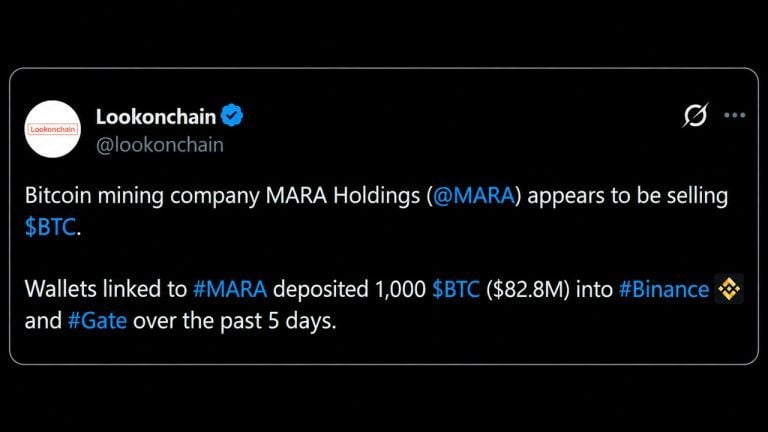
MARA Ships $83 Million in Bitcoin to Exchanges as Its Stock Sinks 45%
Wallets tied to MARA Holdings, one of the largest public bitcoin miners, have moved 1,000 BTC worth about $82.8 million to crypto...

JPMorgan Takes JPM Coin To Ethereum As Banks Test Public-Chain Settlement
JPMorgan is taking its bank-issued deposit token onto public Ethereum, an expansion that puts an established Wall Street payments...