China Ready to Talk Asian Monetary Fund to Cut Dollar Dependence, Malaysia Says
An idea to establish an Asian Monetary Fund has caught the attention of the Chinese leadership, the head of the Malaysian government revealed. The prime minister believes there is no reason for his country, which is hurt...
Archive context
Older archive item. Useful for background and entity history, but not a fresh market-moving signal.
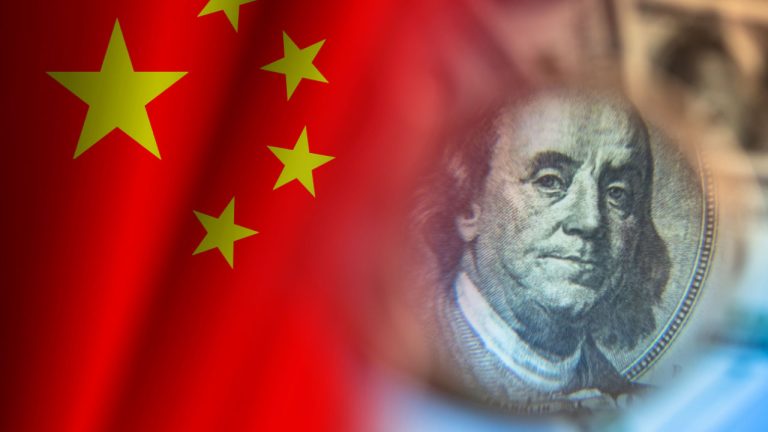
An idea to establish an Asian Monetary Fund has caught the attention of the Chinese leadership, the head of the Malaysian government revealed. The prime minister believes there is no reason for his country, which is hurting from a strong U.S. dollar, to remain dependent on the greenback.
Malaysia Prepares to Trade With China in National Currencies, Limit Reliance on DollarChina is open to talks with Malaysia on a decades old proposal to set up an Asian Monetary Fund that can reduce reliance on the U.S. currency, Malaysian Prime Minister Anwar Ibrahim announced, quoted by Bloomberg.
Anwar, who also serves as Malaysia’s minister of finance, pitched the idea at the Boao Forum last week when he emphasized on the need to cut dependence on the International Monetary Fund (IMF) as well. On Tuesday, he told Malaysian lawmakers:
When I had a meeting with President Xi Jinping, he immediately said, ‘I refer to Anwar’s proposal on the Asian Monetary Fund,’ and he welcomed discussions.
The head of the Malaysian government was reporting on the results of his recent state visit to the People’s Republic. He also said that Malaysia’s central bank is already working on enabling the two nations to start trading in their respective national fiats, ringgit and renminbi.
An expensive U.S. dollar has been weakening currencies in the region and creating headaches for nations like Malaysia, which is a net importer of food items, the report remarks. Last fall, the ringgit, among other currencies, saw multi-decade lows against the greenback.
Anwar Ibrahim reminded that he initially circulated the proposal for an Asian Monetary Fund when he first took the job of finance minister in the 1990s. At the time, the idea did not gain sufficient traction as the U.S. dollar was seen as strong, he admitted, while pointing out:
But now with the strength of the economies in China, Japan and others, I think we should discuss this — at least consider an Asian Monetary Fund, and, secondly, the use of our respective currencies.
Anwar’s statements come after the finance ministers and central bank governors of the Association of Southeast Asian Nations (ASEAN), of which Malaysia is a member, discussed decreasing their countries’ dependence on western currencies like the dollar. During a meeting in Indonesia at the end of March, they also explored ways to promote the use of local currencies in trade settlements.
Do you think an Asian Monetary Fund will be formed in the near future? Share your expectations on the matter in the comments section below.
Why this matters
This cryptocurrency story adds another data point to the current market tape and is useful when read alongside nearby source coverage.
Original source
Read on Bitcoin NewsRelated market context

Grayscale Opens DeFi And AI Crypto Funds To Investors With Just $2,500
TL;DR: Grayscale and investment platform Republic are offering three specialised crypto funds with minimum commitments starting at...

Circle Says 59 Cents of Each Revenue Dollar Went to USDC Partners and Transaction Costs
Circle said it paid about $819 million of its roughly $1.4 billion in first-half 2026 revenue to USDC distribution partners and tr...

Ripple Prime Opens 24/7 Swaps on Stocks, Metals and Currencies, With Virtu Already Trading
Ripple Prime, Ripple’s institutional prime brokerage, now lets clients hold positions on stocks, indices, commodities and currenci...

Circle defends USDC model, reveals just 7 cents profit per dollar
Circle's low profit margin highlights the tension between maintaining robust compliance infrastructure and competing with rivals o...

Bitcoin Futures Open Interest Slips To $7.68 Billion As Traders Keep Funding Positive
TL;DR: A Saturday derivatives snapshot showed Bitcoin open interest at $7.68 billion, down 0.69% in 24 hours. Funding remained pos...

ChatGPT AI Predicts Million-Dollar Bitcoin by 2027
ChatGPT AI predicts Bitcoin will hit $1M+, which isn’t a crazy call, since many analysts share the same view. What makes this pred...