China Warns of Global Financial Instability From US Economic Policies
China has urged the U.S. and other developed nations to assess the spillover effects of their economic and financial policies. “The economic and financial policies of the U.S. pose the biggest challenge to global financi...
Archive context
Older archive item. Useful for background and entity history, but not a fresh market-moving signal.
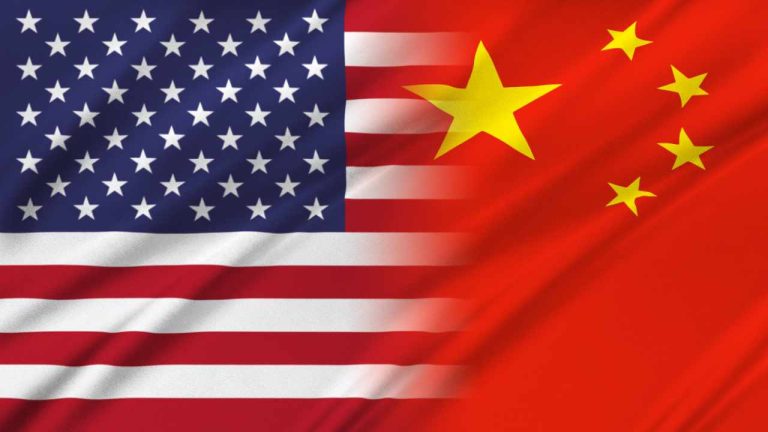
China has urged the U.S. and other developed nations to assess the spillover effects of their economic and financial policies. “The economic and financial policies of the U.S. pose the biggest challenge to global financial stability,” according to the Chinese Ministry of Foreign Affairs.
China Cautions About U.S. Economic and Financial PoliciesWang Wenbin, a spokesperson for China’s Ministry of Foreign Affairs, expressed concerns over the state of the global economy at a press conference Thursday.
Commenting on the recent International Monetary Fund (IMF) Global Financial Stability report pointing out that the turmoil in the U.S. banking sector has increased the risk of global financial stability, the Chinese official said: “Global financial stability bears on the recovery and development of the world economy and the common interests of all countries, and requires the world’s common efforts.”
Emphasizing that “The notable global financial risks have much to do with the aggressive adjustments of the monetary policies in the U.S. and other developed countries,” Wenbin stressed:
Many in the international community shared the view that the economic and financial policies of the U.S. pose the biggest challenge to global financial stability. The massive interest rate hikes by the U.S. Federal Reserve since last year have significantly increased global financing costs and exacerbated disorderly international capital flows.
“This has not only led to the bankruptcy or takeover of some banks in the U.S. and Europe, but also made things more difficult for emerging markets and developing countries, which is not conducive to the stability and recovery of the world economy and common development of the world,” the Ministry of Foreign Affairs spokesperson added.
“Research shows that commercial creditors from developed countries hold almost half of the debt of debt-ridden countries in the world. Since last year, the higher interest rates of developed countries including the U.S. have increased the debt burden of the countries concerned, plunging them into a vicious cycle of debt repayment and exposing them to debt default,” the Chinese official continued, emphasizing:
We urge the U.S. and other developed countries to prudently assess the spillover effects of their economic and financial policies, stabilize market expectations in a timely manner, and avoid creating adverse shocks to global financial stability.
“At the same time, we call on developed countries to listen to the developing countries about what they actually think and urgently need, provide tangible help to countries in difficulty, stop paying lip service and shifting blame, and step up to their responsibility for maintaining global financial stability and promoting global economic recovery,” he concluded.
Do you think that U.S. economic and financial policies will lead to global financial instability? Let us know in the comments section below.
Why this matters
This cryptocurrency story adds another data point to the current market tape and is useful when read alongside nearby source coverage.
Original source
Read on Bitcoin NewsRelated market context

Circle Reveals $819 Million USDC Payouts As Stablecoin Economics Come Under Scrutiny
TL;DR: Circle says it generated roughly $1.4 billion in first-half 2026 revenue while spending $819 million on distribution partne...
Bitcoin steadies near $82,000 as Warsh declines to signal another Fed hike
Bitcoin's resilience amid market volatility highlights its potential as a hedge against economic uncertainty and shifting monetary...

MSCI Tightens Index Rules As Strategy And Other Bitcoin Treasury Firms Face Fresh Scrutiny
TL;DR: MSCI has revised its methodology for classifying non-operating companies, putting Bitcoin-heavy treasury businesses under c...
Strategy dips on bad MSCI World Index news
Strategy’s stock price dipped 4% in after-hours trading yesterday as traders speculated about its removal from the MSCI World Inde...

The 7 Best USDC on Solana to XMR Swap Platforms in 2026
Swapping USDC on Solana for Monero (XMR) offers a fast, low-cost route into a privacy-focused asset. Leading platforms in 2026 pro...

Strive to sell another $130M of SATS stock to buy more bitcoin
Bitcoin treasury firm Strive wants another $130 million on top of a previously announced $500 million IPO to buy more BTC and grow...