Chinese Regulators Crack Down on Real-World Asset Businesses – What It Means for Tokenized Assets
China’s securities regulator is quietly urging domestic brokerages to halt their real-world asset (RWA) tokenization operations in Hong Kong, raising red flags over the fast-growing digital assets sector being cultivated...
Archive context
Older archive item. Useful for background and entity history, but not a fresh market-moving signal.
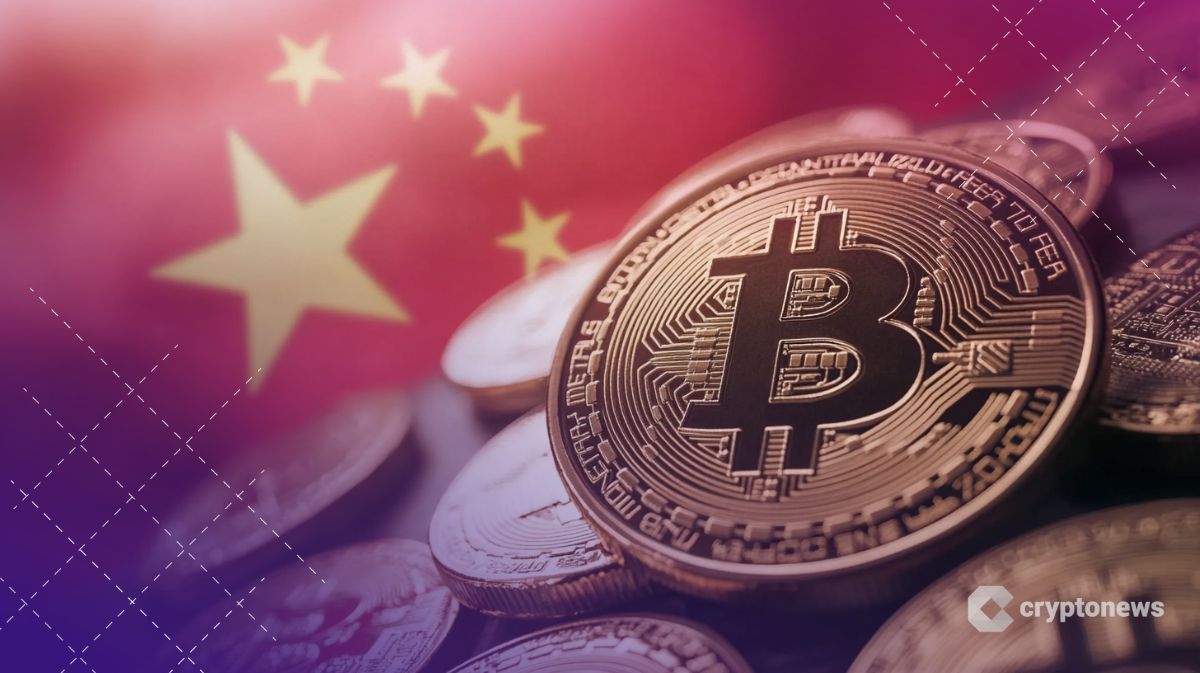
China’s securities regulator is quietly urging domestic brokerages to halt their real-world asset (RWA) tokenization operations in Hong Kong, raising red flags over the fast-growing digital assets sector being cultivated offshore.
Key Takeaways:
- China’s CSRC has urged local brokerages to pause RWA tokenization efforts in Hong Kong due to rising regulatory concerns.
- Hong Kong continues to position itself as a digital asset hub, attracting dozens of firms amid a booming tokenization trend.
- High-profile launches and stock rallies reflect growing investor interest, despite Beijing’s cautious stance.
The China Securities Regulatory Commission (CSRC) has issued informal guidance to at least two major brokerages, instructing them to pause RWA activities, Reuters reported, citing people familiar with the matter.
The move reflects Beijing’s growing concerns over risk exposure and speculative activity linked to tokenized products.
Hong Kong Emerges as Asia’s Digital Asset Hub Amid Tokenization BoomThe timing is notable. Over the past year, Hong Kong has positioned itself as Asia’s digital asset hub, with a growing number of Chinese firms launching virtual asset trading platforms, yield-generating token products, and tokenized bonds.
RWA tokenization refers to the process of converting traditional assets, like stocks, bonds, and real estate, into digital tokens tradable on blockchain networks.
One source said the CSRC’s action aims to ensure stronger risk management and ensure RWA offerings are backed by legitimate, sustainable business models.
The regulator has not issued a public directive, and it remains unclear how long the current stance will be maintained.
While China banned cryptocurrency trading and mining in 2021, its state-backed institutions continue to engage cautiously in blockchain innovation.
NEW: CHINA'S SECURITIES WATCHDOG HAS ADVISED SOME LOCAL BROKERAGES TO PAUSE THEIR REAL-WORLD ASSET (RWA) TOKENIZATION BUSINESS IN HONG KONG – PER REUTERS SOURCES pic.twitter.com/aDciQdLkXj
— DEGEN NEWS (@DegenerateNews) September 22, 2025In contrast, Hong Kong has rolled out a stablecoin licensing regime and is conducting legal reviews on RWA tokenization through the Financial Services and the Treasury Bureau (FSTB) and the Hong Kong Monetary Authority (HKMA).
Several high-profile launches have already taken place. GF Securities’ Hong Kong unit introduced “GF Tokens” in June, backed by fiat currencies.
Meanwhile, China Merchants Bank International helped issue a 500 million yuan digital bond for a Shenzhen-based entity last month. Both firms declined to comment on whether they received CSRC guidance.
Notably, 77 firms have shown interest in Hong Kong’s new licensing framework, according to the HKMA.
Investor enthusiasm has fueled sharp rallies in related stocks, Guotai Junan International soared over 400% after gaining approval to offer crypto trading, and Fosun International surged 28% after stablecoin-related meetings with Hong Kong officials.
Tokenized Real-World Assets May Unlock $400T TradFi MarketIn a recent research, Web3 digital property firm Animoca Brands said that tokenization of RWAs could unlock a $400 trillion traditional finance market.
Animoca researchers Andrew Ho and Ming Ruan said the global market for private credit, treasury debt, commodities, stocks, alternative funds, and bonds represents a vast runway for growth.
“The estimated $400 trillion addressable TradFi market underscores the potential growth runway for RWA tokenization,” they wrote.
Meanwhile, according to the 2025 Skynet RWA Security Report, the market for tokenized RWAs could grow to $16 trillion by 2030.
Tokenized U.S. Treasuries alone are projected to reach $4.2 billion this year, with short-term government bonds driving most of the activity.
Institutional interest is accelerating, with major banks, asset managers, and blockchain-native firms exploring tokenization for yield and liquidity management.
The post Chinese Regulators Crack Down on Real-World Asset Businesses – What It Means for Tokenized Assets appeared first on Cryptonews.
Why this matters
This cryptocurrency story adds another data point to the current market tape and is useful when read alongside nearby source coverage.
Original source
Read on CryptonewsRelated market context

Hong Kong government reaffirms end-2026 deadline for crypto licensing bill
Hong Kong's crypto licensing deadline could reshape the digital asset landscape, impacting global regulatory standards and market...

Centrifuge flags transparency gap as only 29.2% of tokenized assets show verifiable onchain data
The transparency gap in tokenized assets could hinder institutional adoption and risk management, impacting the broader DeFi ecosy...
Securitize partners with LG CNS to advance tokenized assets in South Korea
The partnership could accelerate South Korea's financial innovation, potentially reshaping its asset management landscape and regu...
China’s crypto ban Is failing to stop a $176 billion P2P economy
China’s underground crypto economy is increasingly shifting toward peer-to-peer stablecoin payments despite Beijing’s longstanding...
OKX Gets New Funding From Circle, Standard Chartered at $25B Valuation
Bitcoin Magazine OKX Gets New Funding From Circle, Standard Chartered at $25B Valuation Crypto exchange OKX has raised new funding...
Ondo’s New Tokenized Notes Tie Payouts to an Unnamed Pre-IPO AI Company
Ondo Finance is extending its tokenization business from public stocks and Treasuries to companies that have not yet listed. The f...