Chinese Yuan Overtakes US Dollar as Most Used Currency to Settle Cross-Border Payments in China
The Chinese yuan is now China’s most used currency for cross-border settlements. According to official data from the State Administration of Foreign Exchange, the Chinese yuan rose to be the most-used currency in March o...
Archive context
Older archive item. Useful for background and entity history, but not a fresh market-moving signal.
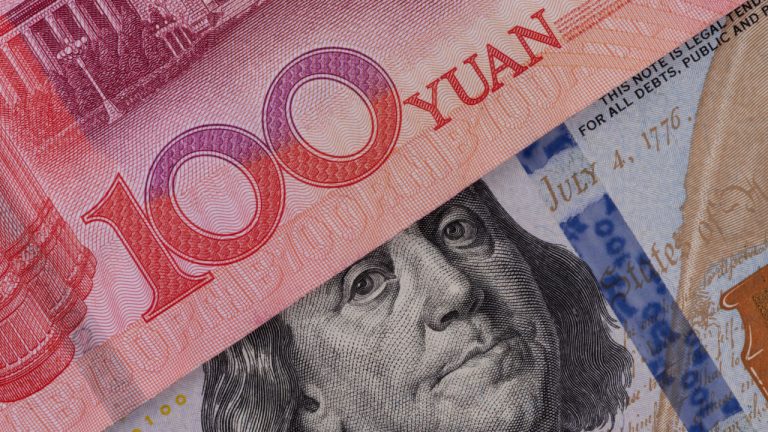
The Chinese yuan is now China’s most used currency for cross-border settlements. According to official data from the State Administration of Foreign Exchange, the Chinese yuan rose to be the most-used currency in March over the U.S. dollar, in a push from the Beijing government to internationalize its currency for payments.
Chinese Yuan Used to Settle Most of China’s International Payments in MarchBeijing is now settling most of its international trade operations using the Chinese yuan. According to official numbers from the State Administration of Foreign Exchange, a Chinese national institution in charge of managing China’s international reserve, the payments settled using the Chinese yuan overtook those made with U.S. dollars in March, being used in 48.4% of all settlements.
The Chinese yuan was used to settle $549.9 billion in payments, a record number, rising from $434.5 billion in February. The usage of the U.S. dollar for these payments fell from 48.6% to 46.7% during the same period.
China has been increasing reliance on its currency due to recent geopolitical challenges that have been used as a rationale for the U.S. to apply sanctions to Russia, affecting also Chinese companies accused of serving as proxies for the Russian government and its institutions.
Yuan Usage Has GrownHowever, internationally, the usage of the Chinese yuan for settlements is minuscule when compared to the volumes settled in U.S. dollars, even with the implementation of sanctions. During March, the usage of the Chinese Yuan in global international payments rose to 4.5%, while the U.S. dollar accounted for 83.71% of all volume settled, according to data from SWIFT, a global banking payments system.
However, this marks an increase compared to the usage numbers of December, when the Chinese renminbi only accounted for 2.15% of all global payments, according to SWIFT’s renminbi tracker. This means that the yuan’s usage has more than doubled during Q1 2023.
This, and other recent trade agreements that have led countries like Russia and Brazil to settle their bilateral payments with China using national currencies or the Chinese yuan, have alarmed some analysts regarding the possible rise of a “bipolar” economic world.
Economist Nouriel Roubini recently stated that rivals of the U.S. would probably group around the yuan to propose it as an alternative to the U.S. dollar. In the same way, billionaire investor Ray Dalio noted the importance of the U.S. dollar in international trade is fading, thanks to the sanctions that the country has imposed on other countries.
What do you think about the growth of the usage of the Chinese yuan? Tell us in the comment section below.
Why this matters
This cryptocurrency story adds another data point to the current market tape and is useful when read alongside nearby source coverage.
Original source
Read on Bitcoin NewsRelated market context

XRP News: RLUSD Settlement Comes to Cross River Fintechs
Big news for XRP as Cross River is integrating Ripple’s U.S.-dollar-backed RLUSD stablecoin on the XRP Ledger into its proprietary...

Circle Targets 40 New Markets As USDC Push Moves Beyond Crypto Trading
TL;DR: Circle plans to expand USDC infrastructure into approximately 40 developing and emerging markets. The company is targeting...

Judge Refuses to Erase Gemini’s $5M Settlement Despite CFTC Reversal
In a rare courtroom reversal, the Commodity Futures Trading Commission (CFTC) joined cryptocurrency exchange Gemini in asking a fe...

Circle Says 59 Cents of Each Revenue Dollar Went to USDC Partners and Transaction Costs
Circle said it paid about $819 million of its roughly $1.4 billion in first-half 2026 revenue to USDC distribution partners and tr...

MEXC AI Trading Report Reveals 85% of Crypto Traders Use AI, But Most Limit Its Control Over Funds
Mutsamudu, Comoros, October 16, 2026 — MEXC, a global cryptocurrency exchange, released its AI Trading Report, based on a survey o...

Judge Rejects Gemini And CFTC Bid To Overturn $5 Million Settlement
TL;DR: A federal judge has rejected a joint attempt by Gemini and the Commodity Futures Trading Commission to overturn the exchang...