Citi Predicts Metaverse Could Be $13 Trillion Opportunity With 5 Billion Users
Citi has predicted that the total market for the metaverse economy could grow to between $8 trillion and $13 trillion by 2030. In addition, the global bank expects that the number of metaverse users could be as many as f...
Citi has predicted that the total market for the metaverse economy could grow to between $8 trillion and $13 trillion by 2030. In addition, the global bank expects that the number of metaverse users could be as many as five billion.
Citi released a new Global Perspectives & Solutions (Citi GPS) report titled “Metaverse and Money: Decrypting the Future” Thursday. The leading global bank has approximately 200 million customer accounts and does business in more than 160 countries and jurisdictions.
The 184-page report explores various aspects of the metaverse in-depth. They include what a metaverse is; its infrastructure; digital assets including non-fungible tokens (NFTs) in the metaverse; money and defi (decentralized finance) in the metaverse; and regulatory developments applicable to the metaverse.
Regarding the size of the metaverse economy, Citi described: “We believe the metaverse may be the next generation of the internet — combining the physical and digital world in a persistent and immersive manner — and not purely a virtual reality world.”
Noting that “A device-agnostic metaverse accessible via PCs, game consoles, and smartphones could result in a very large ecosystem,” Citi wrote:
We estimate the total addressable market for the metaverse economy could grow to between $8 trillion and $13 trillion by 2030.
In addition, the report explains that Citi believes the total number of metaverse users could be around five billion.
Report co-author Ronit Ghose, global head of Banking, Fintech & Digital Assets, Citi Global Insights, explained:
Expert contributors to the report indicate a range of users of up to 5 billion, depending on whether we take a broad definition (mobile phone user base) or just one billion based on a narrower definition (VR/AR device user base) — we adopt the former.
The report also discusses how users would access the metaverse. “Consumer hardware manufacturers will be portals to the metaverse and potential gatekeepers,” the authors wrote. “Similar to today, there will likely be a split between a U.S./international and a China/ firewall-based metaverse in addition to a spectrum based on technology and business model too, i.e., metaverse centralization versus decentralization.”
Moreover, the report details that “The metaverse of the future would encompass more digitally-native tokens but traditional forms of money would also be embedded,” adding:
Money in the metaverse could exist in different forms, i.e., in-game tokens, stablecoins, central bank digital currencies (CBDCs), and cryptocurrencies.
“In addition, digital assets and NFTs, in the metaverse will enable sovereign ownership for the users/owners and are tradeable, composable, immutable, and mostly interoperable,” the Citi report notes.
The authors also explored what metaverse regulation would look like, predicting that “If the metaverse(s) is the new iteration of the internet, it will attract great scrutiny from global regulators and policymakers.”
They additionally warned, “All the challenges of the Web2 internet could be magnified in the metaverse, such as content moderation, free speech, and privacy,” elaborating:
In addition, a blockchain-based metaverse will brush up against still evolving laws around cryptocurrencies and decentralized finance (defi) in many jurisdictions around the world.
In January, global investment bank Goldman Sachs said that the metaverse could be as much as an $8 trillion opportunity. Another major investment bank, Morgan Stanley, predicted the same size for the metaverse in November last year. Meanwhile, Bank of America said that the metaverse is a massive opportunity for the entire crypto ecosystem.
Do you agree with Citi about the metaverse? Let us know in the comments section below.
Original source
Read on Bitcoin NewsRelated market context

Banks are buying Bitcoin vaults, but a quantum problem may be waiting inside
The banks are finally buying the vaults. In May, BNY, the world's largest custodian with $59.4 trillion in assets under custody an...
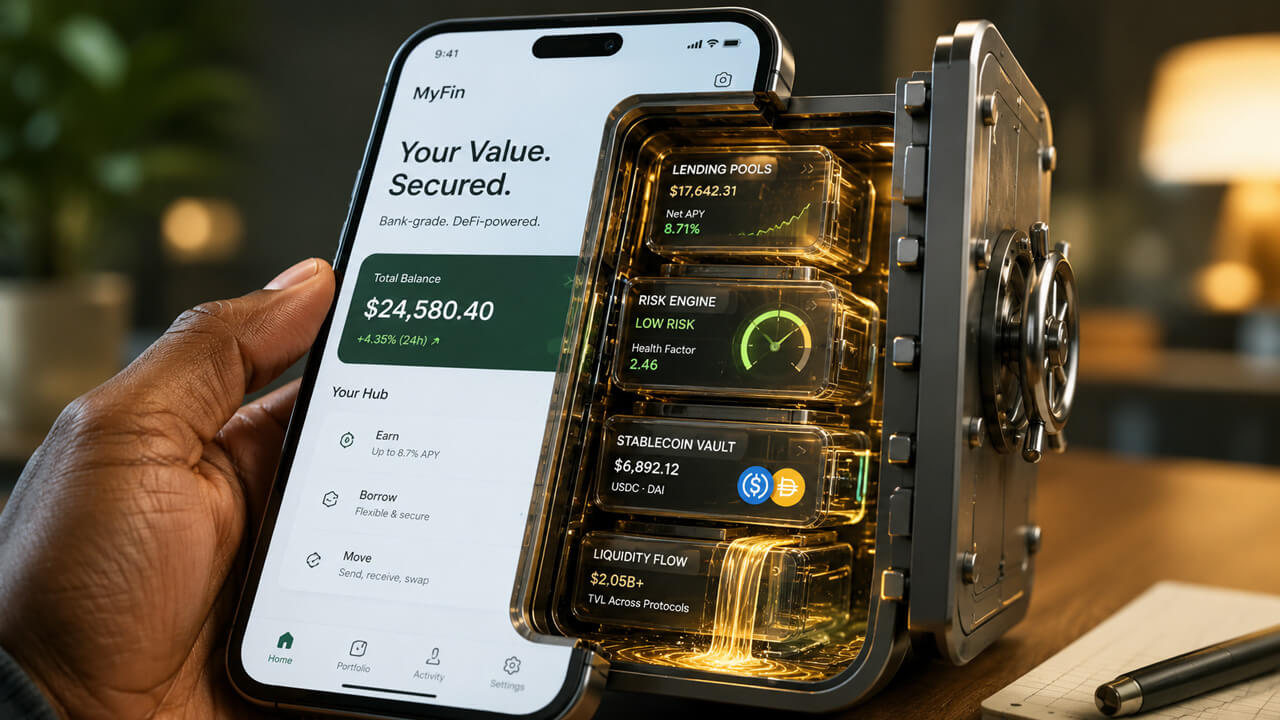
The future of vaults: neobanks and invisible DeFi
The following is a guest post and opinion from Vincent Maliepaard, VP of Marketing at Sentora. On January 26, 2026, Kraken launche...

Japan Three Biggest Banks Unite to Launch Yen Crypto Stablecoin by March 2027
MUFG Bank, Mizuho Bank, and Sumitomo Mitsui Banking Corporation have established a formal joint council to develop and co-issue a...

$1.5 Trillion Transacted: Rain Report Reveals the Massive Scale of Latam’s Stablecoin Economy
The crypto card company stressed that these volumes result from a more conscious use of stablecoins, driven by concrete problem-so...

VanEck Bets BNB’s Real-World Usage Can Help Its ETF Stand Out
TL;DR VanEck is positioning its VBNB spot BNB ETF around BNB Chain usage and revenue metrics. The ETF reportedly has around $2 mil...

SpaceX’s IPO exposes the first crack in tokenized stocks – fragmented ownership and allocation
SpaceX priced its IPO at $135 per share on June 11, raised $75 billion in the largest public offering in history, and opened on Na...