Coinbase and Circle Challenge Basel Committee’s Stablecoin Regulations
Coinbase and Circle, two prominent players in the cryptocurrency industry, are contesting aspects of a proposal from the Basel Committee on Banking Supervision that aims to introduce stricter criteria for the regulatory...
Archive context
Older archive item. Useful for background and entity history, but not a fresh market-moving signal.

Coinbase and Circle, two prominent players in the cryptocurrency industry, are contesting aspects of a proposal from the Basel Committee on Banking Supervision that aims to introduce stricter criteria for the regulatory treatment of stablecoins held by banks.
The committee’s consultation document, released in December, outlines requirements for stablecoins to qualify for preferential regulatory treatment under a “Group 1b category.” These requirements include maintaining low volatility and adequate liquidity. Comments on the proposal were due by March 28.
In response, Coinbase expressed disappointment with the committee’s approach in a letter submitted on March 28, criticizing many of the requirements as not being based on the actual risk these assets pose to banks. Coinbase argued that the proposed criteria seem to reflect broader policy objectives rather than strictly financial risk considerations.
Additionally, Coinbase accused the committee of aiming to significantly limit banks’ ability to hold and utilize stablecoins.
Circle, the issuer of a popular stablecoin, also raised concerns about the committee’s treatment of permissionless blockchains. The committee suggested that permissionless blockchains present unique risks and indicated they would not be allowed in Group 1 for the time being.
Circle argued that banks should be encouraged to leverage technologies like permissionless blockchains to enhance their digital transformation and cybersecurity efforts. They emphasized their successful partnerships with global banking institutions and advocated for a collaborative approach rather than stigmatizing blockchain-based financial services.
The Basel Committee on Banking Supervision, comprised of global standard setters, plays a crucial role in shaping regulatory frameworks for financial institutions worldwide.
Coinbase and Circle are pushing back against proposed stablecoin regulations from the Basel Committee on Banking Supervision. The proposed regulations aim to determine preferential treatment for stablecoins held by banks. Coinbase criticized the criteria as not being based on actual risk assessment, while Circle advocated for the use of permissionless blockchains in banking.
Featured Image: Megapixl
Why this matters
This cryptocurrency story adds another data point to the current market tape and is useful when read alongside nearby source coverage.
Original source
Read on CryptoCurrencyNewsRelated market context

Citi And Coinbase Bring Stablecoin Payments Into Corporate Banking
TL;DR Citi and Coinbase have expanded their partnership with new stablecoin and fiat payment infrastructure for businesses. Citi c...
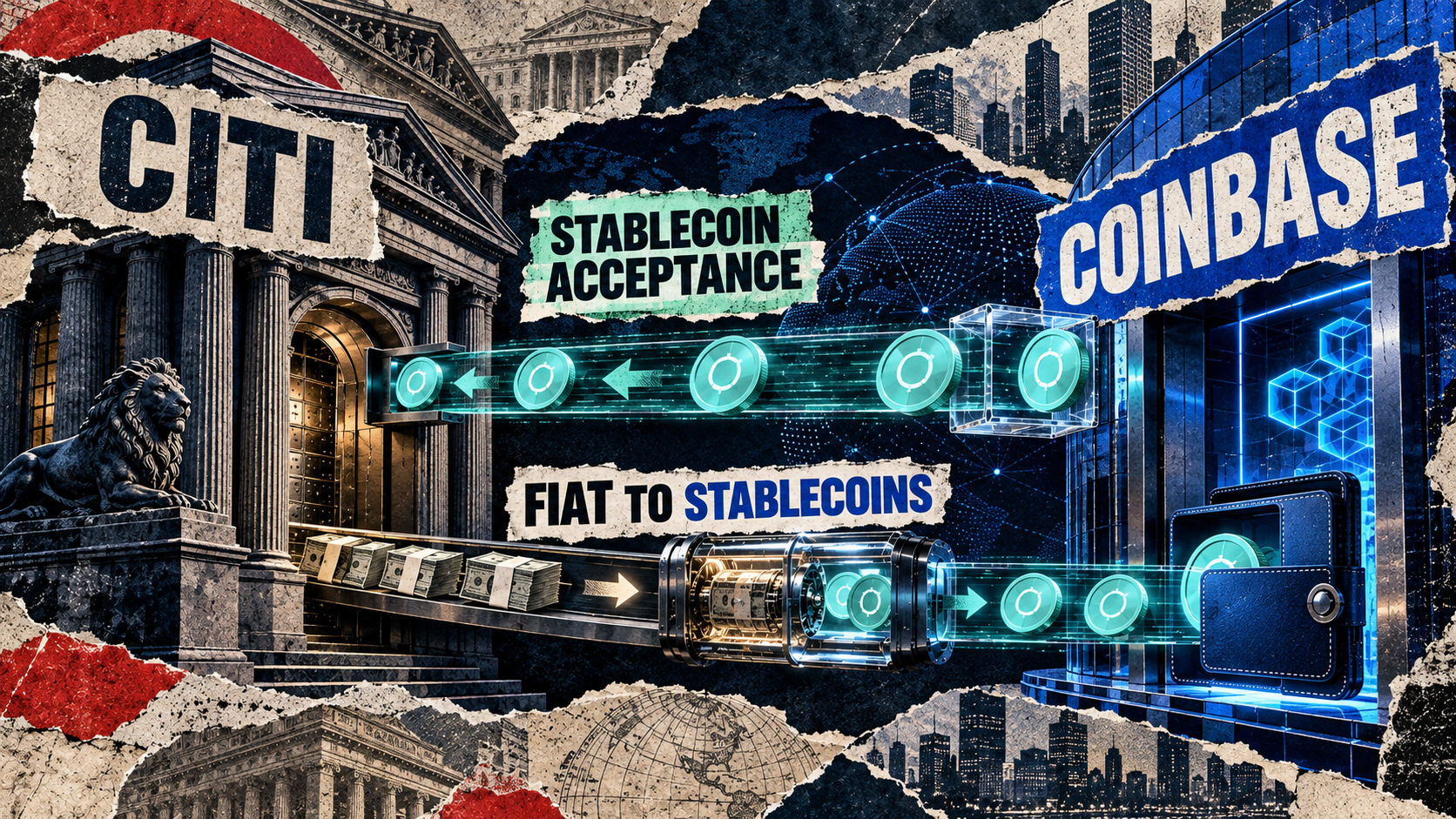
Coinbase powers Citi’s new stablecoin rails, and corporate banking faces a major shift
Citi institutional clients can now accept stablecoin payments through Spring by Citi using Coinbase's payments infrastructure, Coi...

Citi, Coinbase partner to integrate stablecoin payments into US banking
This partnership could accelerate stablecoin integration into mainstream finance, potentially reshaping the crypto landscape and b...

Circle Brings USDC Workflows Into Banking Platform Used By Major Institutions
TL;DR Volante Technologies and Circle have announced a collaboration around stablecoin payment and settlement infrastructure. Vola...
Citigroup, Coinbase automate stablecoin to fiat conversion for institutional clients
The integration of stablecoins into traditional banking could accelerate digital asset adoption, influencing financial systems and...
Morning Minute: Citi and Coinbase Just Made Stablecoins Invisible
Plus, crypto majors rebound as oil and yields fall and Saylor’s Strategy returns to buying Bitcoin.