Crypto Ban in Russia Can Have Opposite Effect, Medvedev Warns as Opposition Mounts Against Proposal
Dmitry Medvedev, former president and prime minister of Russia, has voiced his concerns over Bank of Russia’s initiative to ban most crypto operations. Prohibition could bring the opposite result, the Russian politician...
Archive context
Older archive item. Useful for background and entity history, but not a fresh market-moving signal.
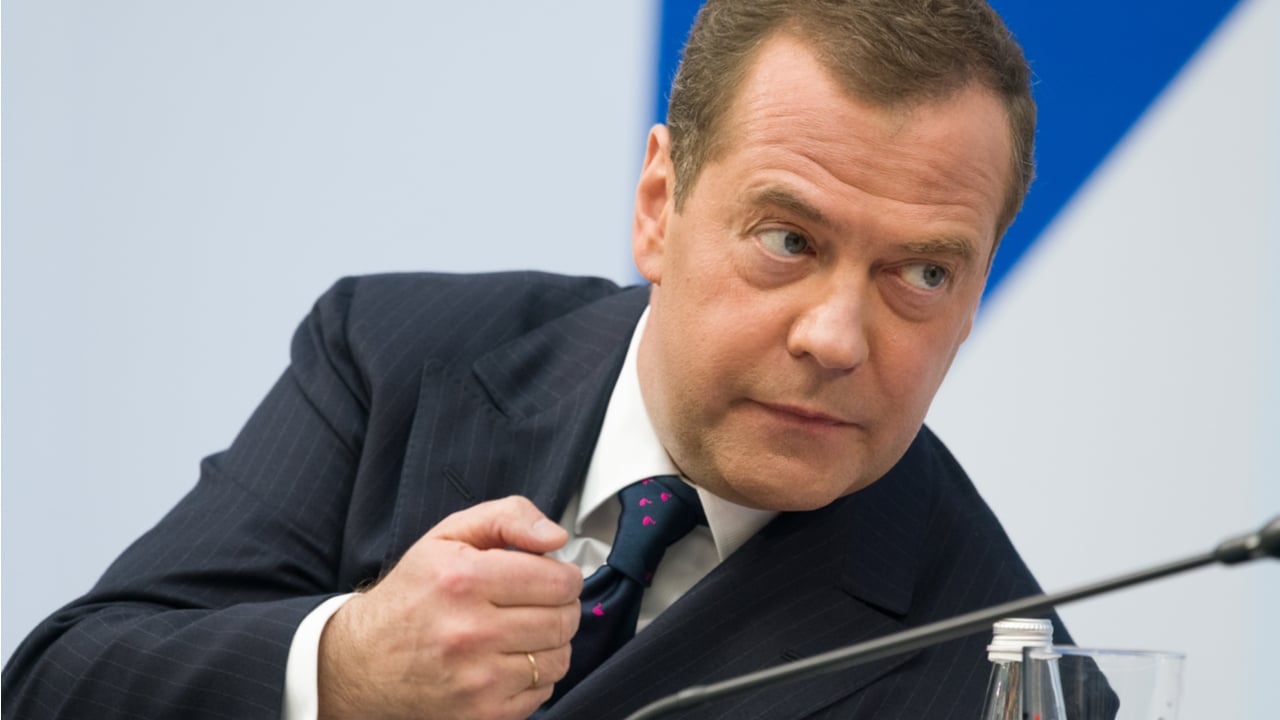
Dmitry Medvedev, former president and prime minister of Russia, has voiced his concerns over Bank of Russia’s initiative to ban most crypto operations. Prohibition could bring the opposite result, the Russian politician warned, joining a chorus of opinions against the restrictive policy.
More Officials and Organizations Reject Central Bank’s Call to Prohibit Cryptocurrency
Central Bank of Russia’s proposal to place a number of crypto-related activities outside the law has sparked a wave of reactions in Moscow. Among the critics are the Finance Ministry which put out its own regulatory concept, the State Duma where deputies are working on a new crypto law, and the government which prepared a roadmap for crypto regulation together with various departments.
The central bank’s position has its reasons, Dmitry Medvedev, who now serves as deputy chairman of the Security Council of the Russian Federation, acknowledged in an interview with Russian media. The monetary authority has cited threats to the nation’s financial stability and risks for its citizens as key factors for its hardline stance on crypto. However, quoted by Tass, Medvedev warned:
To be honest, when you try to ban something, this very often leads to the opposite result.
Other Russian officials have recently expressed more specific concerns. Any restrictions on the issuance and circulation of cryptocurrencies would halt the development of the blockchain industry and go against the country’s policy of supporting the IT sector, Minister Of Digital Development Maxut Shadayev was quoted as saying by the business daily Vedomosti. A ban would also lead to outflow of qualified specialists, he added.
The Russian Association for Electronic Communications (RAEC) has also joint the front against Bank of Russia’s push for prohibition while backing the finance ministry and the federal government. A ban would not solve existing problems with fraud and other illegal acts but, on the contrary, it will complicate control as market activity will move to the “grey” sector, the industry organization noted. In a statement quoted by the business news portal RBC, RAEC also said:
The ban on the circulation of cryptocurrencies will leave Russia on the sidelines of the development of one of the fastest growing digital markets at the moment, which will significantly slow down the innovative development of the country.
According to data compiled by RAEC’s experts, the contribution of digital markets to the Russian economy amounted to 6.7 trillion rubles (over $85 million) in 2020. The association’s preliminary estimates for 2021 suggest that the indicator has increased by 29%, to 8.6 trillion rubles (around $110 million at current exchange rates).
Meanwhile, the head of the State Duma Financial Market Committee, Anatoly Aksakov, has publicized the idea of legalizing cryptocurrencies under the Russian law “On Experimental Legal Regimes in the Field of Digital Innovations.” This would allow authorities to examine how the various elements of the crypto infrastructure function under strict government control, Aksakov elaborated during a conference devoted to crypto regulations.
Do you think Russia will eventually legalize cryptocurrencies and operations with them? Share your expectations in the comments section below.
Why this matters
This cryptocurrency story adds another data point to the current market tape and is useful when read alongside nearby source coverage.
Original source
Read on Bitcoin NewsRelated market context
Irish Central Bank Fines Coinbase Unit €3.25 Million Over Customer Fund Safeguards
TL;DR: Ireland’s central bank imposed a €3.25 million penalty on Coinbase Ireland over electronic-money safeguarding and outsourci...

China Sets 2030 Deadline for National Blockchain Network Despite Sweeping Crypto Ban
Key Takeaways: Under the new 5-year digital strategy, China aims to achieve a national blockchain network which will be largely co...

Kraken wants to be your bank, but who will protect your money?
Kraken's parent company wants a place in your finances long before you buy Bitcoin and long after you sell it. On Oct. 14, Payward...
Bloomberg Adds Basel Crypto Exposure Classification For Banks And Asset Managers
TL;DR: Bloomberg has expanded its crypto analytics to classify bank exposure under Basel standards, including indirect holdings hi...

Bank Lobby Presses OCC For Clarity On Stablecoin Rewards After Final Rule
A final stablecoin rule has not ended the argument over rewards. The Bank Policy Institute used its October 24 newsletter to renew...

22 Companies Block OKXICE Tokenized Stocks, Putting 63-Share Crypto Plan Under Pressure
Key Takeaways: A total of twenty-two companies have declined to accept tokenization of their shares on the pending OKXICE. Among t...