Crypto firms beware: Lazarus’ new malware can now bypass detection
The malware payload “LightlessCan” — used in fake job scams — is far more challenging to detect than its predecessor, warns cybersecurity researchers at ESET.
Archive context
Older archive item. Useful for background and entity history, but not a fresh market-moving signal.

The malware payload “LightlessCan” — used in fake job scams — is far more challenging to detect than its predecessor, warns cybersecurity researchers at ESET.
Why this matters
This cryptocurrency story adds another data point to the current market tape and is useful when read alongside nearby source coverage.
Original source
Read on CointelegraphRelated market context

A Solana wallet tested a fake address with $10, then sent it $30,750
Lookalike payment addresses targeted nearly 4.5 million Solana wallets over 11 months, according to blockchain-data firm Bitquery’...

New iPhone spyware can hunt for crypto wallets and extract their data every 15 seconds
Researchers found a new iPhone spyware variant that can remotely extract cryptocurrency wallet data and sensitive credentials from...
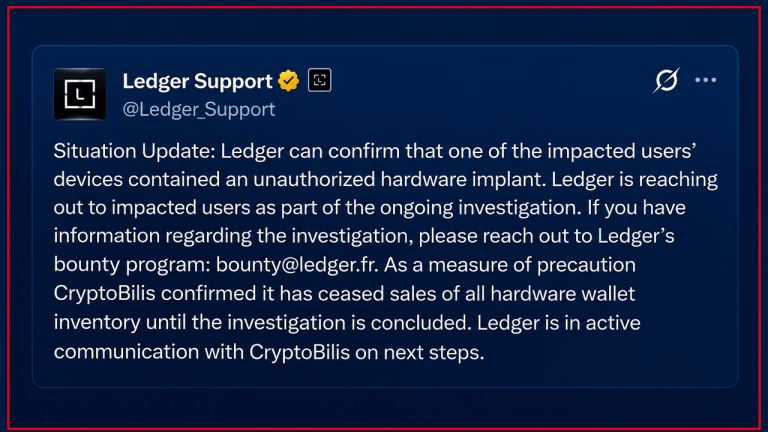
Ledger Confirms Hidden Hardware Implant in Affected User’s Wallet
Ledger confirmed Saturday, Oct. 10, 2026, that a hardware wallet belonging to one affected customer contained an unauthorized impl...

Hyperliquid surpasses $1B revenue, $1B used for HYPE buybacks
Hyperliquid's strategic buybacks enhance HYPE's market value, reflecting strong financial health and boosting investor confidence...

OpenAI, Google and Meta battle for AI internet domains as crypto firms target .bitcoin and .wallet
OpenAI, Google, and Meta are competing for AI-related internet domains as cryptocurrency firms pursue their own digital naming rig...

Stealing $1.5B in crypto is easy, cashing out is the trap
North Korean hackers stole around $1.5 billion from Bybit in February 2025. While the hack itself has been widely covered and anal...