Crypto Firms May Need to Split Services into Separate Companies Under MiCA
The European Securities and Markets Authority’s (ESMA’s) latest opinion on conflict-of-interest requirements introduces a paradigm shift for Crypto-Asset Service Providers (CASPs). The regulatory body's enhanced framewor...
Archive context
Older archive item. Useful for background and entity history, but not a fresh market-moving signal.

The European Securities and Markets Authority’s (ESMA’s) latest opinion on conflict-of-interest requirements introduces a paradigm shift for Crypto-Asset Service Providers (CASPs). The regulatory body's enhanced framework, unveiled in January 2025, not only suggests potential legal entity separation for conflicting services but also implements stringent personal transaction monitoring and broadens the definition of remuneration.
ESMA’s Key Changes to Conflict of Interest Requirements for CASPs
Last week ESMA published a new opinion document, unveiling significant modifications to its regulatory technical standards (RTS) on conflicts of interest for CASPs under MiCA. These changes represent a crucial step toward stronger investor protection and market integrity.
“ESMA suggests a limited number of changes to the amendments proposed by the European Commission, as explained further below,” the regulatory body commented in the newest document. “ESMA acknowledges that an appropriate balance should be found between, on the one hand, the protection of investors and financial stability related objectives, and on the other hand, promoting safe and sustainable innovation.”
A notable addition appears in Recital 4, which introduces a more stringent approach to managing acute conflicts of interest. When standard policies and procedures prove insufficient, CASPs may need to segregate conflicting crypto-asset services into separate legal entities with independent management. This requirement particularly targets situations where conflicts cannot be adequately managed within a single entity or group structure.
Moreover, the new Recital 11 introduces comprehensive requirements for monitoring the personal transactions of connected persons. The framework now explicitly:
- Requires close scrutiny of transactions by connected persons
- Mandates documentation and approval processes
- Prohibits transactions that would violate MiCA regulation
“Recital 11 mandating the monitoring of personal transactions of connected persons (with the addition of article 6 on this very specific topic (Policies and procedures on conflicts of interest in the context of personal transactions) and that policies and procedures should include the prohibition of those transactions that infringe MiCA in particular title VI (prevention and prohibition of market abuse),” commented Delphine Forma, Policy Lead at Solidus Labs.
Crypto Firms Face Enhanced Oversight
Moving further, the expanded scope of Article 5 introduces a comprehensive definition of remuneration that covers all forms of payment, including both financial and non-financial benefits, whether provided directly or indirectly by CASPs in connection with crypto-asset services. This thorough approach aims to close potential loopholes that could be exploited through alternative compensation structures.
The modifications, according to ESMA, should create a more robust framework for CASPs to:
- Identify and manage conflicts of interest more effectively
- Implement stronger internal controls
- Maintain clearer separation between potentially conflicting activities
Under the new framework, CASPs must also implement comprehensive policies that integrate three key elements. First, they need to establish detailed procedures for monitoring and identifying personal transactions. Second, they must maintain transparent remuneration disclosure frameworks that capture all forms of compensation.
🪙 #ESMA and @EBA_News analysed recent developments in crypto-assets, decentralised finance (DeFi), #crypto lending, borrowing and staking → https://t.co/k2wSsoEHwa.This publication contributes to the @EU_Commission report under Article 142 of #MiCA. pic.twitter.com/LEd9aEmxdz
— ESMA - EU Securities Markets Regulator 🇪🇺 (@ESMAComms) January 17, 2025Finally, they are required to develop organizational structures specifically designed to prevent and manage potential conflicts of interest, with clear separation of duties and responsibilities where necessary.
Proposed changes are one thing, but reality is another. During an interview with Finance Magnates at FMLS:24, Forma candidly admitted that “the crypto industry is not ready for MiCA.”
“I don’t think the regulators are even ready,” she added. “Some countries haven’t even implemented an enforcement law. Furthermore, Belgium hasn’t even decided yet who will be the regulator in charge of MiCA in the country.”
This article was written by Damian Chmiel at www.financemagnates.com.Why this matters
This cryptocurrency story adds another data point to the current market tape and is useful when read alongside nearby source coverage.
Original source
Read on Finance MagnatesRelated market context
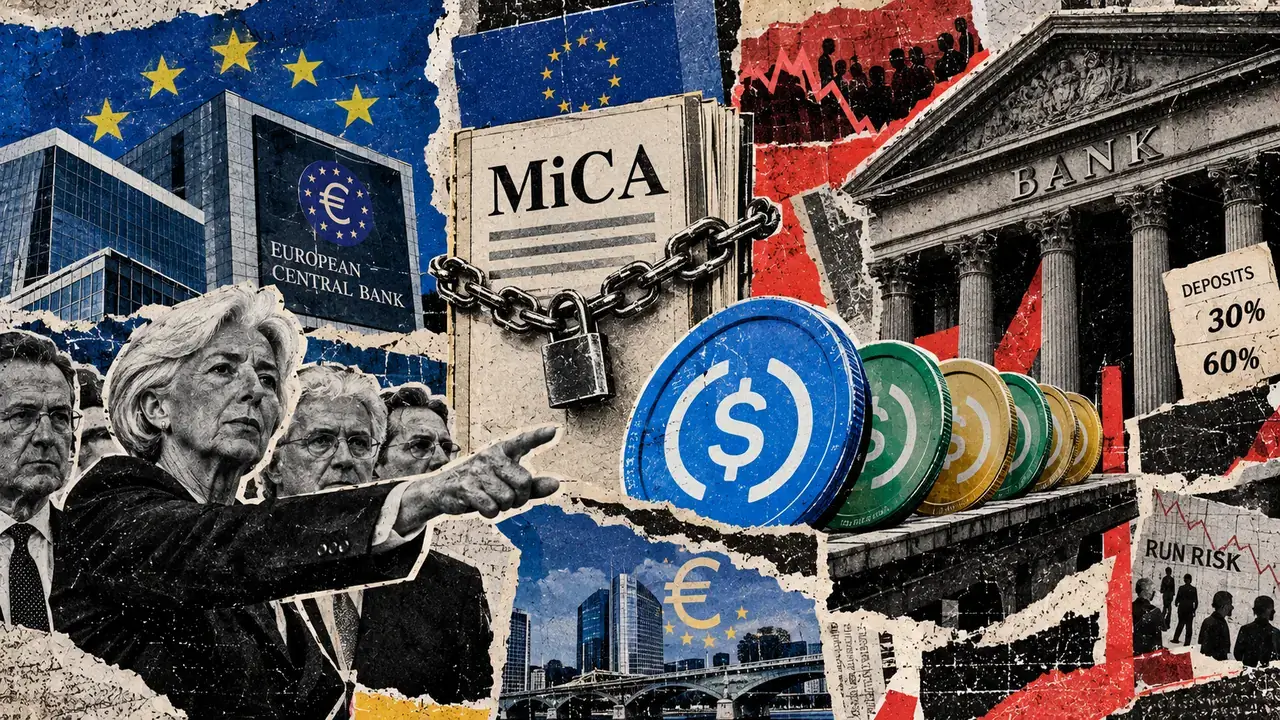
EU central banks attack MiCA rules and stablecoin runs are blamed
Europe’s central banks want the European Union to rethink a rule designed to make stablecoins safer, but that can also link a toke...

Solana DEX Trades Top NYSE With 208M Weekly Transactions
Solana decentralized exchanges processed about 208 million spot trades in the week ending Sept. 13, surpassing the NYSE’s roughly...

CFTC to develop crypto regulatory framework using existing powers
The CFTC's proactive crypto regulation could enhance market confidence and structure, potentially influencing crypto asset valuati...

Tron nears 100M weekly transactions, solidifying its role as stablecoin infrastructure
Tron's rise as a stablecoin hub could reshape global digital payments, offering low-cost transactions and influencing regulatory l...
CFTC Chair Selig Says Regulator Is Preparing for ‘24-7, On-Chain’ Markets
Bitcoin Magazine CFTC Chair Selig Says Regulator Is Preparing for ‘24-7, On-Chain’ Markets Commodity Futures Trading Commission Ch...

Raiffeisen Bank International to Roll Out Bitcoin Services Across Europe in Expanded Bitpanda Deal
Bitcoin Magazine Raiffeisen Bank International to Roll Out Bitcoin Services Across Europe in Expanded Bitpanda Deal Austrian banki...