Crypto Taxation Challenges and Spain’s Deadline
In a move to assert greater control and oversight in the realm of cryptocurrency taxation, Spanish residents with crypto assets on non-Spanish platforms are mandated to declare them by March 31, 2024. The Spanish Tax Adm...
Archive context
Older archive item. Useful for background and entity history, but not a fresh market-moving signal.

In a move to assert greater control and oversight in the realm of cryptocurrency taxation, Spanish residents with crypto assets on non-Spanish platforms are mandated to declare them by March 31, 2024. The Spanish Tax Administration Agency, Agencia Tributaria, introduced form 721—a dedicated tax declaration form for virtual assets abroad—as part of the evolving regulatory framework. The submission window for form 721 kicks off on January 1, 2024, and spans until the end of March.
Individuals and corporate taxpayers are required to declare the amount of funds stored in their foreign crypto accounts as of December 31, 2023. However, the obligation to declare foreign holdings is applicable only to individuals whose balance sheets exceed the equivalent of 50,000 euros (approximately $55,000) in crypto assets. Those utilizing self-custodied wallets must report their holdings using the standard wealth tax form 714.
This initiative follows the Spanish Tax Administration Agency's intensified efforts to enforce tax compliance among local holders of crypto assets. In April 2023, the agency issued 328,000 warning notices to individuals who had not fulfilled their tax obligations on crypto holdings for the 2022 fiscal year. The surge in warnings marked a 40% annual increase, with 150,000 warnings in 2022 compared to just 15,000 in 2021.
Spain is actively positioning itself with comprehensive regulations to govern the cryptocurrency space. The introduction of the Markets in Crypto-Assets Regulation, a pioneering European Union framework, is slated to take effect nationally in December 2025—six months before the official deadline. In a parallel move, the National Securities Market Commission, Spain's principal financial regulator, initiated its first case against a technology provider in November for violating rules related to crypto promotion.
Crypto Taxation Challenges: A Global Perspective
Cryptocurrencies present a unique challenge to policymakers globally, especially concerning their integration into existing tax systems. This challenge is particularly pronounced in the realm of implementation, where crypto's quasi-anonymity poses inherent obstacles to third-party reporting. The dual nature of cryptocurrencies as investment assets and means of payment further complicates matters.
The concentration of ownership at the top adds another layer of complexity to the taxation landscape. Despite ownership being highly concentrated among a select few, a substantial portion of crypto investors boasts only moderate incomes. The potential capital gains tax revenue at stake on a global scale could reach tens of billions of dollars, but perhaps more significant are the profound risks posed to value-added tax (VAT) and sales taxes.
As countries grapple with the intricacies of crypto taxation, the evolving landscape underscores the need for nuanced and adaptive regulatory frameworks that balance the unique features of cryptocurrencies with the imperatives of taxation and financial oversight.
This article was written by Pedro Ferreira at www.financemagnates.com.Why this matters
This cryptocurrency story adds another data point to the current market tape and is useful when read alongside nearby source coverage.
Original source
Read on Finance MagnatesRelated market context
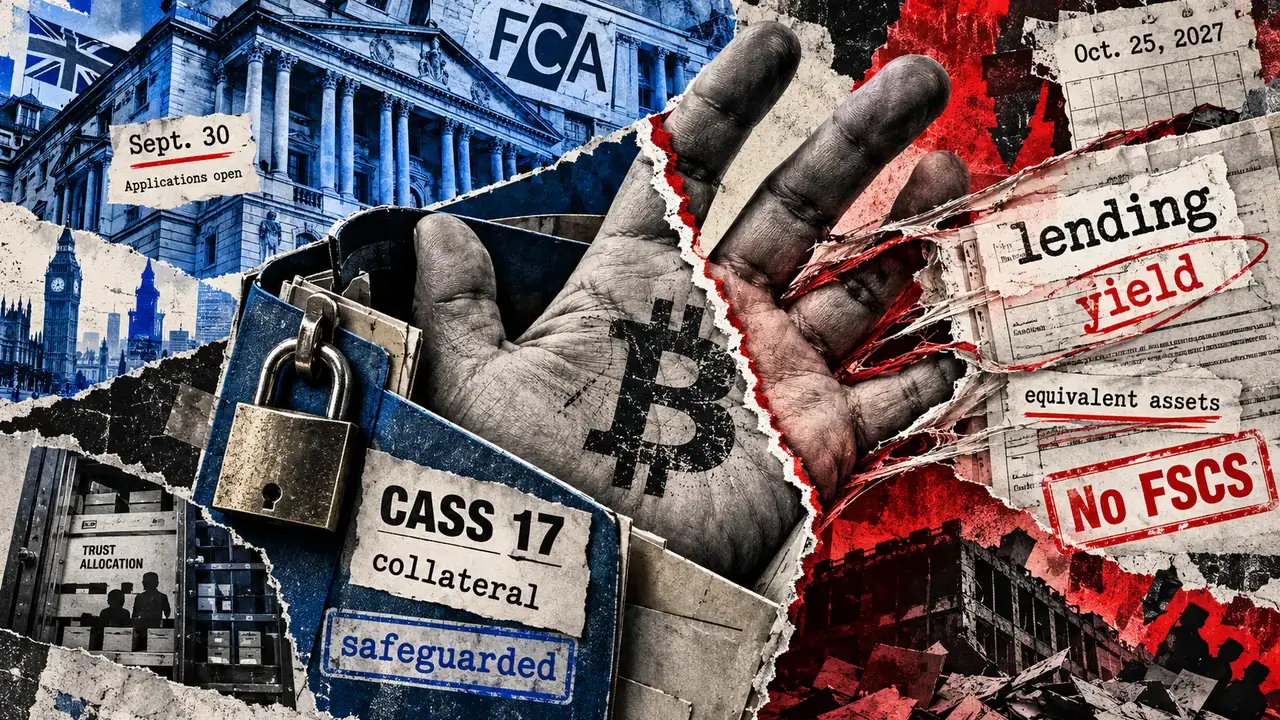
UK’s 2027 crypto rules let firms remove trust protection from Bitcoin lent for yield
UK crypto firms can now apply for authorization as of Sept. 30, bringing Bitcoin holders closer to a rulebook that will treat coin...

Kraken Completes Acquisition Of TradeStation Crypto Infrastructure Assets
In a major development confirmed on SEPTEMBER 30, 2026, Confirmed announcement/filing for Kraken Completes Acquisition Of TradeSta...

Sen. Daines moves crypto tax overhaul with stablecoin relief and wash-sale rules
Sen. Daines' crypto tax reform could streamline digital transactions, impacting user convenience and trader strategies in the evol...

Senate Republicans introduce crypto tax bill targeting digital assets
The bill's focus on crypto taxation may signal a shift towards detailed regulatory frameworks, influencing market sentiment and fu...
Former NCA officer Paul Chowles ordered to repay $2.4M for Bitcoin theft during Silk Road 2.0 probe
The case highlights the need for enhanced oversight and security measures in law enforcement's handling of digital assets to preve...

Abracadabra Moves to Shut Down MIM Stablecoin, Offering Holders Roughly 4 Cents per Token
The team running Abracadabra has proposed shutting down the lending protocol and its Magic Internet Money (MIM) stablecoin, with M...